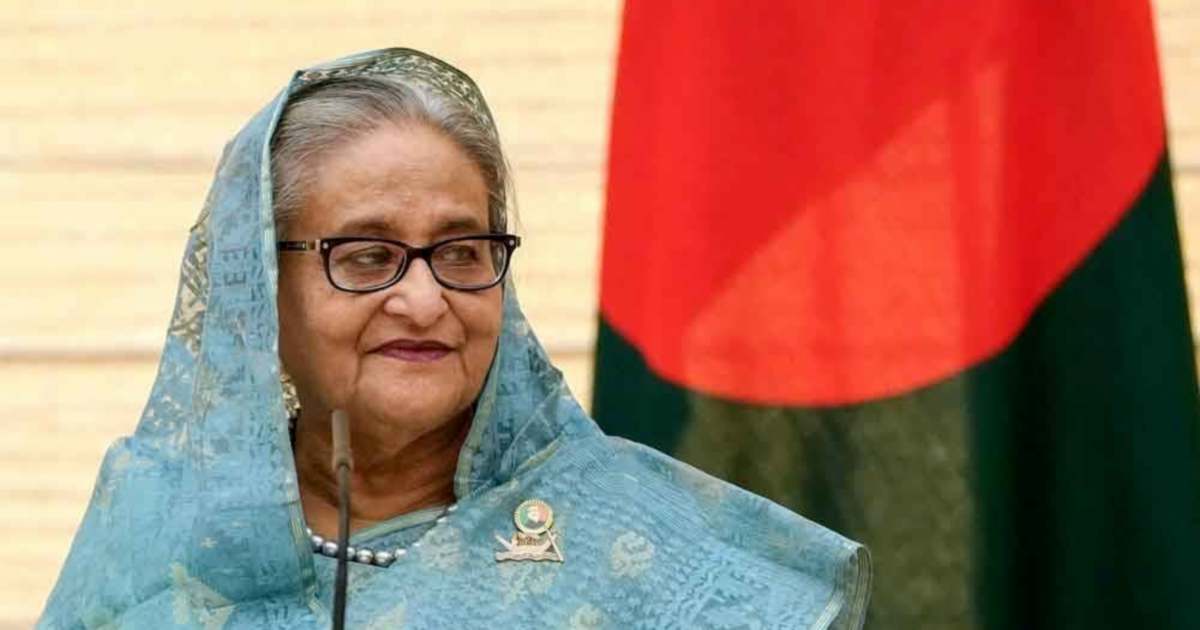
Sheikh Hasina, the ousted former Prime Minister of Bangladesh, has publicly declared her intention to return to her homeland within the year, openly challenging the legal proceedings against her and characterising the judicial system's actions as instruments of political persecution. Her defiant statement represents a significant escalation in the ongoing power struggle that has gripped Bangladesh since her removal from office, signalling her refusal to accept exile as a permanent state of affairs. The death sentence imposed against her in her absence has become a focal point of contention, with Hasina dismissing the conviction as fundamentally flawed both in substance and procedure.
The legal conviction against Hasina sits at the heart of the current political crisis consuming Bangladesh. The former premier has rejected the death sentence as lacking any legitimate constitutional foundation, asserting that the proceedings themselves violated established legal frameworks and democratic principles. Her characterisation of the ruling as "politically motivated" reflects a broader narrative that has emerged from her supporters, who view the judicial process as a tool wielded by political rivals rather than an impartial administration of justice. This interpretation underscores the profound polarisation within Bangladesh's political establishment, where questions of law and governance have become inseparable from factional competition.
Hashina's vow to return carries profound implications for Bangladesh's already fragile political landscape. The country has experienced considerable turbulence in recent years, with competing visions of governance, democracy, and national direction creating deep fissures within institutions and civil society. Her potential homecoming would likely intensify existing tensions, as her supporters mobilise around her and opponents seek to enforce legal consequences. The prospect of her return has set the stage for what could be a critical confrontation between competing claims of legitimacy and authority within the state apparatus.
The international community has watched Bangladesh's developments with considerable concern. Major democracies have expressed unease about the trajectory of institutional governance, rule of law standards, and the treatment of political opponents within the judicial system. For regional observers, particularly in Southeast Asia, the Bangladesh crisis represents a cautionary tale about the fragility of democratic institutions when political competition turns adversarial and institutions become weaponised for partisan advantage. Malaysia and other ASEAN nations, navigating their own complex political dynamics, have maintained cautious positions while noting the parallels to their own experiences with contentious transitions of power.
Hashina's political trajectory has been marked by considerable accomplishment and considerable controversy. As Prime Minister, she oversaw periods of economic growth and development initiatives that reshaped Bangladesh's infrastructure and social landscape. However, her administration also became synonymous with accusations of corruption, extrajudicial actions, and suppression of dissent. These competing narratives have created a polarised political environment where assessment of her tenure depends heavily on one's political orientation. Her supporters credit her with advancing Bangladesh's standing and development agenda, while critics point to democratic backsliding and human rights concerns during her years in power.
The mechanics of her removal from office and the subsequent legal proceedings against her have crystallised the divisions within Bangladesh's body politic. The death sentence, delivered in a trial conducted without her physical presence, raises fundamental questions about due process and the right to a fair hearing that resonate far beyond Bangladesh's borders. International legal observers have questioned whether such proceedings meet established standards for criminal justice, particularly when the accused is absent and unable to mount a full defence. These concerns have lent credibility to Hasina's assertions that the legal system has been compromised by political considerations.
The timing of Hasina's declaration to return this year appears designed to mobilise her political base and signal resolve in the face of legal jeopardy. Her supporters have begun organising in anticipation of her homecoming, viewing it as a pivotal moment that could reshape Bangladesh's political equilibrium. However, her return would inevitably encounter significant obstacles, including the death sentence that would theoretically allow authorities to detain her upon arrival. This dynamic creates a standoff between Hasina's political ambitions and the legal apparatus arrayed against her, with the outcome potentially hinging on broader political considerations rather than purely legal factors.
The implications for Bangladesh's democratic development remain deeply uncertain. If Hasina does return, her arrival could either catalyse genuine political dialogue and institutional reform or deepen authoritarian trends depending on how authorities respond and how political actors conduct themselves. The stakes extend beyond individual ambitions to encompass fundamental questions about whether Bangladesh can develop stable, rule-of-law based systems of governance that allow for peaceful competition among political rivals. The international community will likely intensify scrutiny of how Bangladesh's institutions respond to Hasina's anticipated return, with the response serving as a barometer for the health of democratic governance in the country and the region more broadly.

