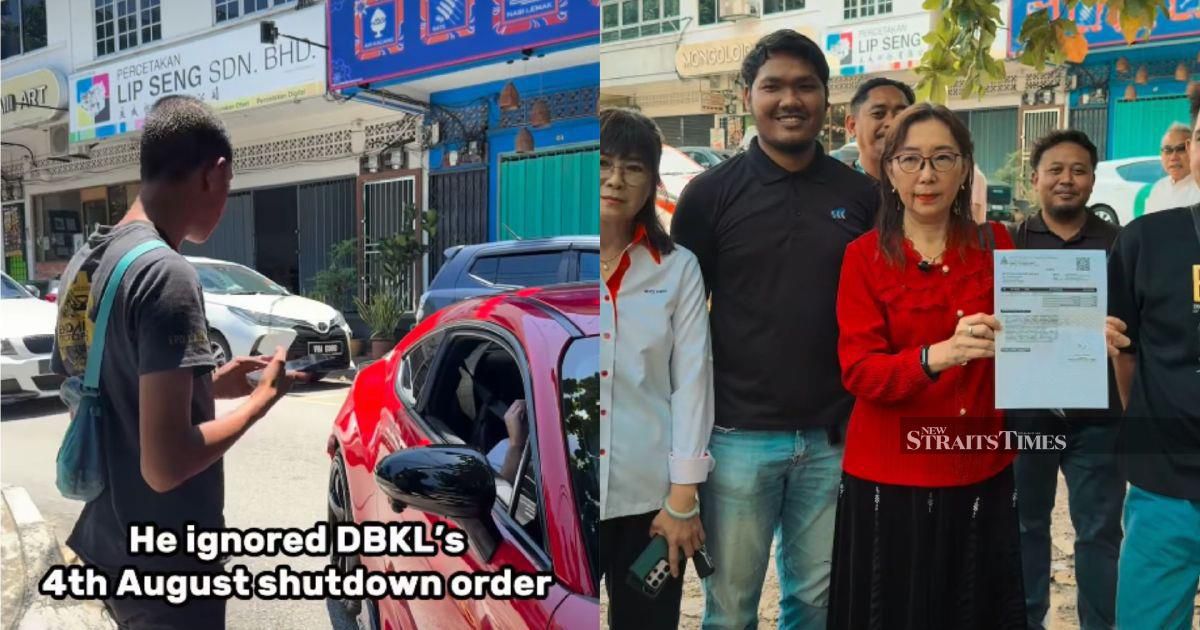
An enforcement operation in Taman OUG has resulted in the arrest of a man suspected of collecting parking fees illegally along Jalan Hujan, culminating in an alleged physical confrontation with a compliance officer. The individual, whose activities had drawn official attention and repeated warnings, is now facing questions about both the unlicensed parking collection scheme and the circumstances surrounding the alleged assault.
The arrest marks another chapter in the ongoing struggle against street-level extortion in Kuala Lumpur's residential neighbourhoods, where self-styled parking attendants have long operated in a grey zone between informal convenience and outright criminality. These individuals typically position themselves on busy residential streets, directing vehicles into spaces and collecting small fees from motorists who comply with their informal "guidance." While some residents tolerate the practice as a parking management solution, authorities view such activity as potentially coercive and unlicensed revenue collection.
Taman OUG, a densely populated area in central Kuala Lumpur, has long grappled with parking challenges as vehicle ownership has outpaced dedicated parking infrastructure. The proliferation of informal parking collectors in such areas reflects this underlying tension between supply and demand. Enforcement agencies periodically conduct crackdowns to address the practice, though the persistence of such collectors suggests that demand for their services—whether voluntary or coercive—remains substantial among both residents seeking convenient parking and collectors seeking income.
What distinguishes this particular case is the alleged escalation to physical confrontation. The enforcement officer's encounter with the suspected collector appears to have been neither routine nor passive, with claims that the individual resisted or opposed the officer during the enforcement action. Such confrontations raise questions about the level of tension existing between informal economy participants and state officials, and whether parking collection disputes occasionally turn confrontational when enforcement pressure increases.
The decision to pursue enforcement against this particular individual also reflects a broader regulatory approach increasingly evident across Malaysian cities. Authorities are moving beyond mere tolerance or periodic warnings toward formal interventions that may include arrest and prosecution. This escalation suggests that enforcement priorities have shifted or that community complaints about a specific collector prompted action.
The pattern of repeated non-compliance with enforcement notices indicates that prior warnings had been issued. The existence of multiple notices before arrest suggests either that the individual did not take earlier warnings seriously or that they faced economic pressure to continue collecting parking fees despite official warnings. Understanding which factor was at play matters significantly for policy purposes—whether informal collectors are deliberately defiant or economically desperate shapes how authorities should respond.
For Malaysian motorists, particularly those in congested areas, the arrest underscores an ongoing reality: parking remains contested space in urban Malaysia, and solutions remain incomplete. Formal parking infrastructure development has not kept pace with urban growth, leaving residents negotiating with informal sector participants for basic services. The presence of enforcement operations against parking collectors, while necessary for rule of law, does not resolve the underlying parking shortage that makes such collectors' services attractive in the first place.
The alleged assault component of the case carries particular weight in Malaysian law enforcement discourse. Assaulting a public officer or enforcement agent is treated seriously, with potential legal consequences extending beyond simple disorderly conduct to charges that carry custodial sentences. If substantiated, this aspect of the case may result in more serious charges than unlicensed parking collection alone would entail.
Taman OUG residents now face renewed attention to their neighbourhood's parking management challenges. While enforcement success in removing individual collectors may provide temporary relief, systematic solutions would require either substantially increased formal parking facilities or coordinated community agreements about parking management. The arrest alone, without addressing underlying infrastructure deficits, may simply create a temporary vacuum before another informal collector emerges to meet unmet demand.
The incident also reflects broader questions about labour and informality in Malaysian cities. Parking collection, like many street-level occupations, often attracts individuals with limited formal employment options. Without understanding the socioeconomic drivers pushing people toward informal parking collection, enforcement alone will likely prove cyclical rather than definitively solving the problem.
Looking forward, this case may prompt municipal authorities to accelerate parking solutions in Taman OUG specifically. Whether through increased surveillance, formalized parking attendant schemes, or expanded designated parking areas, the enforcement action signals that tolerance for unlicensed collection is diminishing. How quickly formal alternatives emerge will determine whether this arrest proves a lasting intervention or merely a temporary disruption.

