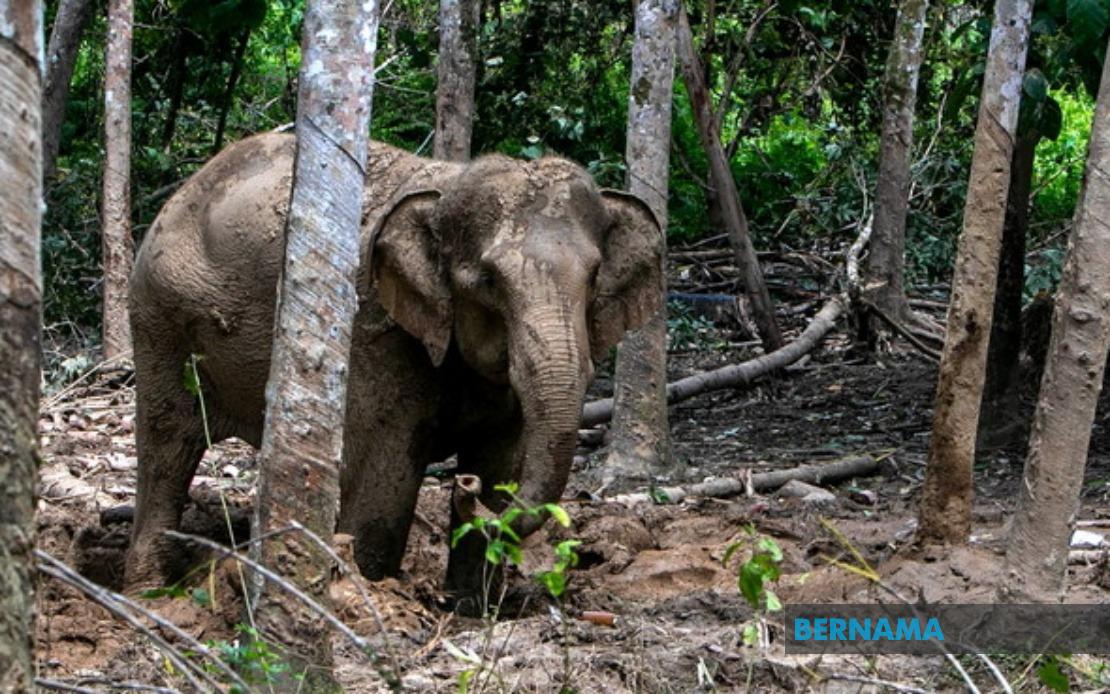
A resident of Kampung Orang Asli Perjek in the Legap Resettlement Scheme at Sungai Siput, Perak, sustained serious injuries last Friday after being attacked by an elephant while attempting to drive a herd away from the village. The incident underscores the intensifying pressures on both wildlife and indigenous communities across Peninsular Malaysia as habitat loss forces elephants into closer contact with human settlements, particularly in agricultural areas where villagers depend on subsistence farming.
Authorities from the Department of Wildlife and National Parks (PERHILITAN) Peninsular Malaysia responded to the scene approximately 10 pm after receiving emergency notification of the attack. Initial investigations revealed that four elephants had penetrated the settlement's periphery and begun foraging on cassava and banana crops cultivated by residents. The victim, alongside other villagers, made an effort to chase the animals away from their farmland—a common but dangerous response when wildlife threatens food security in rural communities with limited alternative income sources.
During the confrontation, the man positioned himself too near the herd and came under direct assault from one of the elephants. He incurred significant injuries accompanied by blood loss and briefly lost consciousness before being rescued by fellow villagers. He was transported to Raja Permaisuri Bainun Hospital in Ipoh, where medical personnel reported his condition as stable. The incident highlights the vulnerability of indigenous populations living on the margins of wildlife corridors, where traditional subsistence practices bring them into unavoidable conflict with large animals displaced by deforestation and habitat fragmentation.
Drone-assisted monitoring by PERHILITAN personnel later confirmed that all four elephants had departed the village, allowing authorities to declare the immediate threat contained. The department announced that it had implemented preventative strategies designed to mitigate the likelihood of further confrontations between humans and wildlife in the Legap Resettlement Scheme. These interventions reflect a broader shift toward technology-enabled wildlife management, though critics argue that such measures often arrive only after incidents have already occurred and communities have suffered losses.
The victim's family will receive support through the Wildlife Attack Victim Assistance initiative, a relief programme overseen by the Ministry of Natural Resources and Environmental Sustainability. This assistance scheme exists in recognition of the reality that rural and indigenous communities bear a disproportionate share of the costs associated with wildlife conservation—absorbing crop damage, livestock losses, and personal injury while national parks and protected areas receive significantly greater investment and protection. Such programmes attempt to acknowledge this imbalance, though advocates for Orang Asli communities contend that compensation alone cannot substitute for addressing the root causes of human-wildlife conflict.
PERHILITAN has issued public guidance cautioning citizens against attempting to manage dangerous wildlife independently, stressing that direct confrontation with elephants and other large animals dramatically elevates the risk of serious harm or fatality. This advisory reflects a longstanding challenge in wildlife management across Southeast Asia: the tension between protecting agricultural livelihoods and protecting animal populations. For villagers subsisting on small plots of land with minimal resources, warnings to avoid direct action ring hollow when their crops—essential to family survival—face destruction by foraging elephants.
The Sungai Siput region has experienced recurring elephant incursions in recent years as populations in the Belum-Temengor forest complex grow and their traditional ranges become increasingly fragmented. The Legap Resettlement Scheme itself represents a colonial-era attempt to integrate Orang Asli communities into settled agriculture, a policy that has positioned indigenous residents in precisely the interface zones where wildlife conflict proves most intense. The proximity of the settlement to elephant movement corridors creates a structural problem that management interventions can mitigate but not fundamentally resolve without larger landscape-level conservation efforts.
Residents encountering wildlife emergencies may now contact PERHILITAN through its dedicated hotline at 1-800-88-5151 or lodge formal complaints via the Public Complaints Management System (SISPAA) accessible through the department's website. These mechanisms represent attempts to professionalise and centralise response procedures, though accessibility remains challenging in rural areas with limited telecommunications infrastructure. The establishment of such reporting channels reflects international best practice in wildlife management, yet their effectiveness depends heavily on the capacity and responsiveness of field personnel in remote locations.
The attack comes amid broader regional concerns about elephant-human conflict across Thailand, Malaysia, and Indonesia, where agricultural expansion and deforestation have squeezed wildlife populations into diminishing spaces. Conservation organisations operating across Southeast Asia have increasingly advocated for landscape-level interventions—including wildlife corridors, habitat restoration, and compensation schemes—rather than purely reactive crisis management. Malaysia's experience in the Sungai Siput area offers lessons relevant to other nations grappling with similar challenges as development pressures intersect with the needs of both wildlife and vulnerable human communities dependent on natural resources.

