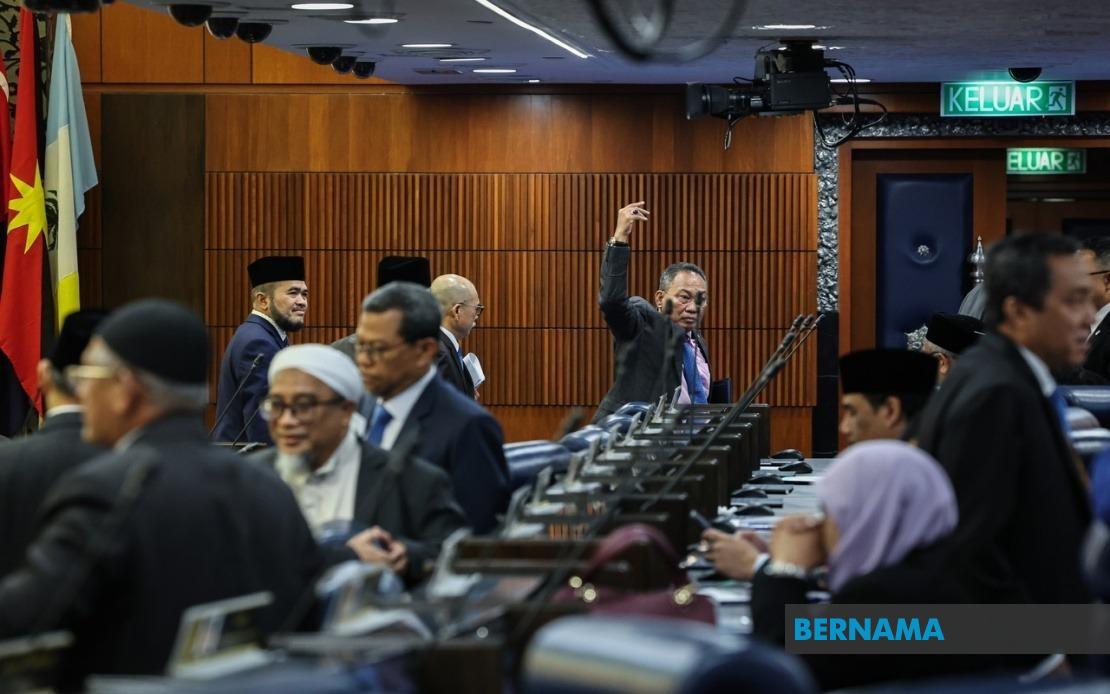
The opposition's walkout from yesterday's Dewan Rakyat session has prompted sharp criticism from policy analysts, who contend that the boycott undermines Parliament's fundamental role in holding the executive accountable. Perikatan Nasional lawmakers, led by Opposition Leader Datuk Seri Hamzah Zainuddin, abandoned the special sitting convened to discuss the Royal Commission of Inquiry findings into Tabung Haji—an institution managing funds for approximately 10 million Muslim depositors across Malaysia. The absence of PN MPs during the ministerial briefing by Minister in the Prime Minister's Department (Religious Affairs) Dr Zulkifli Hasan and the ensuing debate has drawn scrutiny for potentially compromising legislative oversight of an organisation central to the nation's Islamic financial ecosystem.
Associate Professor Dr Mazlan Ali from Universiti Teknologi Malaysia articulated the core concern underpinning expert disapproval: opposition representatives possess an institutional duty to interrogate government actions through parliamentary mechanisms, a responsibility they forfeited through their withdrawal. The RCI report detailed management and operational deficiencies spanning 2014 to 2020, findings that demand rigorous public examination to protect depositor interests and inform future policy. By vacating the chamber, PN MPs eliminated opportunities to pose direct questions, demand ministerial clarifications, and create an official parliamentary record of government responses—tools essential for transparency in matters affecting ordinary Malaysians' savings and financial security. The boycott thus transformed a critical accountability forum into an incomplete proceeding, diminishing public confidence in legislative scrutiny of institutions handling billions in deposited funds.
The opposition's stated justification centered on the absence of Prime Minister Datuk Seri Anwar Ibrahim, whose ongoing hospitalisation for medical treatment prevented his attendance. PN Chief Whip Datuk Seri Takiyuddin Hassan formally proposed postponing the session, citing the simultaneous medical treatment of both the Prime Minister and Deputy Prime Minister Datuk Seri Fadillah Yusof. However, Mazlan Ali contested the logic underlying this position, observing that Dr Zulkifli Hasan, as the responsible minister within his portfolio, possessed sufficient authority and expertise to furnish comprehensive explanations regarding the RCI's conclusions and the government's remedial actions. In parliamentary democracies across Southeast Asia and beyond, deputy or sectoral ministers routinely represent government positions during legislative proceedings, a convention designed precisely to maintain continuity of accountability regardless of individual absences. The insistence on prime ministerial participation, Mazlan suggested, represented an artificial elevation of political theatre over substantive governance.
Dr Nazreena Mohammed Yasin, a senior lecturer in social sciences at Universiti Tun Hussein Onn, reinforced this analytical perspective by emphasising Parliament's structural role as an institutional platform for rigorous examination of government conduct. The Dewan Rakyat debate format permits MPs to scrutinise RCI findings systematically, pose targeted inquiries, and extract governmental commitments to specific accountability measures—capabilities that boycotting MPs surrendered entirely. She underscored that parliamentary participation constitutes the most effective mechanism for realising the check-and-balance function beyond mere symbolic opposition; through active engagement, elected representatives transform criticism into substantive oversight, ensuring government explanations reach both the parliamentary record and the public domain. The transparency afforded by such processes strengthens democratic accountability, a principle that applies uniformly regardless of which political coalition commands the legislative majority.
The implications of the opposition's absence extend beyond the immediate parliamentary session, touching upon perceptions of commitment to constituent interests. Mazlan Ali cautioned that the boycott risks projecting an image that opposition politics prioritises partisan positioning over championing depositor welfare—a messaging hazard in an institution whose viability and ethical management demand sustained, non-partisan scrutiny. For the 10 million Tabung Haji account holders, many of whom rely upon these savings for pilgrimage expenses and financial security, the withdrawal of opposition parliamentary voices may signal reduced legislative pressure ensuring the government implements RCI recommendations thoroughly and timeously. This perception, whether fair or not, potentially undermines public confidence in opposition efficacy, particularly among constituencies that depend heavily on Tabung Haji services.
Dr Nazreena further highlighted that government accountability to Parliament operates independently of prime ministerial participation, vesting responsibility across all relevant ministers within their respective portfolios. The minister tasked with explaining Tabung Haji governance reforms bears equal statutory duty to respond to parliamentary interrogation, rendering the Prime Minister's medical absence an insufficient justification for legislative disengagement. She stressed that MPs bear dual responsibility: not merely to voice criticism but to ensure such criticism generates substantive governmental responses and traceable follow-up action through institutional mechanisms. By absenting themselves, opposition lawmakers relinquished their capacity to lodge questions formally, demand timeline commitments for implementation, and maintain parliamentary records documenting government pledges—creating accountability deficits that benefit neither depositors nor democratic governance.
The RCI report itself merited comprehensive parliamentary examination given its scope and implications. The inquiry identified significant weaknesses in Tabung Haji's management and operational procedures during the 2014-2020 period, a span encompassing multiple governments and administrations. Systematic parliamentary review offered opportunities to extract cross-party consensus regarding governance reforms, identify systemic vulnerabilities requiring legislative remedies, and establish performance benchmarks against which future administrations could be measured. Opposition participation would have enriched this process through adversarial questioning and alternative policy perspectives, strengthening the eventual reforms by subjecting them to pluralistic scrutiny. The boycott thus diminished not only immediate accountability but the quality and robustness of long-term institutional improvements.
Considering the political context, the decision to withdraw reflects escalating tensions between government and opposition over parliamentary procedures and ministerial attendance requirements. However, both analysts interviewed rejected the notion that such tensions justify abandoning legislative duties. Parliamentary democracies function through institutional norms permitting vigorous opposition even—indeed, especially—during disputes regarding executive conduct. Walkouts constitute extraordinary measures warranted only by extraordinary circumstances: constitutional violations, denial of parliamentary access, or procedural illegality. The medical absence of senior political figures, while inconvenient, falls short of such thresholds and should not justify legislative disengagement on matters affecting public welfare.
The broader implications for Malaysian parliamentary practice merit consideration as institutional precedent. If opposition majorities establish expectations that prime ministerial presence constitutes a prerequisite for legislative engagement, Parliament's functionality becomes hostage to individual attendance rather than institutional responsibilities. This dynamic weakens the chamber's capacity to function during health crises, international travel, or other legitimate absences affecting senior officials. Conversely, if governments recognise opposition walkouts as acceptable responses to attendance disagreements, they may rationalise their own parliamentary absences, eroding reciprocal norms of engagement. Both trajectories undermine democratic governance by subordinating institutional accountability to political maneuvering.
For Malaysian depositors and the broader public, the immediate consequence involves reduced parliamentary scrutiny of Tabung Haji governance reforms at a critical juncture. The RCI's findings detailed weaknesses requiring corrective action; parliamentary debate would have illuminated government intentions, timelines, and resource commitments addressing these deficiencies. Opposition participation would have ensured public disclosure of any contentious recommendations, departmental disputes, or budgetary constraints potentially limiting reform scope. The boycott thus obscured public understanding of how thoroughly the government intends addressing institutional vulnerabilities—an information deficit that ultimately affects depositor confidence and institutional credibility.
Moving forward, analysts suggest opposition parties must balance principled objections to government procedures with statutory obligations to constituents seeking legislative representation on consequential matters. The Tabung Haji debate presented precisely the forum wherein such representation should occur, regardless of political disagreements regarding attendance protocols. Parliament functions most effectively when all represented constituencies engage substantively, even contentiously, within its chambers. The walkout, though politically expressive, abdicated this fundamental responsibility to millions of depositors whose interests depend upon rigorous parliamentary oversight of institutional management.

