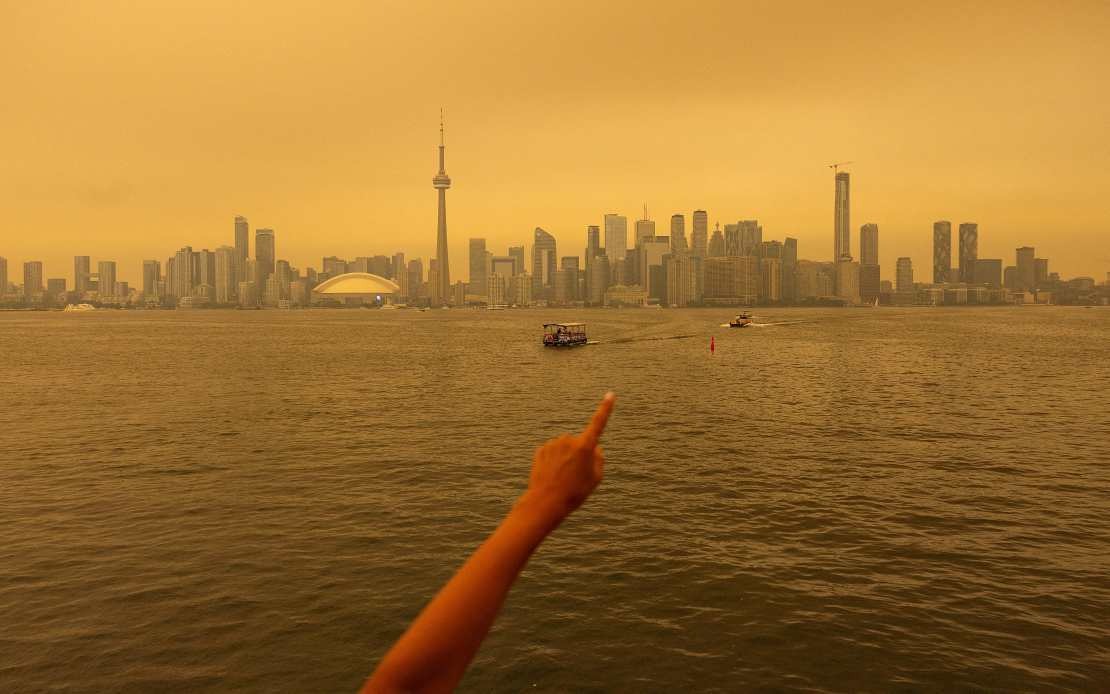
Extensive wildfires spreading across northwestern Ontario have triggered a public health emergency across Canada's most populous urban centres, with both Toronto and Ottawa experiencing hazardous air conditions that authorities warn could persist for days. The scale of the crisis became apparent on Wednesday morning when Toronto's air quality index ranked among the worst of any major city globally, a stark reminder of how regional environmental disasters can cripple metropolitan regions. The convergence of over 100 active fire zones, humid weather patterns, and geographical factors has created a public health challenge that extends far beyond the immediate fire zones, affecting millions of residents in Canada's densest population corridor.
Environment Canada classified Toronto's Air Quality Health Index as "very high risk," a designation that prompted health authorities to issue widespread alerts and recommend that residents, particularly the elderly and those with respiratory conditions, remain indoors with windows closed. The capital city of Ottawa simultaneously grappled with its own air quality crisis, where a combination of wildfire smoke and elevated humidity levels created conditions that trapped pollutants near ground level. Witnesses described the atmosphere as surreal, with the sky taking on a distinctly yellow hue and visibility reduced to dangerous levels in many neighbourhoods. The humidity, rather than dispersing smoke particles upward into the atmosphere, functioned as a trapping mechanism that concentrated contamination in the urban environment, creating conditions rarely seen in Canadian cities outside of extreme weather events.
The crisis took on dramatic proportions when social media circulated footage of a Canadian National (CN) train crew encountering active wildfires near Armstrong, Ontario. The video, recorded late Monday by a locomotive crew member, captured towering flames engulfing forests on both sides of the rail line, casting an intense red glow throughout the locomotive cabin and demonstrating the proximity of the fire threat to critical infrastructure. CN confirmed the video's authenticity and disclosed that the train crew had been safely evacuated, preventing what could have become a catastrophic incident involving both loss of life and damage to freight infrastructure. The incident underscored how rapidly wildfires can advance and threaten transportation corridors that many Canadians depend upon for commerce and supply chain continuity.
In response to the escalating fire situation, CN announced a temporary suspension of train operations across the affected section, a decision that has significant implications for regional freight movement and cross-border commerce. The suspension affects a critical transportation artery connecting resource-extraction regions with major population centres, and the disruption signals how environmental emergencies can cascade into economic disruptions affecting supply chains far beyond the immediate disaster zone. Goods destined for markets across North America face delays as the rail operator prioritizes the safety of personnel and equipment over schedule adherence, a pragmatic decision that reflects the severity of conditions on the ground.
Emergency responders have initiated mass evacuations from several communities in the wildfire zone, with residents fleeing their homes as flames advance toward populated areas. The evacuation orders represent a significant displacement of people and highlight the direct threat posed by the fire advancement across the region. Local authorities coordinated sheltering and support services for evacuees, recognizing that this crisis extends beyond air quality management to encompass immediate threats to life and property. The human cost of these environmental events remains central to understanding their full impact on Canadian society, even as public attention often focuses on urban air quality consequences.
Meteorological forecasts from weather authorities provide little comfort to affected residents, as prevailing airflow and wind patterns are expected to sustain the heavy smog conditions for several additional days. The persistence of smoke represents a sustained health emergency for urban populations, as the cumulative exposure to elevated particulate matter and air pollutants increases risks for cardiovascular and respiratory complications across demographic groups. The extended timeline for air quality recovery suggests that individuals with pre-existing health conditions should take additional precautions, and public health systems should anticipate increased emergency department visits related to respiratory distress.
For Malaysia and Southeast Asia, this event carries instructive lessons regarding transboundary air pollution and climate-related environmental challenges. The Ontario wildfires demonstrate how regional fire events can create continental-scale air quality emergencies affecting major cities, a phenomenon that Malaysians understand intimately given recurring haze episodes affecting the region during burning seasons in Indonesia. The Canadian situation showcases how developed nations with sophisticated air quality monitoring systems communicate hazard information to the public, and how emergency protocols prioritize both immediate safety and longer-term health protection. The suspension of freight rail operations also illustrates economic vulnerabilities that emerge when environmental disasters disrupt critical transportation infrastructure, a consideration relevant to Southeast Asian economies dependent on continuous supply chain flows.
The wildfire crisis reflects broader climatic patterns that favour larger and more frequent fire seasons, a trend projected to intensify across multiple continents as temperature regimes shift. Ontario's fire season typically peaks in summer months, but the intensity and geographic spread of the current outbreak suggest that baseline assumptions about seasonal fire patterns may require revision. Climate scientists attribute such intensification to warming temperatures that extend fire seasons, reduce fuel moisture content, and create atmospheric conditions that favour rapid fire spread. For Canadian policymakers, this event reinforces the urgency of investments in firefighting capacity, land management practices, and climate adaptation strategies that recognize wildfire risk as a persistent feature of the environmental landscape rather than an anomalous occurrence.
The combination of wildfire impacts on air quality, transportation disruption, and public health risks demonstrates the interconnected nature of environmental emergencies in the 21st century. A single environmental event cascades through multiple systems simultaneously—atmospheric circulation patterns spread smoke across provinces, rail networks become inoperable due to safety threats, and urban populations face health constraints that affect productivity and quality of life. Managing these compound effects requires coordination across multiple government levels and sectors, from emergency response agencies to public health authorities to transportation regulators. The Ontario crisis serves as a contemporary illustration of how climate variability, even in developed nations with substantial resources, can overwhelm existing infrastructure and impose significant economic and health costs that ripple across societies.

