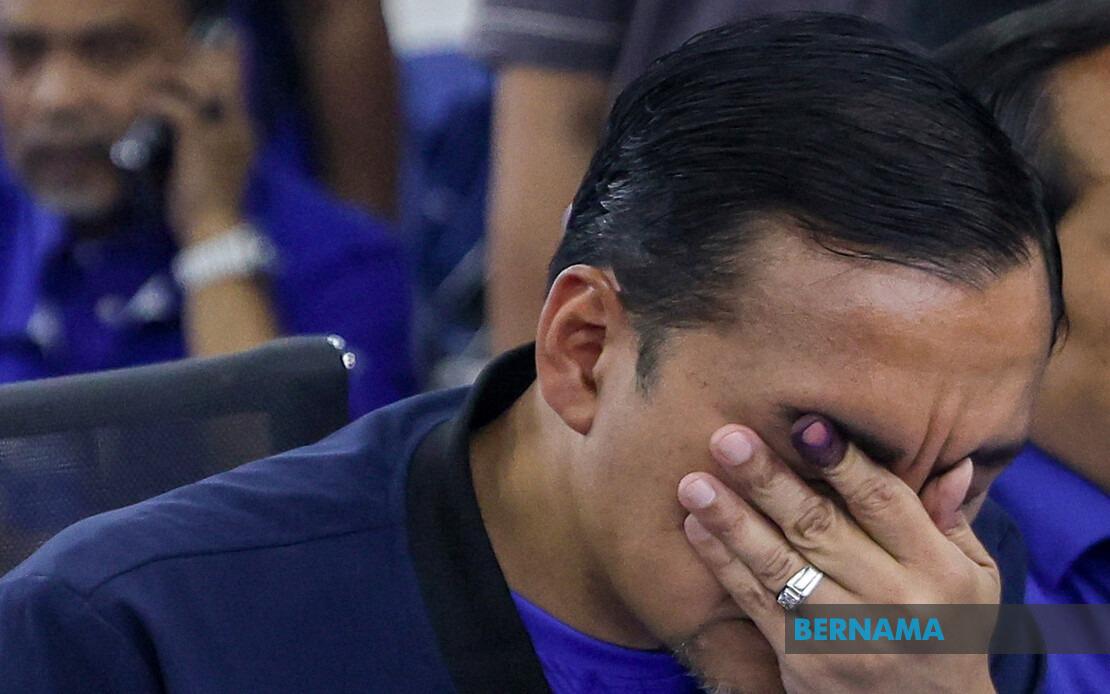
Datuk Onn Hafiz Ghazi has consolidated his grip on the Machap state constituency, emerging victorious in the 16th Johor state election held on July 11 with a commanding performance that underscores his continued political dominance in the heartland. The Johor Menteri Besar and state Barisan Nasional chairman secured 20,382 votes in what turned out to be a two-way contest, according to results formally announced by the Election Commission, propelling the BN's campaign messaging of stability and experienced governance in the state.
The scale of Onn Hafiz's triumph becomes evident when examining his winning margin. He defeated Pakatan Harapan candidate Nur Hafiz Roslan by a decisive 15,375 votes, a performance that indicates substantial voter confidence in both his personal leadership credentials and the broader BN platform. The enlarged majority is particularly significant given the straightforward nature of the contest, which saw no fragmentation of the opposition vote that might have artificially inflated the winning margin. This result stands as a powerful endorsement from Machap constituents who chose BN's vision over PH's alternative proposals.
The electoral performance gains fresh significance when benchmarked against Onn Hafiz's previous triumph in 2022. Two years ago, he won the seat with a considerably slimmer majority of just 6,543 votes, though that contest unfolded in a far more crowded field. In the 2022 election, the Machap race featured four substantial contenders—Perikatan Nasional's Azlisham Azahar, MUDA's R. Sangaran, and PEJUANG's Sharuddin Md Salleh all mounted credible campaigns alongside the BN campaign. The fragmented nature of that contest meant that even with a clear victory, Onn Hafiz's winning margin reflected the divided opposition landscape.
The shift from a four-cornered contest to a straight fight between BN and PH in 2024 offers crucial insights into the evolving political dynamics in Johor's constituencies. The absence of Perikatan Nasional and other opposition splinters suggests either a consolidation of anti-BN forces into the PH banner or, conversely, reduced enthusiasm among alternative opposition groupings for contesting this particular seat. Such consolidation patterns often emerge when parties assess ground sentiment and decide where to concentrate their resources and political capital.
Onn Hafiz's role as state BN chairman adds another dimension to understanding this result. His personal electoral success carries ramifications beyond the individual constituency, serving as a barometer for the broader coalition's health in Johor ahead of the next federal general election cycle. A commanding victory in his own backyard typically strengthens a regional chairman's position within party hierarchies and enhances his credibility when coordinating campaign strategies across multiple constituencies.
The 15,375-vote margin also indicates that BN's message penetrated effectively across different demographic segments within Machap. The constituency encompasses both urban and semi-rural areas, requiring coalition candidates to address diverse concerns ranging from urban development and service delivery to rural agricultural support and infrastructure investment. Onn Hafiz's substantial victory suggests that voters across these varied communities found his track record and vision persuasive.
For the broader Malaysian political landscape, this Johor result carries implications for understanding post-2022 electoral trends. The 2022 general election witnessed significant shifts in voter behaviour, particularly in coastal and urban-adjacent constituencies where swing voting became pronounced. Machap's return to BN with an expanded majority suggests that the coalition may have stabilised voter sentiment in at least portions of the Johor electorate, reversing or halting some previous erosion of support.
The Machap outcome also provides data points relevant to PH's electoral strategy heading into future contests. The rejection of Nur Hafiz Roslan, despite PH's continued efforts to challenge BN dominance, indicates that opposition consolidation alone may not suffice without addressing underlying voter concerns about capability, vision, or local representation. PH will likely conduct post-election analysis to understand whether the defeat reflected candidate-specific factors or broader dissatisfaction with the coalition's Johor proposals.
Onn Hafiz's retention of Machap without requiring coalition partners to field competing candidates hints at BN's continued organisational depth in Johor. Unlike states where internal coalition tensions occasionally surface through multi-party nominations, the BN machinery in this region appears sufficiently coordinated to concentrate its entire machinery behind a single candidacy. This internal cohesion, particularly crucial during state-level elections where federal party dynamics play reduced roles, strengthens BN's capacity to wage competitive campaigns across multiple fronts simultaneously.
The election outcome also reflects voter preferences regarding continuity versus change in state governance. By reelecting Onn Hafiz with an enlarged majority, Machap constituents signalled satisfaction with the BN's administration of state affairs and the Menteri Besar's personal leadership of that administration. Such endorsements typically carry weight within government circles, often translating into enhanced resource allocation and political priority for constituencies that deliver strong performance for ruling coalitions.
Looking forward, Onn Hafiz's strengthened electoral standing may influence succession planning discussions within BN's Johor leadership structures. Strong personal mandates at the state election level often factor prominently in deliberations about leadership transitions and ministerial appointments, particularly in states where electoral legitimacy carries significant symbolic weight. The Machap result thus extends its relevance beyond the immediate contest to encompass broader questions about BN's leadership trajectory in Malaysia's second-largest state.

