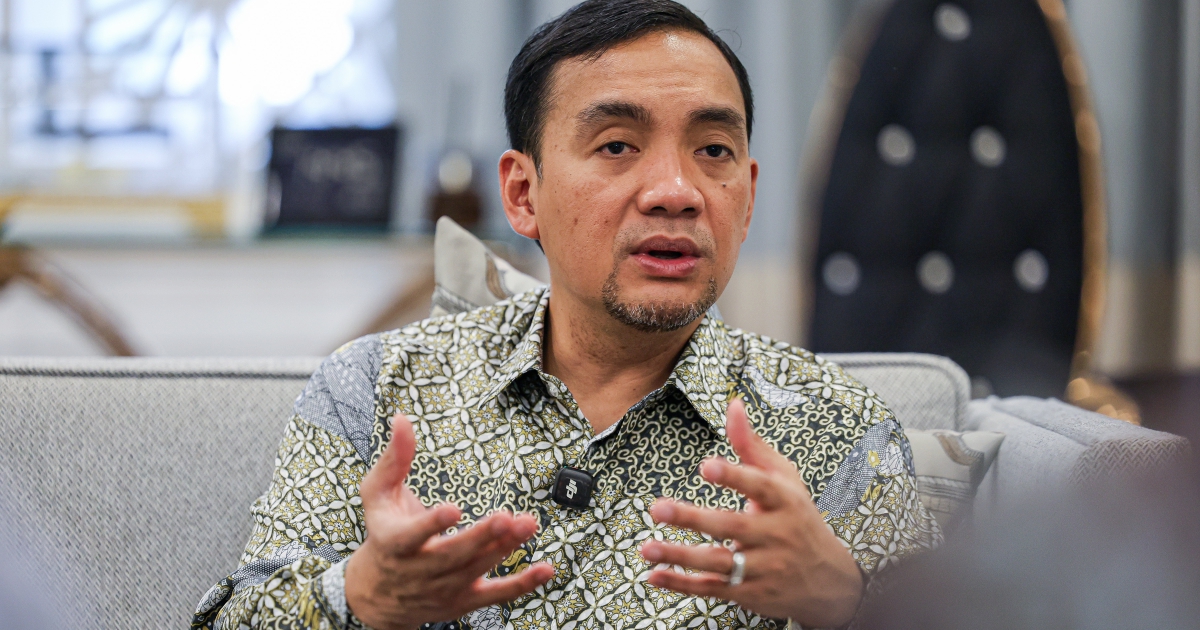
Johor's caretaker Menteri Besar Datuk Onn Hafiz Ghazi has publicly rejected allegations that he claimed the palace issued a directive for the dissolution of the state assembly, directly disputing assertions attributed to him by Datuk Dr Mohd Puad Zarkashi.
The denial comes amid ongoing political manoeuvring in Johor ahead of state elections, a critical moment for the second-largest state in Malaysia by economy. The question of whether the palace initiated the assembly dissolution has become a focal point of political discourse, touching on the constitutional relationship between the Sultan's office and the chief minister, and the separation of powers inherent in Malaysia's constitutional monarchy structure.
Onn Hafiz's refutation carries significance beyond mere political posturing. If the palace had indeed ordered the dissolution, it would suggest the Sultan took a direct role in legislative proceedings rather than operating through conventional constitutional channels where the Menteri Besar advises the Sultan on such matters. This distinction matters considerably in Malaysia's system, where the Sultan's constitutional powers are extensive but traditionally exercised on the advice of elected leadership. Any deviation from this principle would represent an unusual exercise of executive authority.
Datuk Dr Mohd Puad Zarkashi's original claim that Onn Hafiz attributed the dissolution to a palace order now faces serious contradiction. Without corroborating evidence or further clarification, the assertion remains unsubstantiated. In Malaysian politics, claims about royal directives carry particular weight given the special constitutional position of the monarchy, making such allegations demands for careful verification before wider acceptance.
The timing of this dispute is noteworthy. Johor has experienced considerable political volatility in recent years, with shifts in state government composition reflecting broader national political realignments. The assembly dissolution, presumably leading to fresh elections, represents a significant democratic exercise that will reshape the state's political landscape. Questions about the genesis of such a major decision naturally invite scrutiny from political rivals and observers.
For Malaysian readers, particularly those in Johor, this exchange underscores the sometimes opaque nature of high-level political decision-making. The public narrative surrounding major state decisions often emerges piecemeal through claims, denials, and counter-claims rather than through direct institutional communication. This opacity can undermine public confidence in the transparency of governance, even when decisions themselves remain constitutionally valid.
The distinction between the palace "ordering" a dissolution and the Menteri Besar advising the palace to dissolve the assembly represents more than semantic precision. It reflects fundamental questions about political agency and responsibility. A Menteri Besar who acts independently carries different accountability than one who merely implements a higher authority's decision. Malaysian voters expect elected leaders to exercise discretionary judgment in matters affecting their state, not simply execute instructions from unelected quarters.
Onn Hafiz's position as caretaker Menteri Besar adds another layer of complexity. In Malaysia's system, caretaker administrations occupy a liminal space—they possess executive authority but lack the legitimacy of a newly elected government. Caretaker leaders typically operate with heightened constraints, avoiding major policy decisions pending electoral validation. Whether a caretaker should even initiate assembly dissolution raises separate constitutional questions, though such actions have occurred in Malaysian political history.
The broader context of Johor politics reveals a state grappling with competing power centres and political allegiances. The state's economic importance and its historical significance in Malaysian politics mean that governance questions receive outsized attention. Any ambiguity about how major decisions are made inevitably attracts scrutiny from rival factions seeking advantage.
For constitutional scholars and observers of Malaysian governance, this incident illustrates recurring tensions between the written constitution and political practice. While the constitution clearly delineates the Sultan's powers, the interplay between formal authority and political reality often operates in less explicit ways. Understanding who actually initiates major decisions—the elected government or the palace—matters for assessing whether Malaysia's constitutional monarchy functions according to its intended design.
The forthcoming Johor elections will ultimately determine whether voters validate the decision to dissolve the assembly and hold fresh polls. Until then, the question of who initiated this decision remains contested political terrain. Onn Hafiz's denial shifts attention toward determining the actual sequence of events and the genuine motivations underlying the assembly dissolution, a clarification that would better serve public understanding of state governance.

