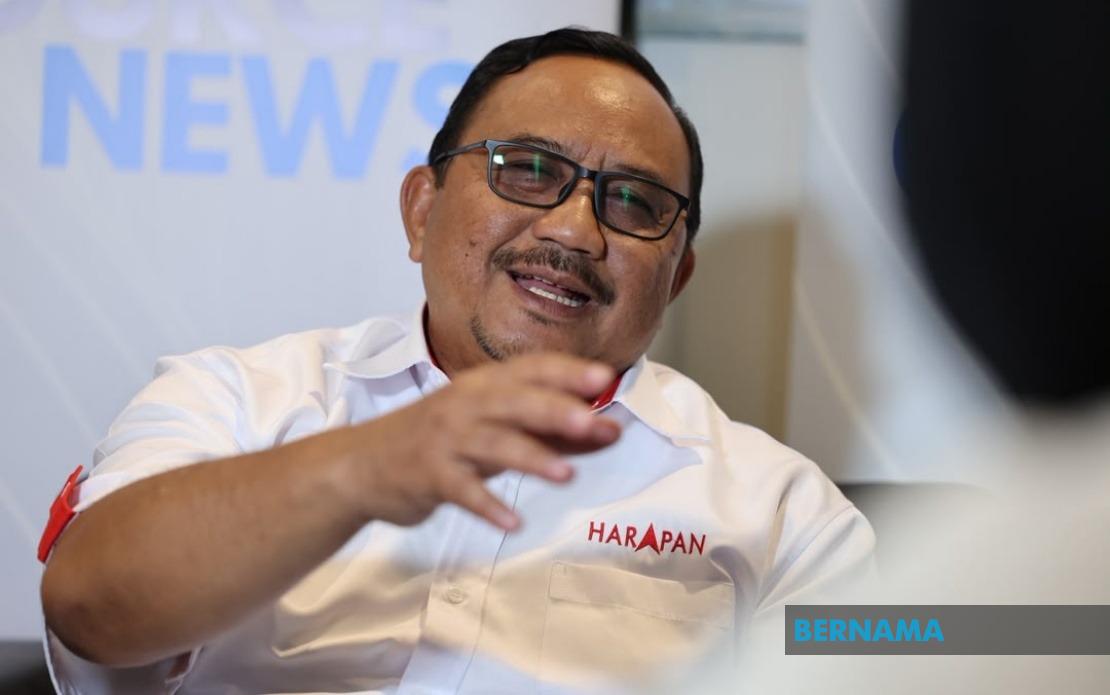
Seeking to address persistent connectivity challenges affecting rural communities, Batu Pahat MP Onn Abu Bakar has championed a Wireless Bridging System initiative targeting seven underserved zones within the Senggarang state constituency. The proposal, formally submitted to the Academy of Sciences Malaysia through the Science, Technology and Innovation Ministry, represents an attempt to leverage academic expertise and government resources to tackle what residents describe as a critical infrastructure gap during the digital age.
The infrastructure project hinges on collaboration between the government and Universiti Tun Hussein Onn Malaysia, with initial funding requirements estimated between RM100,000 and RM200,000. Onn, who is contesting the Senggarang seat as the Pakatan Harapan–PKR candidate in the concurrent state elections, frames the initiative as part of his broader development vision for the constituency, positioning digital access alongside other essential services in his campaign platform.
The selected implementation zones reflect the distributed nature of the connectivity problem across rural Johor. Jalan Kampung Sungai Keluang Darat, Jalan Kampung Parit Kadir, Jalan Kampung Parit Seri Bahrom, Kampung Punggur Darat, Sri Merlong, Simpang 6, and the vicinity of Seri Bahrom Mosque represent pockets where residents currently experience severely degraded signal strength, typically receiving only one to two bars of mobile coverage. This fragmentation suggests that the issue extends beyond simple network capacity constraints and reflects gaps in existing telecommunications infrastructure planning.
Onn's emphasis on ensuring inclusive participation in the digital economy resonates with broader Malaysian policy objectives around the digital divide. By invoking the language of leaving no residents behind, he anchors the proposal within national development frameworks that increasingly recognise internet access as fundamental infrastructure rather than a luxury service. His position as a Member of Parliament provides institutional leverage with agencies including the Malaysian Communications and Multimedia Commission and the Communications Ministry, facilitating the navigation of bureaucratic approval processes that technological projects typically encounter.
The technical soundness of the proposed solution rests substantially on prior successful implementations. Professor Muhammad Ramlee Kamarudin from UTHM's Electrical and Electronic Engineering Faculty confirmed that the WBS proposal was formally submitted to MOSTI in February, with presentations occurring in early March. Critically, UTHM has already demonstrated the viability of this technology in Kampung Simbuan Tulid, Keningau, Sabah, where the wireless bridging system has proven capable of delivering reliable connectivity to geographically isolated communities that conventional cellular networks struggle to serve effectively.
The Sabah precedent carries particular weight for evaluating the Senggarang proposal's feasibility. That earlier deployment established that WBS technology can function durably in terrain and climatic conditions comparable to rural Johor, while generating measurable improvements in internet reliability and speed for end users. The continuous supervision commitment extending to 2027 indicates institutional confidence in the technology's longevity and underscores the importance of sustained technical monitoring rather than deployment-and-abandon approaches that have sometimes characterised rural infrastructure projects in Malaysia.
The timing of this initiative warrants consideration within the electoral context. Senggarang encompasses one-third of the Batu Pahat parliamentary constituency, alongside Rengit and Penggaram, and will witness a three-way contest involving Onn Abu Bakar representing the PH–PKR coalition, Mohd Yusla Ismail standing for BN–UMNO, and Datuk Mohd Rashid Hasnon contesting for PN–Bersatu. The infrastructure proposal serves as tangible evidence of policy engagement with specific constituent needs, potentially resonating particularly among rural voters for whom connectivity deficits directly impact economic opportunities, agricultural productivity, and access to essential services including healthcare and education information.
The digital divide that this project addresses reflects accumulating disparities between urban and rural development in Malaysia. While Kuala Lumpur and other metropolitan centres enjoy saturated 4G and emerging 5G coverage, peripheral constituencies like Senggarang remain vulnerable to service gaps where terrain, population density, or commercial unprofitability have discouraged telecommunications companies from comprehensive infrastructure investment. This creates a governance challenge that individual parliamentary initiatives can only partially address, suggesting the need for systemic policy adjustments around rural connectivity funding and incentivisation.
The broader implications extend beyond Senggarang specifically. If successfully implemented and properly evaluated, the WBS project could serve as a replicable model for other Malaysian constituencies grappling with analogous connectivity deficits. The collaboration between UTHM, government agencies, and elected representatives establishes a framework that potentially merits scaling to additional underserved regions, provided adequate funding mechanisms and technical capacity exist. The emphasis on research partnerships rather than purely commercial solutions offers an alternative pathway to connectivity that may prove more economically feasible than expecting telecommunications operators to serve markets they consider insufficiently profitable.
From a voter perspective, the proposal's substance and implementation timeline remain critical assessment factors. Initial approval from MOSTI and subsequent funding allocation would typically require several months, potentially extending well beyond the electoral cycle. Voters in Senggarang must therefore evaluate whether they view such proposals as credible commitments likely to be pursued post-election, or as campaign positioning without durable institutional backing. The involvement of UTHM researchers with established track records lends credibility, though political transitions could affect project continuity if electoral outcomes shift constituency representation or parliamentary majorities.
The connectivity challenge in areas like Senggarang intersects with Malaysia's broader economic competitiveness agenda. Rural residents unable to reliably access broadband face reduced opportunities for e-commerce participation, telework engagement, or digital skills development. Agricultural producers require internet connectivity for supply chain coordination and market price information. Students in remote areas encounter learning disadvantages when digital resources remain inaccessible. These compounding effects suggest that infrastructure deficits carry economic costs extending well beyond inconvenience, justifying policy prioritisation and resource allocation despite the relatively modest funding amounts involved.
With Johor voters scheduled to cast ballots on July 11, with early voting commencing July 7, the Senggarang contest and the various infrastructure proposals shaping that race merit close electoral observation. The WBS initiative represents an attempt to translate specific infrastructure needs into electoral positioning, while simultaneously advancing legitimate development objectives. Whether such projects ultimately generate measurable improvements in constituent welfare depends not merely on election outcomes, but on the sustained institutional commitment required for complex technological implementation in challenging operational environments.

