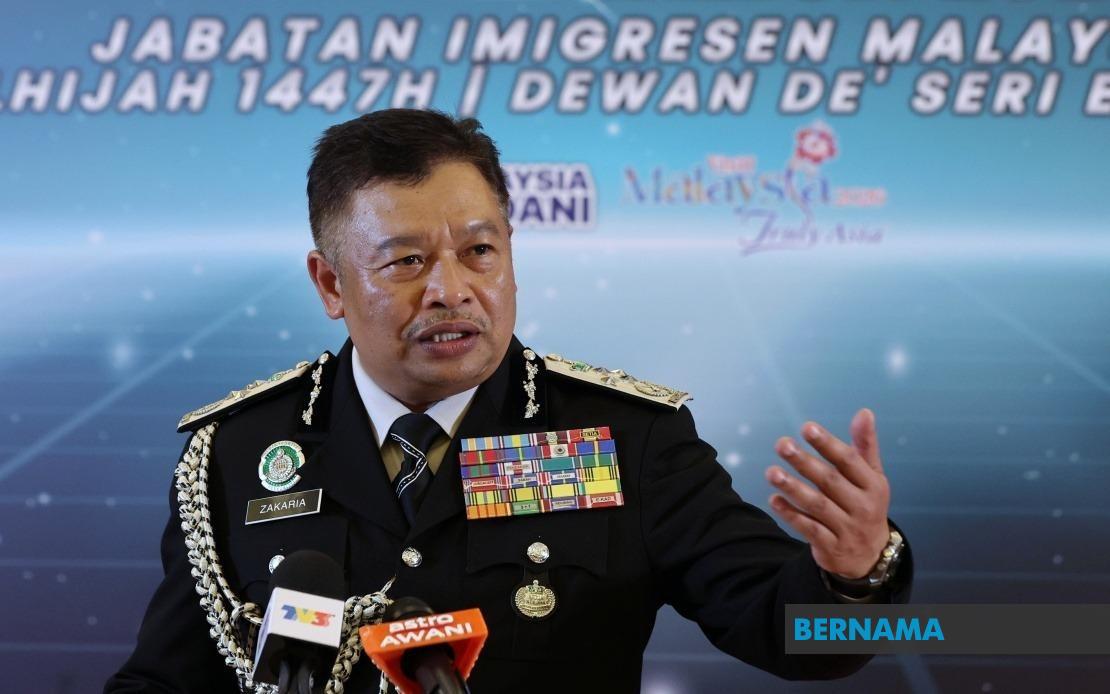
Malaysia's Immigration Department has narrowed the scope of a passport processing problem to just two airlines, according to Immigration Director-General Datuk Zakaria Shaaban. Speaking at a press conference in Putrajaya on August 13, he clarified that the technical complications affecting Malaysian passports with validity periods exceeding 10 years are isolated to these carriers' internal systems rather than reflecting any broader international rejection of Malaysian travel documents.
Zakaria stressed an important distinction that may ease concerns among Malaysian travellers and passport holders. The complications do not indicate that foreign countries have become reluctant to accept Malaysian passports, a concern that could have sparked significant diplomatic or consular complications. Instead, the problem remains contained within the technological infrastructure that specific airlines employ when verifying and processing passenger documentation at check-in counters and during booking procedures. This technical limitation affects how their systems read and validate the extended validity periods now being offered to Malaysian passport applicants.
The Immigration Department has taken a measured approach to resolving the issue, emphasizing that it is not attributing blame to the airlines themselves. These systems operate on a global scale and serve multiple countries' travel documents without incident, Zakaria explained. The fact that other airlines manage Malaysian passports with validity periods exceeding 10 years without difficulty suggests the problem is specific to the technical architecture of these two carriers rather than a systemic flaw in the passports themselves or in international standards governing their acceptance.
The temporary suspension announced by the Immigration Department specifically targets the additional validity period that extends beyond the standard 10-year window. The core 10-year validity period for Malaysian International Passports remains unchanged and continues to be issued normally. This distinction is crucial for understanding the department's response—it is not eliminating extended passport validity altogether but rather pausing the bonus months that had been added in certain circumstances until the airline system incompatibilities can be resolved in coordination with the International Civil Aviation Organization (ICAO).
Previously, the Immigration Department had implemented a policy designed to maximize the value Malaysian citizens received from their passport renewals. When applicants still possessed substantial validity remaining on their existing passports—more than six months—the department would add an extra six months to the validity period of the new passport being issued. This approach aimed to prevent Malaysian citizens from losing the unused portion of their old documents while ensuring they received maximum coverage from their renewal investment. The additional validity period exceeding 10 years grew out of this customer-friendly policy framework.
Understanding the mechanics of this extension reveals why certain technical systems might struggle with the non-standard validity periods. International passport standards typically align with neat ten-year increments, and older airline booking and check-in systems may not have been programmed to handle the irregular validity dates that result from adding variable amounts of time to a passport's expiration date. This mismatch between Malaysia's generous validity policy and outdated airline infrastructure appears to be at the heart of the processing difficulties.
To address the concerns of citizens already holding passports issued with validity periods of 10 years and six months, the Immigration Department is offering free replacement passports. This gesture recognizes that Malaysian citizens should not be disadvantaged by technical limitations beyond their control and demonstrates the department's commitment to resolving the situation without imposing financial burdens on affected passport holders. Citizens with such passports can apply for replacements that align with the standard 10-year validity period without incurring the usual renewal fees.
Zakaria acknowledged that while feedback has identified two problematic airlines, the department cannot definitively confirm whether additional carriers face similar system issues but have simply not yet reported them. This cautious framing suggests the Immigration Department is continuing to monitor feedback from travellers and may discover additional cases as more Malaysian citizens attempt to use their extended-validity passports across different carriers and airports. The department has essentially opened a channel for ongoing reports to ensure comprehensive identification of any remaining compatibility problems.
The involvement of the International Civil Aviation Organization signals that resolving this issue requires coordination beyond Malaysia's borders. ICAO establishes the international standards governing travel documents and aviation security, making their participation essential for ensuring that any solutions developed between the Immigration Department and the affected airlines align with global norms and do not create complications for Malaysian travellers internationally. This multilateral approach underscores the complexity of modernizing passport systems in an increasingly interconnected aviation environment.
For Malaysian travellers planning upcoming trips, the practical impact depends on which airlines they intend to use. Those booking with carriers other than the two experiencing difficulties should encounter no complications in processing their extended-validity passports. However, passengers planning to fly with the affected airlines may face uncertainty or processing delays, making it prudent to apply for replacement passports or contact airlines directly to confirm current system capabilities. The situation highlights how technical infrastructure decisions made by private corporations can have far-reaching consequences for millions of citizens' travel plans and administrative processes.
The resolution of this issue will likely require software updates or system recalibrations at the two airlines to properly recognize and process Malaysian passport validity periods extending beyond 10 years. Such technical modifications typically involve coordination between airlines' IT departments and relevant government bodies, a process that can span weeks or months depending on system complexity and testing requirements. In the interim, the department's free replacement passport initiative provides a practical workaround for citizens concerned about travel complications.
This situation also underscores broader questions about the pace at which international systems adapt to individual countries' policy innovations. Malaysia's decision to extend passport validity periods beyond the standard 10 years reflects a customer-centric approach to government services, yet implementing such policies requires ensuring compatibility across countless third-party systems globally. As governments worldwide increasingly seek to differentiate their services and improve citizen experiences, similar technical integration challenges are likely to emerge in other sectors, making Malaysia's experience relevant to broader discussions about balancing innovation with international standardization.

