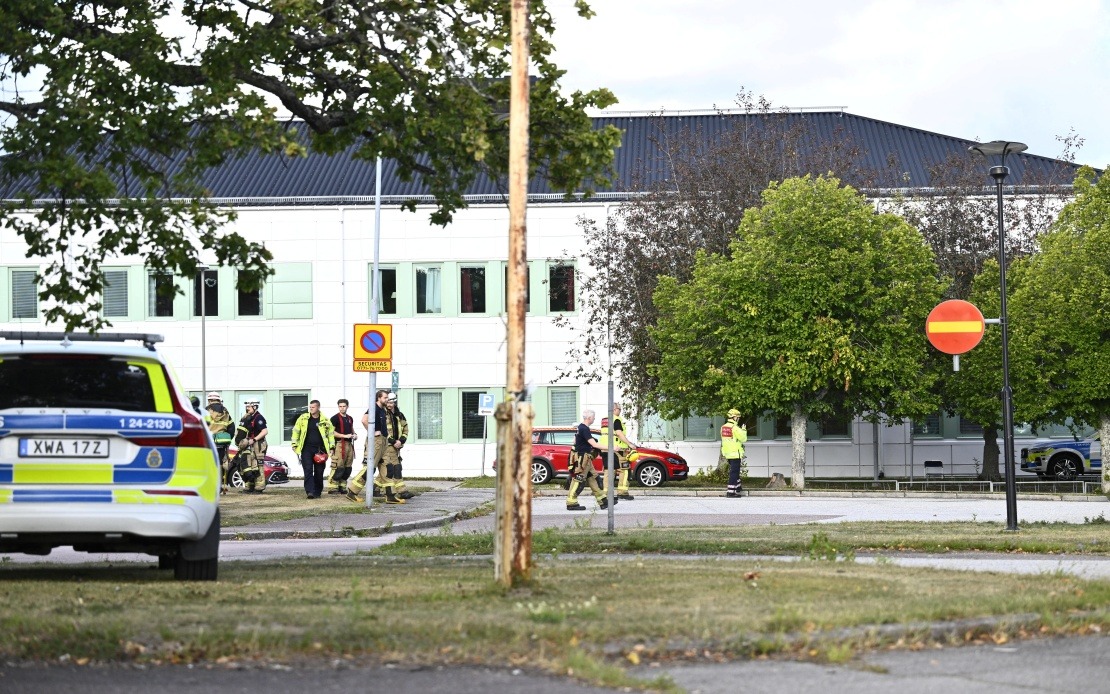
A sword-wielding attacker entered Brinell School in the central Swedish town of Fagersta on Wednesday afternoon, resulting in one death and leaving two other victims with serious injuries. Police and emergency services responded to the incident at approximately 2:06 pm local time after receiving emergency calls. The attack marks a tragic episode in the Nordic nation, prompting swift security responses across the municipality and drawing immediate attention from Swedish government officials.
The two seriously injured victims, identified as boys under 18 years old, were stabilised by medical personnel and transported to hospital where they remained in serious but stable condition. A third person sustained minor injuries during the assault. The rapid deployment of emergency services helped contain the immediate medical crisis, though the severity of the attack shocked the community and triggered a broader security lockdown affecting neighbouring schools and public facilities throughout Fagersta.
Investigators have identified the attacker as an 18-year-old male who formerly attended Brinell School. According to Swedish broadcaster SVT, the suspect can be linked to two addresses within Fagersta. Police have taken the individual into custody and launched a formal investigation into the circumstances surrounding the assault. The fact that the attacker possessed a prior connection to the school has raised questions about warning signs and whether institutional safeguarding procedures operated effectively before the incident occurred.
In response to the emergency, authorities implemented immediate precautionary measures across Fagersta's educational and recreational infrastructure. Seven facilities were placed under lockdown protocols, including Olympen, Fagerstahallen, Risbroskolan, Skogsglantan, Bjorksta, Prastkragen, and Norrbybacken. These facilities encompassed schools and community centres, effectively restricting access and movement as police worked to secure the area and gather evidence. The widespread lockdown reflected official concern about potential secondary threats and the need to maintain public safety during the ongoing investigation.
Swedish Justice Minister Gunnar Strommer issued a statement confirming that the government was actively monitoring developments and maintaining close coordination with law enforcement agencies. He emphasised that police were conducting an intensive investigation at the scene and that government officials maintained continuous contact with officers leading the response. Strommer's comments reflected the seriousness with which Swedish authorities treated the incident and their commitment to transparency during the unfolding emergency situation.
The attack comes during a period of heightened international concern about school safety and violent incidents in educational settings. Sweden, like many Western nations, has experienced periodic incidents of violence at educational facilities, prompting ongoing debates about security measures, mental health support systems, and threat assessment protocols. School administrators across the country periodically review safety procedures and emergency response plans, though preventing attacks by individuals with sudden violent intentions remains a significant challenge for policymakers and security professionals.
For Malaysian and Southeast Asian observers, the incident underscores the universal nature of school safety challenges that transcend geographic and economic borders. While violent incidents at educational facilities remain relatively rare in Sweden compared to some other developed nations, the event highlights how educational institutions worldwide must balance maintaining welcoming learning environments with implementing appropriate security measures. Educational administrators throughout the region regularly assess their own protocols and procedures in light of international incidents, seeking to identify best practices while respecting cultural contexts and community expectations.
The investigation into what prompted the attack remains ongoing, with police seeking to understand the individual's motivations and mental state at the time of the incident. Understanding the circumstances surrounding such attacks is crucial for developing preventative strategies and identifying potential intervention points before violence occurs. Swedish authorities will likely examine whether available warning signs were missed or whether support systems failed to reach an individual exhibiting concerning behaviour.
The incident will inevitably prompt discussions within Swedish policy circles about school security funding, threat assessment protocols, and the role of community and family engagement in identifying at-risk individuals. These conversations, while emerging from tragedy, often produce practical recommendations that influence how schools across developed democracies approach safeguarding their students and staff. The balance between maintaining open, welcoming educational environments and implementing proportionate security measures remains a central challenge for modern schools navigating contemporary risks.

