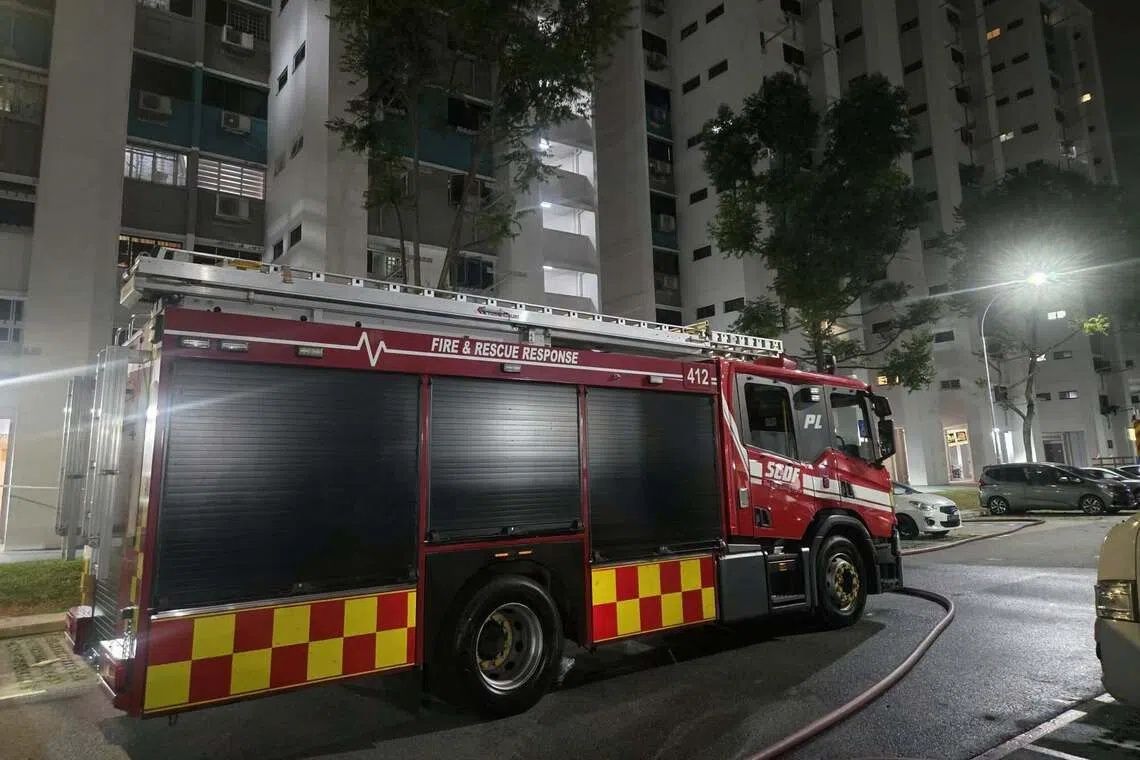
A residential fire in Jurong East has claimed another life and displaced dozens of residents, underscoring a troubling pattern of fatal blazes across Singapore's public housing estates in recent weeks. The Singapore Civil Defence Force responded to the emergency at Block 339 Jurong East Avenue 1 just before 4am on August 16, discovering thick black smoke pouring from a third-floor unit where a resident lay unresponsive in the living room.
The deceased was pronounced dead at the scene by paramedics, making this the latest tragedy in a sequence of fires that have struck HDB blocks with alarming frequency throughout late July and early August. The incident forced authorities to evacuate 50 residents from the building as firefighters brought the blaze under control. According to the SCDF's account, the fire had consumed items in the unit's living room, requiring personnel to force entry to access the interior.
The cause remains undetermined as investigations continue. Authorities have not yet released details about the victim's identity or the precise origin of the fire, though the pattern of residential fires in dense public housing areas raises questions about fire safety practices and emergency preparedness in these environments. The speed with which the fire spread and produced dangerous smoke levels suggests the importance of early detection systems and resident awareness.
This fatality represents part of a disturbing cluster of incidents that began on July 28, when a fire at Block 39 Circuit Road killed a 70-year-old man in the early morning hours. The Circuit Road fire marked the beginning of what would become a series of residential disasters affecting Singapore's HDB residents within a compressed timeframe. The concentration of these incidents within three weeks has drawn attention to fire safety across the public housing sector.
Just three days later, on July 31, another blaze erupted on the eighth floor of Block 309 Clementi Avenue 4, claiming the life of a 65-year-old resident and injuring two firefighters battling the flames. This incident demonstrated the physical toll that such emergencies exact on the emergency response personnel themselves, who face hazardous conditions while attempting rescue operations in smoke-filled corridors.
The most recent confirmed fatality prior to the Jurong East incident occurred on August 5, stemming from a fire that broke out on August 3 at Block 684 Race Course Road. That fifth-floor unit fire sent five residents, aged between 55 and 88, to hospital for treatment. One of those patients, an 88-year-old man, succumbed to his injuries two days after the fire, indicating that the health impacts of such incidents extend beyond immediate casualties and can prove fatal days later as injuries compound.
For Malaysian readers and observers across Southeast Asia, these incidents highlight shared vulnerabilities in densely populated urban housing sectors. Malaysia's own rapid urbanization and reliance on public housing schemes mean that the safety challenges facing Singapore's HDB residents mirror concerns that may emerge domestically. The frequency and severity of fires in high-rise residential buildings represent a regional concern, particularly as cities grow and aging building stock requires continued vigilance.
The evacuation of 50 residents from the Jurong East block demonstrates both the immediate human cost of such incidents and the cascading disruptions they create. Residents lose homes, possessions, and sense of security within their residential communities. The psychological impact on those evacuated and neighbors who witness emergency responses cannot be overlooked, particularly among elderly residents who may already face mobility or health challenges during emergency evacuations.
Fire safety in public housing requires a multifaceted approach encompassing regular maintenance of detection and suppression systems, resident education on fire prevention and emergency procedures, and rapid emergency response capabilities. The clustering of these incidents within weeks suggests the need for comprehensive safety audits across similar housing blocks to identify and rectify potential hazards before they manifest as tragedies.
The SCDF's quick response to the August 16 fire prevented what could have been significantly greater loss of life, with 50 residents successfully evacuated. However, prevention remains more effective than mitigation. Authorities and residents alike must examine whether current fire safety protocols, installation of smoke detectors, maintenance of escape routes, and emergency preparedness training are adequate for protecting vulnerable populations living in high-density residential environments.
As investigations into the Jurong East fire proceed, the broader question facing Singapore and other rapidly urbanizing Southeast Asian cities concerns systemic approaches to preventing such incidents from becoming routine occurrences. The succession of fatal fires across different blocks suggests problems that transcend individual unit failures and may point toward broader infrastructure, maintenance, or safety awareness gaps requiring coordinated policy responses.

