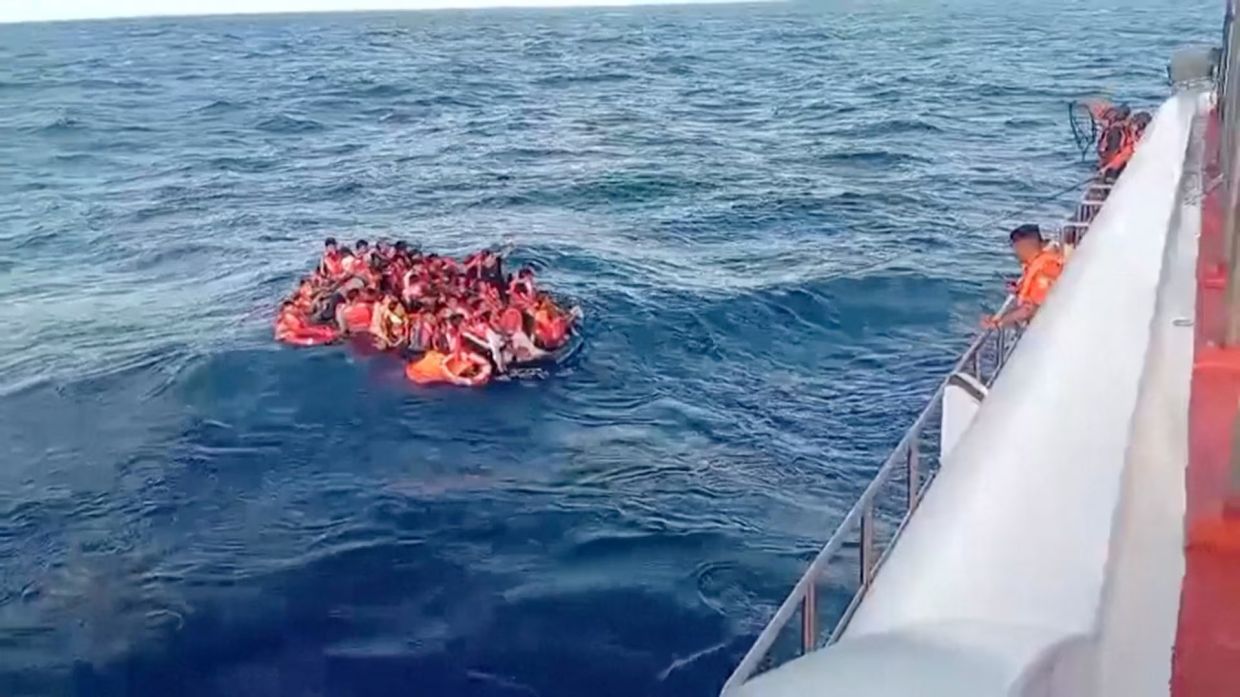
A devastating maritime incident unfolded in Indonesian waters early Wednesday morning when the passenger ferry Putri Yasmin erupted into flames approximately 4:15 a.m. local time, claiming at least one life and forcing a major rescue operation. The vessel was navigating the route between the tourist haven of Bali and the neighbouring island of Lombok when the fire broke out, triggering one of the region's more significant emergency responses in recent months. Authorities confirmed Thursday that an Indonesian woman perished in the incident, though the full circumstances surrounding her death remain under investigation.
The scale of the rescue operation underscores both the logistical challenges and coordinated strengths of Indonesia's maritime emergency response system. The National Search and Rescue Agency mobilized resources alongside the Indonesian Navy, maritime police, and crew from civilian vessels operating in the vicinity. Together, these agencies succeeded in extracting 211 individuals from the burning ferry and transporting them safely to ports on both Bali and Lombok. Authorities characterized the evacuation as proceeding "safely and smoothly," a crucial assessment given the inherent dangers of conducting large-scale rescues during a shipboard fire.
However, the incident has exposed troubling inconsistencies in passenger documentation and vessel oversight. The ferry's official manifest listed 131 people aboard, comprising 114 passengers and 17 crew members. Yet the actual number rescued—211—dramatically exceeded this recorded figure by 80 individuals, indicating that substantial numbers of unregistered passengers had boarded the vessel. Such discrepancies raise serious questions about the enforcement of maritime regulations and the monitoring of passenger capacity limits, issues that have plagued Indonesia's ferry industry for years despite repeated government pledges to tighten controls.
The immediate aftermath focused on accounting for survivors and launching investigative proceedings. Indonesia's National Transportation Safety Committee has assumed responsibility for determining what sparked the blaze, working in coordination with authorities at Lembar Port on Lombok. Preliminary inquiries must establish whether mechanical failure, electrical malfunction, cargo issues, or human error ignited the fire. The assessment phase also encompasses calculating material losses across the ferry itself, vehicles transported as cargo, and other freight aboard, a process that officials indicated remained ongoing Thursday.
The Putri Yasmin incident reflects chronic vulnerabilities within Indonesia's maritime transport ecosystem. As an archipelagic nation comprising more than 17,000 islands, Indonesia depends fundamentally on ferry services to connect its dispersed population and facilitate economic activity across vast ocean distances. Yet this critical dependency has historically coexisted with inadequate safety oversight and enforcement mechanisms. Previous ferry disasters—including the 2018 sinking of the KM Sinar Bangun, which killed over 150 people—have prompted official investigations and temporary crackdowns, but systemic improvements remain elusive.
Weather unpredictability compounds the structural weaknesses in maritime safety management. The waters surrounding Bali and Lombok, though generally well-travelled, experience seasonal squalls and sudden meteorological shifts that can overwhelm vessels lacking robust safety protocols or experiencing mechanical deficiencies. The collision of environmental hazards with lax enforcement creates a particularly dangerous operating environment for the ferries that ordinary Indonesians and foreign tourists rely upon daily.
The incident carries particular significance for Malaysia and the broader Southeast Asian region, which shares similar maritime transport dependencies and regulatory challenges. Malaysian ferry operators and ports serve comparable functions within the Malaysian archipelago, and the lessons emerging from Indonesian incidents—particularly regarding passenger manifesting, safety inspections, and emergency preparedness—offer cautionary insights. The potential for cascade effects across regional shipping networks, should international scrutiny intensify around Indonesian maritime standards, could create ripple effects on regional trade and tourism flows.
The death toll, while mercifully limited given the circumstances and passenger numbers, underscores how quickly maritime emergencies can turn catastrophic. That 211 people were successfully rescued speaks to the effectiveness of coordinated emergency response, yet the single confirmed fatality represents a preventable loss that investigators must now examine. Understanding how one passenger perished while the overwhelming majority escaped may illuminate critical gaps in evacuation procedures, safety equipment availability, or crew training.
Indonesian authorities now face mounting pressure to demonstrate concrete improvements in maritime oversight. The stark disparity between manifest records and actual passenger numbers suggests that enforcement mechanisms at departure points may require fundamental redesign. Whether this incident catalyzes genuine systemic reform or follows the pattern of previous disasters—generating investigation reports without substantive regulatory change—will significantly influence public confidence in Indonesian maritime transport and potentially affect tourism and trade patterns throughout the region.

