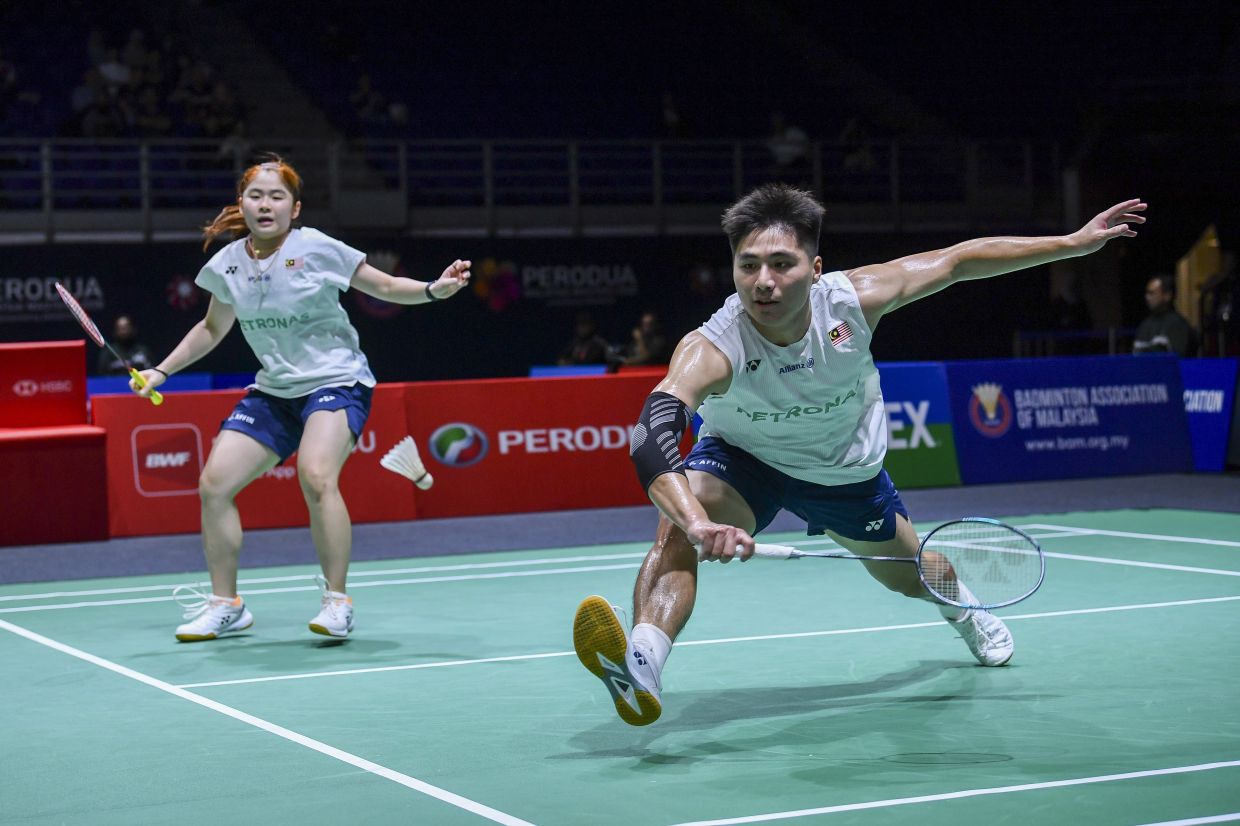
Jimmy Wong's decision to rejoin the Badminton Association of Malaysia in April represents a calculated move in pursuit of his Olympic aspirations. The 23-year-old mixed doubles specialist now works within the national team structure with a clear pathway in mind: by partnering with Cheng Su Yin, he aims to qualify for the 2028 Los Angeles Games. His return marks a fresh chapter in his competitive journey, one built on the foundation that sustained integration with Malaysia's badminton apparatus offers genuine prospects for advancement at the international level.
The mixed doubles player is approaching his goals with measured optimism, conscious that ambition without perspective can breed counterproductive pressure. Rather than fixating on a lengthy list of targets, Jimmy has identified one paramount objective—realisation of his Olympic dream—while maintaining flexibility in how that objective materialises. This philosophical approach reflects maturity uncommon among younger players navigating the demands of elite sport. He recognises that delivering optimal performances consistently on court will organically create the conditions necessary for his breakthrough.
Central to Jimmy's optimism is the presence of Nova Widianto, the mixed doubles coach who brings credentials that few athletes enjoy access to. Widianto's background as an Olympic silver medallist and former world champion provides tangible expertise rooted in championship experience rather than theoretical knowledge. For Jimmy, training alongside a coach of this calibre represents a qualitative leap from his previous arrangements. The benefits extend beyond technical refinement of strokes and tactical positioning; Widianto's mentorship addresses psychological resilience and personal development, dimensions equally critical for athletes aspiring to Olympic competition.
Immediate rankings present both challenge and opportunity. Currently positioned at 118th globally, Jimmy and Su Yin require significant advancement to access the premier tournament tier. Breaking into the top 32 by year's end would represent substantial progress, yet it remains an achievable target given the trajectory of emerging partnerships. This intermediate milestone carries strategic importance beyond mere numerical ranking—entry into Super 750 and Super 1000 tournaments would expose the pairing to world-class opposition repeatedly, accelerating their competitive maturation and providing crucial ranking points necessary for Olympic qualification pathways.
The partnership with Cheng Su Yin itself demonstrates promise. Chemistry between doubles partners determines competitive success almost as much as individual technical ability, yet building such understanding requires time and repeated exposure to pressure situations. Their communication appears intuitive, suggesting complementary temperaments and playing styles. Yet both players acknowledge gaps requiring attention. Rather than viewing these shortcomings as setbacks, they appear positioned as learning opportunities within a developing relationship, particularly given that they have only contested four tournaments together so far.
A breakthrough moment arrived recently at the Singapore Open, where the Malaysian pair accomplished something remarkable by eliminating world No. 1 ranked Feng Yanzhe-Huang Dongping in the opening round. This scalp victory demonstrates that Jimmy and Su Yin possess the capacity to trouble established elite combinations, a prerequisite for any partnership harbouring Olympic aspirations. While their campaign ended in the second round, the manner of their exit was instructive rather than demoralising—they had proven themselves capable of defeating the world's best in a single match, suggesting the partnership can perform under pressure when it matters most.
For Malaysian badminton, Jimmy's commitment to the national programme carries broader significance. The sport remains a national priority, with Malaysia's competitive heritage spanning generations of accomplished players across various disciplines. Mixed doubles represents one category where fresh talent development proves essential, given retirements and the relentless advancement of international standards. Jimmy's integration into the system, backed by coaching expertise like Widianto's, reflects the association's deliberate investment in building the pipeline of competitive partnerships required to sustain Malaysia's badminton prominence.
The Los Angeles 2028 Olympics timeline provides appropriate motivation without overwhelming pressure. The four-year horizon allows reasonable progression from current rankings toward qualification thresholds, particularly with structured training and regular tournament exposure at progressively higher levels. For players at Jimmy's career stage, such intermediate goals serve as meaningful waypoints rather than destination conclusions; success at 2028 could position him for even greater achievements in subsequent Olympic cycles.
Navigating the mental demands of elite sport represents perhaps Jimmy's greatest contemporary challenge. The conscious decision to avoid accumulating excessive targets reflects awareness that psychological factors often determine outcomes in closely contested matches between technically similar opponents. His stated focus on delivering best efforts during competition, rather than obsessing over distant medals, suggests maturity that augurs well for handling the inevitable setbacks and frustrations accompanying the path toward international breakthrough.
Moving forward, Jimmy's progress will depend substantially on consistent participation in high-level tournaments where he and Su Yin encounter the established mixed doubles powers regularly. Each match against top pairings provides feedback valuable for tactical and technical evolution. The BAM system, reinforced by Widianto's guidance, appears structured to facilitate this competitive education. Whether Jimmy and Su Yin ultimately achieve Olympic qualification remains uncertain, as international badminton grows increasingly competitive, yet the foundations now firmly in place suggest they have positioned themselves appropriately within the Malaysian programme to maximise their prospects.

