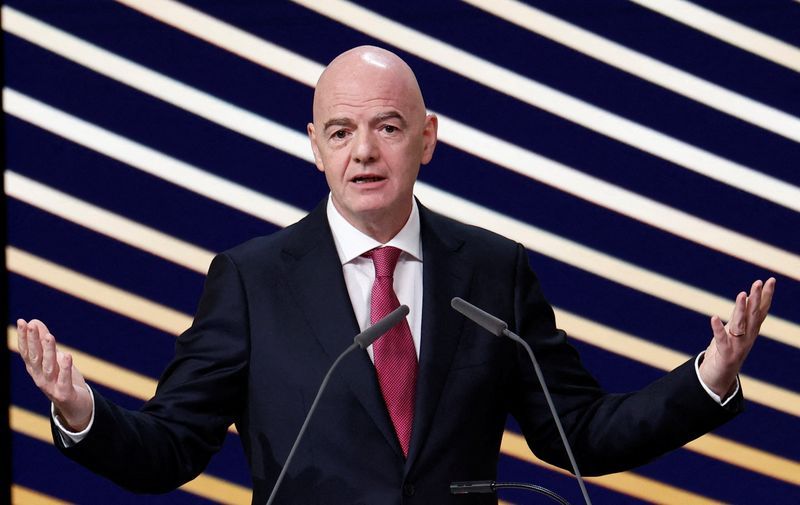
The Oceania Football Confederation has given qualified backing to FIFA's decision to scrap its disputed private investment proposal and conduct an internal review, marking a divergence from three major continental bodies that have openly challenged the governing body's leadership. However, New Zealand has broken from its regional confederation to withdraw endorsement of FIFA President Gianni Infantino ahead of his reelection campaign next year, reflecting deepening fractures within world football's governance structure.
The OFC, representing soccer's smallest continental bloc with just eleven full member nations, issued a statement on Friday following discussions held earlier in the week, indicating that the region perceived tangible benefits from FIFA's stewardship over the past decade. The confederation's measured response contrasts sharply with the confrontational positions adopted by UEFA, the Asian Football Confederation, and CONCACAF, all of which have demanded leadership accountability and a formal examination of Infantino's management following the collapse of the FIFA Forward Enterprise scheme.
Infantino has come under sustained pressure as his reelection approaches, having endured public criticism from three major confederations that represent the bulk of world football's commercial value and fan engagement. The three bodies pointedly attacked his conduct regarding the abandoned investment initiative, signalling that divisions within FIFA's governance have widened considerably beyond the administrative corridors of Zurich. This institutional rebellion underscores the unprecedented challenge facing a sitting FIFA president seeking another term, a scenario that has prompted soul-searching about how elite football leadership operates globally.
The OFC's executive committee formally welcomed FIFA's decision to withdraw the FFE proposal whilst committing to a comprehensive review of how the scheme was developed and presented to members. In their statement, Oceania's leadership characterised this introspection as an opportunity for FIFA to identify necessary structural improvements, suggesting they view the crisis as potentially constructive for the organisation's long-term credibility. The confederation's cautious endorsement acknowledges the gravity of mistakes made while positioning Oceania as willing to work constructively with FIFA management on reforms.
New Zealand Football, representing the sole Oceania nation to qualify for this year's World Cup tournament, adopted a fundamentally different approach by formally withdrawing its support for Infantino's reelection campaign. The New Zealand body went beyond mere criticism to demand an independent review of how FIFA developed and promoted the Forward Enterprise initiative, signalling that domestic football authorities in major footballing nations are no longer willing to defer to established power structures within world soccer's governance.
The New Zealand Football Federation's statement emphasised that decisions and actions taken by FIFA leadership had precipitated a collapse of confidence and trust throughout international football's structures, creating divisions that threaten the sport's institutional cohesion. By specifically calling for independent scrutiny rather than FIFA's self-examination, New Zealand flagged its belief that the governing body cannot credibly investigate itself without external oversight. This position carries weight given that New Zealand qualifies for World Cup tournaments, positioning it among the more successful footballing nations within the Oceania region and granting it considerable moral authority within the confederation.
The withdrawn investment proposal had promised member associations a substantial $20 million grant for the next funding cycle, with the potential to double that amount if confederations and national bodies agreed to sign the formal investment agreement. This financial incentive structure suggests FIFA had deployed significant material inducements to secure approval for the scheme, raising questions about whether the organisation adequately consulted with members before advancing the proposal. The scale of financial resources at stake underscores why member nations view the handling of this initiative as emblematic of broader governance problems requiring systemic examination.
Following an emergency gathering in Morocco the previous week, FIFA issued an apology to its 211 member associations, acknowledging errors in how the investment proposal had been processed and communicated. The governing body simultaneously reasserted that its leadership retained full backing from key officials and stakeholders, an assertion that now appears increasingly questionable given public defections by major confederations and prominent member nations. The apologetic tone contrasted with FIFA's attempt to consolidate support for Infantino, creating an awkward narrative in which the organisation admitted fault whilst simultaneously urging continued confidence in its president.
The divergence between Oceania's cautious cooperation and New Zealand's outright withdrawal of support reflects broader tensions between smaller and larger footballing nations within the FIFA ecosystem. Oceania's pragmatic acceptance of FIFA's review process may partly reflect the confederation's limited leverage and its historical financial dependence on FIFA's development programmes and grants. New Zealand's more assertive position suggests that medium-sized footballing nations with consistent international tournament participation feel empowered to challenge FIFA authority more forcefully, particularly when governance failures undermine institutional integrity.
This developing situation carries significant implications for Southeast Asian football governance, as regional confederations and national associations assess FIFA's capacity for transparent, accountable administration. The AFC's explicit call for a leadership review demonstrates that Asian football's largest bodies are increasingly willing to coordinate opposition to FIFA management, a dynamic that could reshape how future disputes within world football's governance are resolved. Malaysia and other Southeast Asian nations watching this institutional drama unfold may recalibrate their expectations regarding FIFA's accountability standards and governance transparency.
Infantino's reelection prospects have been substantially damaged by the convergence of opposition from major confederations and strategic defections by significant member nations like New Zealand. The FIFA president now faces a reelection campaign in which he must simultaneously defend his overall record while addressing specific criticisms about the Forward Enterprise debacle and broader questions about decision-making processes within the organisation. The independent review mechanisms now under discussion, whether FIFA-led or external, will likely expose further details about how the investment scheme was conceived and promoted to members.

