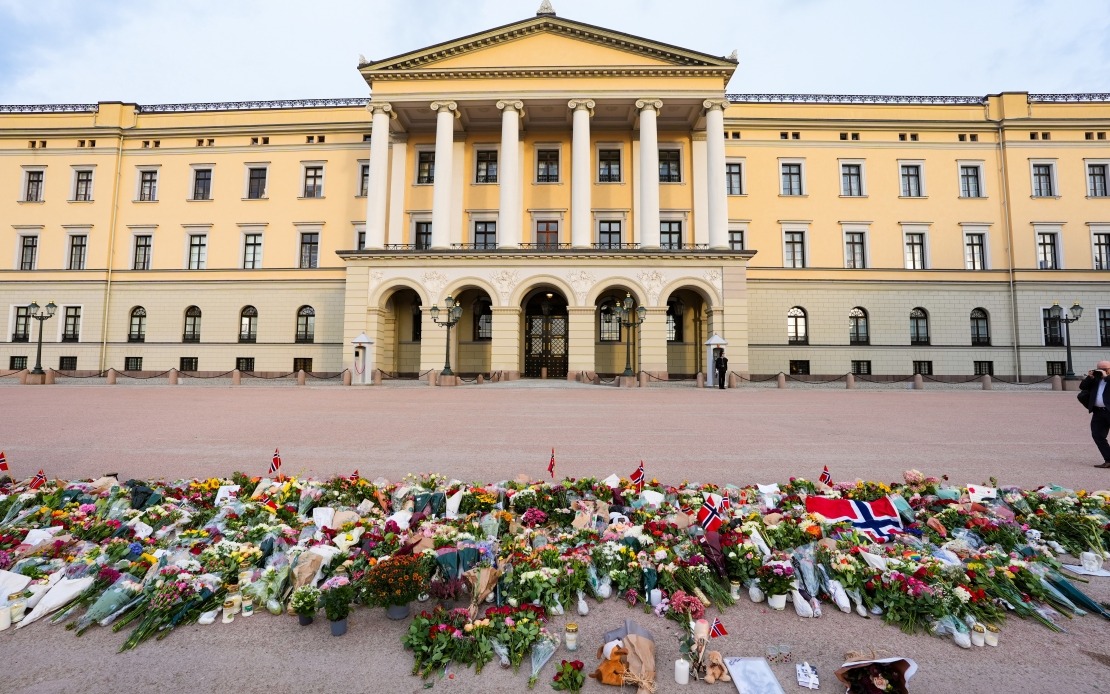
Norway's King Harald V, who had presided over the Scandinavian nation for more than three decades, died peacefully on Friday morning at Oslo's National Hospital. The 89-year-old monarch passed away at 6:35 am local time, marking the end of an era for one of Europe's most stable and prosperous democracies. The announcement prompted immediate ceremonial adjustments at the Royal Palace, where the national flag was lowered to half-staff in accordance with Norwegian mourning protocol.
The king's final illness began approximately two weeks before his death, when he was admitted to hospital on August 17 for medical evaluation. What appeared initially as routine healthcare evolved into a more serious medical situation as doctors identified the underlying condition requiring treatment. Norwegian health authorities subsequently disclosed that Harald had been undergoing cortisone therapy to manage hemolytic anemia, a haematological disorder characterized by the destruction of red blood cells. This condition had triggered fluid accumulation throughout his body, complicating his overall health status and limiting his capacity to perform state functions.
A bacterial infection in his bloodstream emerged as the critical factor that accelerated his deterioration in his final days. This bloodstream infection, following on the existing anemic condition, proved to be the decisive factor in his passing. The combination of these medical challenges overwhelmed even the best efforts of Norway's advanced healthcare system, demonstrating how seemingly manageable chronic conditions can become life-threatening when complicated by acute infections in elderly patients.
Under Norway's constitutional succession framework, Crown Prince Haakon immediately assumed the monarchy upon his father's death without any interregnum or delay. The constitutional monarchy's succession rules provided for an orderly transfer of power, with governmental institutions ready to acknowledge the new sovereign. The Norwegian government was scheduled to convene an extraordinary Council of State at the Royal Palace to formally meet with the new king and confirm procedural matters relating to the transition. Unlike many European monarchies, Norway does not conduct elaborate coronation ceremonies, instead relying on constitutional recognition and parliamentary procedures to legitimize the succession.
Prince Haakon's accession marks a significant generational shift in Norwegian governance. The new monarch will be required by the Norwegian Constitution to take a formal oath before the Storting, the nation's parliament, cementing his legal authority as head of state. The precise royal style and title by which he will be known will be formally announced following the Council of State meeting, though the expectation is that he will become King Haakon VII, continuing a naming tradition in Norwegian royal history.
Harald's reign, which commenced on January 17, 1991, following the death of his father King Olav V, spanned more than 35 years of continuous service. Throughout this extended period, he served as a constitutional figurehead during Norway's transformation into one of the world's wealthiest nations, driven largely by North Sea petroleum wealth. His longevity as a reigning monarch made him Europe's oldest sitting king at the moment of his death, a distinction that underscored both his resilience and the changing demographics of European royalty. Few monarchs anywhere in the modern world have maintained their position for such an extensive duration.
For Malaysian and Southeast Asian observers, Harald's reign and passing offer instructive lessons about constitutional monarchy in a modern context. Norway demonstrates how a royal institution can maintain relevance and public support through careful adherence to constitutional limits, political neutrality, and genuine engagement with national development. Unlike some monarchies that have faced questions about their contemporary purpose, the Norwegian royal house maintained strong public affection and credibility throughout Harald's reign. This success derived partly from the Scandinavian emphasis on democratic accountability and the absence of any perception that the monarchy wielded political power beyond ceremonial and symbolic domains.
The transition to King Haakon represents continuity in Norwegian institutional stability. The new monarch, who has been groomed for this role throughout his life, brings experience from numerous state functions and international engagements. The succession occurred smoothly because Norwegian constitutional arrangements had clarified the line of succession and the procedures for transition, eliminating any ambiguity or potential for constitutional crisis. This contrasts sharply with some other nations where succession disputes or unclear constitutional provisions have created instability.
Harald's passing also marks the conclusion of a distinctive historical era in Norwegian history. His reign encompassed the Cold War's final years, Norway's navigation of European integration questions, and the country's emergence as a major energy exporter. The king witnessed and represented Norwegian society through profound economic and social transformations, remaining a symbol of national continuity even as the country changed dramatically around him. His diplomatic skills and international relationships proved valuable assets for a small nation seeking influence and respect in global affairs.
The Norwegian monarchy's endurance and effectiveness across Harald's extended reign raises questions about what factors enable constitutional monarchies to thrive in the modern era. Political scientists and constitutional experts have identified transparency, genuine parliamentary respect, absence of personal political ambition, and careful cultivation of national symbolism as critical elements. The Scandinavian model, of which Norway is exemplary, suggests that hereditary monarchy can coexist comfortably with robust democracy when both institutions respect their respective spheres. As King Haakon begins his reign, observers will watch whether these principles that sustained his father's era continue to guide the Norwegian monarchy forward.

