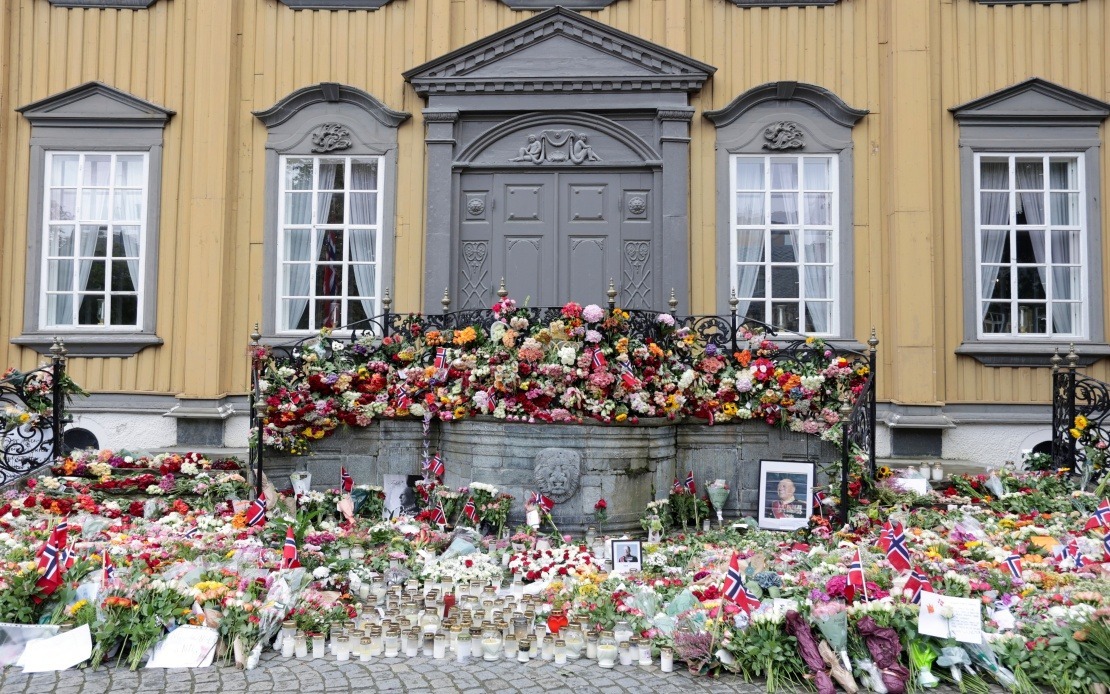
Norway is in a period of national mourning following the passing of King Harald V on Friday, with commemorative services taking place in churches and cathedrals throughout the kingdom on Sunday. The 89-year-old monarch's death marks the end of a significant reign in Norwegian history, and the Royal House has confirmed that a state funeral will be held on September 9, providing the nation with a formal occasion to honour his legacy and contributions to the Nordic nation.
The scale of public grief has been evident in scenes across the country, where tens of thousands of Norwegians have gathered at religious institutions to pay their respects to the late king. The outpouring of emotion reflects the deep connection many citizens maintained with Harald V throughout his decades on the throne. Beyond the formal religious services, Norwegians have left tributes at the Royal Palace in Oslo, with flowers, candles, and handwritten messages creating spontaneous memorials that illustrate the personal bond between the monarchy and the people.
Under Norway's constitutional framework governing the line of succession, the transition of power occurred immediately upon Harald V's death. His eldest son, 53-year-old Prince Haakon, has now become king, adopting the regnal name Haakon VIII as he takes on the constitutional and ceremonial responsibilities of the Norwegian throne. This seamless transfer of authority reflects the stability built into the monarchy's institutional structures, a feature that distinguishes Nordic constitutional arrangements and reinforces public confidence in governmental continuity during periods of dynastic transition.
The appointment of Haakon VIII represents a generational shift in the leadership of Norway's royal house. At 53, the new monarch brings his own perspective and experience to a role that will define the monarchy's public presence and symbolic function for years to come. His ascension has been anticipated within Norwegian society, and the established succession framework has ensured that questions about the future direction of the institution have been addressed before this moment of transition.
For Southeast Asian observers, the Norwegian succession offers instructive parallels regarding how established constitutional monarchies manage leadership transitions. In Malaysia and across the region, where monarchical systems remain central to national identity and governance, the Norwegian example demonstrates how clear legal frameworks, public acceptance of succession procedures, and institutional stability can facilitate orderly transfers of power. The absence of uncertainty or competing claims in Norway contrasts with succession challenges that occasionally emerge in other contexts, underscoring the importance of transparent constitutional provisions.
King Harald V's nine-decade lifespan encompassed transformative periods in Norwegian history, from post-World War II reconstruction through modern European integration. His reign witnessed Norway's development into one of the world's wealthiest nations, driven substantially by North Sea oil revenues, and his role as constitutional monarch involved representing national values during periods of significant social and economic change. The timing of his death, as Norway continues managing substantial sovereign wealth and navigating contemporary geopolitical complexities, places his successor at a moment requiring both continuity and forward-thinking leadership.
The funeral arrangements scheduled for September 9 will provide an opportunity for international dignitaries and representatives from other European monarchies to acknowledge Norway's transition and express solidarity with the nation during this period. Such state occasions typically attract significant diplomatic participation, reflecting the interconnected nature of European royal institutions and the broader significance of succession events within the continent's political landscape.
For Norwegian society, the coming weeks will involve both formal governmental processes and informal national reflection on Harald V's legacy. The memorial services currently underway represent the beginning of this extended period of commemoration, which will culminate in the state funeral and continue through various institutional and cultural remembrances. Government business will proceed with appropriate adjustments for the period of national mourning, while the new monarch begins establishing his presence through official duties and public engagement.
The stability demonstrated by Norway's succession process reflects decades of institutional development and public understanding of constitutional monarchy's role in democratic governance. Unlike situations where succession disputes generate political tension or uncertainty about governmental legitimacy, the Norwegian transition has proceeded with the kind of predictability that characterizes mature constitutional systems. This institutional reliability itself constitutes an important asset for a nation managing substantial economic interests and complex international relationships.
As Haakon VIII settles into his new role, Norwegian society will gradually shift from the immediate shock of losing a long-reigning monarch to engagement with the evolving character and priorities of his reign. The new king inherits a throne with significant symbolic responsibilities and meaningful constitutional functions within Norway's parliamentary democracy, positioning him as a unifying national figure while elected officials manage day-to-day governance. The transition underway reflects both the Norwegian monarchy's enduring cultural significance and the institutional frameworks that enable peaceful, orderly succession in established democracies.

