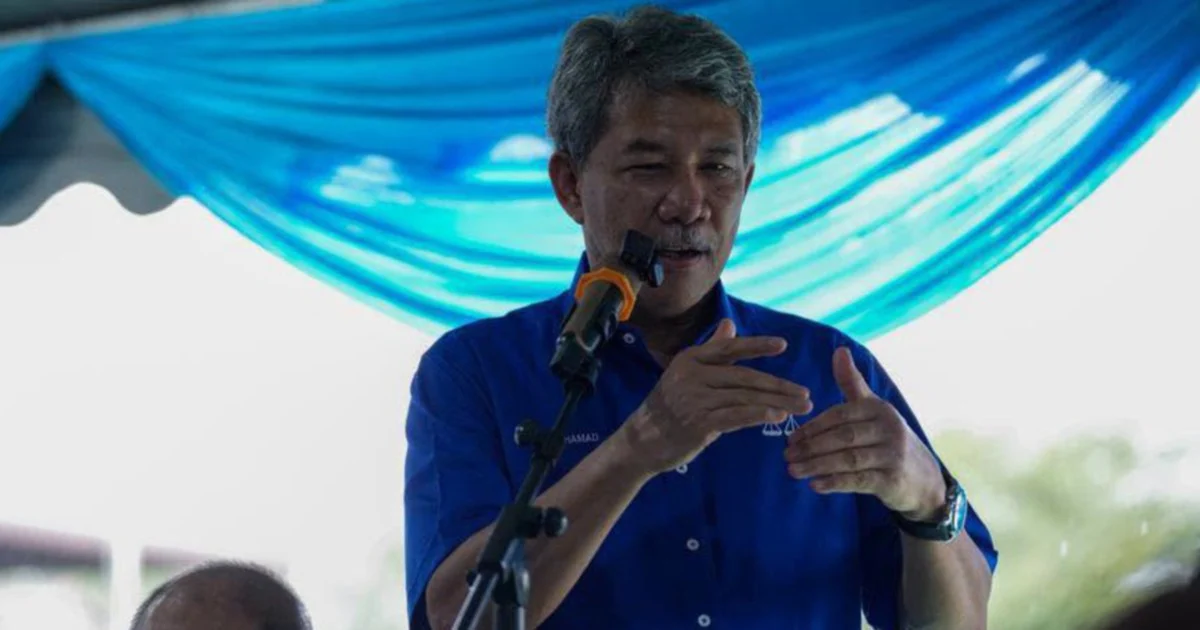
A prominent figure within the Barisan Nasional coalition moved to quell speculation linking the upcoming Johor state election to efforts at securing the liberty of imprisoned former prime minister Datuk Seri Najib Razak, publicly rebuking Pakatan Harapan leaders for perpetuating such claims at a campaign event in Tebrau.
The remarks represent an attempt to recalibrate the political narrative surrounding the state contest, which has increasingly become entangled with broader questions about judicial clemency and executive power. The BN spokesperson's intervention suggests internal concern that opponents are weaponising the Najib question to undermine the coalition's electoral positioning, particularly among constituencies sensitive to perceptions of impunity.
Najib remains incarcerated following his conviction on charges relating to the 1Malaysia Development Berhad scandal, a corporate malfeasance case that has fundamentally reshaped Malaysian politics and continues casting a long shadow over national discourse. His legal status—including potential avenues for clemency through the Yang di-Pertuan Agong—has remained a volatile subject, with Pakatan Harapan frequently insinuating that a BN electoral victory could pave the way for his release through sympathetic state leadership.
The distinction between state-level authority and federal clemency mechanisms represents a critical constitutional point that appears to have become blurred in campaign messaging. While a Johor menteri besar exercises substantial provincial power, executive clemency remains the prerogative of the Agong, a separation that the BN leader sought to emphasise during the Tebrau campaign stop.
Packatan Harapan's deployment of the Najib question reflects deeper anxieties within the coalition about anti-incumbency factors and the challenge of maintaining electoral momentum in a state where BN historically commands structural advantages. By linking electoral outcomes to questions of justice and impunity, opposition strategists attempt to frame the ballot as a referendum on governance standards and institutional integrity rather than conventional policy platforms.
The phenomenon also demonstrates how personalised corruption narratives have become embedded within Malaysian electoral competition. Rather than remaining confined to legal and institutional channels, questions surrounding high-profile convictions now function as direct electoral currency, influencing voter calculations and party positioning across regions.
From a southeastern Malaysia perspective, the Johor dynamics hold regional significance. The state's political orientation influences not merely local governance but also the broader balance of power within federal parliament, where coalition mathematics determine budgetary allocation, infrastructure investment, and policy direction affecting neighbouring Selangor and Negeri Sembilan.
The BN official's pushback signals recognition that the Najib narrative, regardless of its veracity regarding clemency mechanisms, poses genuine electoral liability. Voters concerned about institutional accountability and clean governance—demographics that have shifted markedly since the 2018 electoral upset—may gravitate toward opposition candidates precisely because of accumulated reservations about governance standards.
Conversely, segments of the electorate view the Najib prosecution through the lens of political persecution, regarding his incarceration as selective justice weaponised against a rival faction. For these constituencies, opposition efforts to weaponise the clemency question may paradoxically strengthen BN support by appearing to instrumentalise the judiciary for partisan advantage.
The constitutional architecture governing clemency presents genuine complexity that both coalitions have exploited rhetorically. While state governments can petition the Agong regarding potential clemency, the ultimate decision remains a prerogative matter wholly divorced from menteri besar authority or ministerial recommendation. This distinction creates space for both narratives to claim credibility while obscuring the actual mechanics of executive clemency.
The Johor election emerges therefore as a compressed manifestation of deeper tensions within contemporary Malaysian politics: the struggle between coalitions to define electoral stakes, the instrumentalisation of high-profile legal cases within campaign strategy, and the challenge of maintaining institutional boundaries while navigating personalised political narratives.
For Malaysian observers and regional analysts tracking Southeast Asian democratic consolidation, the episode illustrates how legacy issues from previous administrations—particularly those involving prominent figures and institutional legitimacy questions—continue shaping electoral calculations across multiple election cycles, suggesting that the 1MDB aftermath will remain politically consequential for years ahead.

