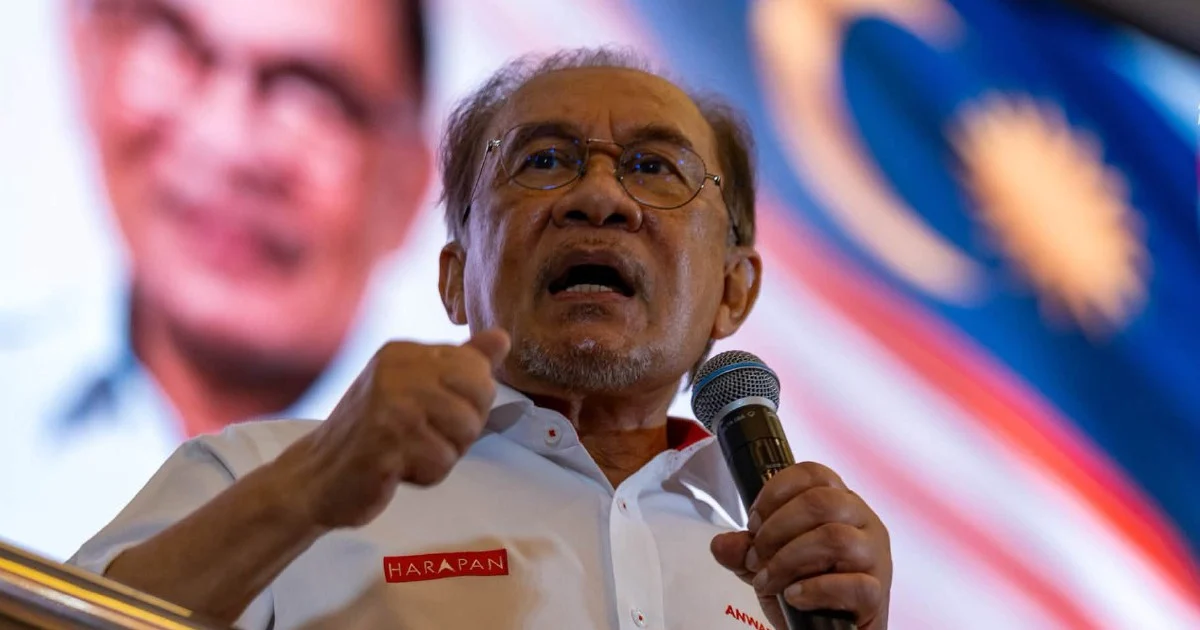
Prime Minister Datuk Seri Anwar Ibrahim has made clear that Malaysia will not approach Singapore to help facilitate voting arrangements for Malaysians employed across the Causeway ahead of the Johor state election scheduled for July 11. The statement addresses concerns that workers in the neighbouring city-state might face obstacles in casting their ballots during what is anticipated to be a significant electoral event in the southern state.
The decision reflects Malaysia's preference for handling its electoral processes without seeking external governmental cooperation on voting logistics. While the Causeway connecting Johor Bahru and Singapore represents one of the world's busiest international borders, with tens of thousands of Malaysians commuting daily for employment, Kuala Lumpur appears confident in managing the polling arrangements through existing domestic mechanisms. This approach underscores the principle that electoral administration remains a sovereign matter for each nation, even when cross-border populations are involved.
The Johor election assumes particular importance in the Malaysian political landscape, coming at a time when the state has experienced significant electoral shifts in recent years. The July 11 polling date gives voters roughly a month to prepare, though this compressed timeline may challenge workers who typically divide their time between Johor and Singapore. The absence of special arrangements means registered voters in the state will need to travel back to their constituencies to participate in the democratic exercise, following standard electoral procedures that have governed Malaysian elections historically.
From a practical standpoint, the rejection of Singapore's involvement simplifies bilateral relations by avoiding the need for two governments to negotiate voting logistics. Such arrangements would inevitably raise questions about sovereignty, election observation, and diplomatic protocol. By maintaining that Malaysia will independently manage its electoral affairs, Anwar's position reinforces the established convention that each nation exercises sole authority over its voting processes within its borders. Singapore, as a highly organised city-state with its own electoral traditions, would likely have preferred to avoid entanglement in another country's political administration regardless.
The cross-border worker population between Malaysia and Singapore represents a significant economic and social dimension of relations between the two neighbours. Malaysians employed in Singapore's financial, healthcare, retail, and service sectors number in the hundreds of thousands, and their voting participation has long been a matter of interest to political observers. The inability to vote conveniently from Singapore effectively disenfranchises some eligible electors who might prefer to remain in their employment rather than return to their constituencies for a single day of voting.
Historically, Malaysia has managed voting by overseas workers through postal voting and limited early voting provisions, though these mechanisms have themselves faced criticism regarding efficiency and security. The Johor election will likely follow established procedures, meaning those unable to return will have limited alternatives. This situation reflects a broader tension in modern electoral systems between individual convenience and the traditional requirement that voters present themselves physically at polling stations, a practice many democracies have gradually liberalised through various postal and advance voting options.
The Johor state government and Election Commission will now focus on ensuring smooth electoral operations within the peninsula itself. Preparations likely include deploying sufficient polling stations, training election officials, and implementing security measures to safeguard the voting process. The July 11 date itself was presumably chosen based on administrative readiness and other scheduling considerations, though the timeframe remains relatively compact for comprehensive logistical preparation across the state's various districts and municipalities.
Anwar's clarification comes amid broader discussions about electoral modernisation and participation rates in Malaysian politics. While some observers advocate for expanding voting accessibility through technology and international cooperation, Malaysian authorities maintain a conservative approach prioritising administrative control and security. The decision to proceed without Singapore's involvement suggests confidence in existing systems, even if such systems may inadvertently reduce participation among certain segments of the eligible electorate.
Looking ahead, the Johor election will provide insight into voter mobilisation and turnout patterns, particularly among younger voters and those with employment flexibility. Political parties contesting the election will need to develop ground strategies that account for voters' capacity to return to their constituencies. The outcome may inform future discussions about voting accessibility and whether Malaysia gradually moves toward more flexible electoral arrangements, though such changes would require legislative modifications and would remain ultimately within Malaysian jurisdictional control regardless of international precedents.

