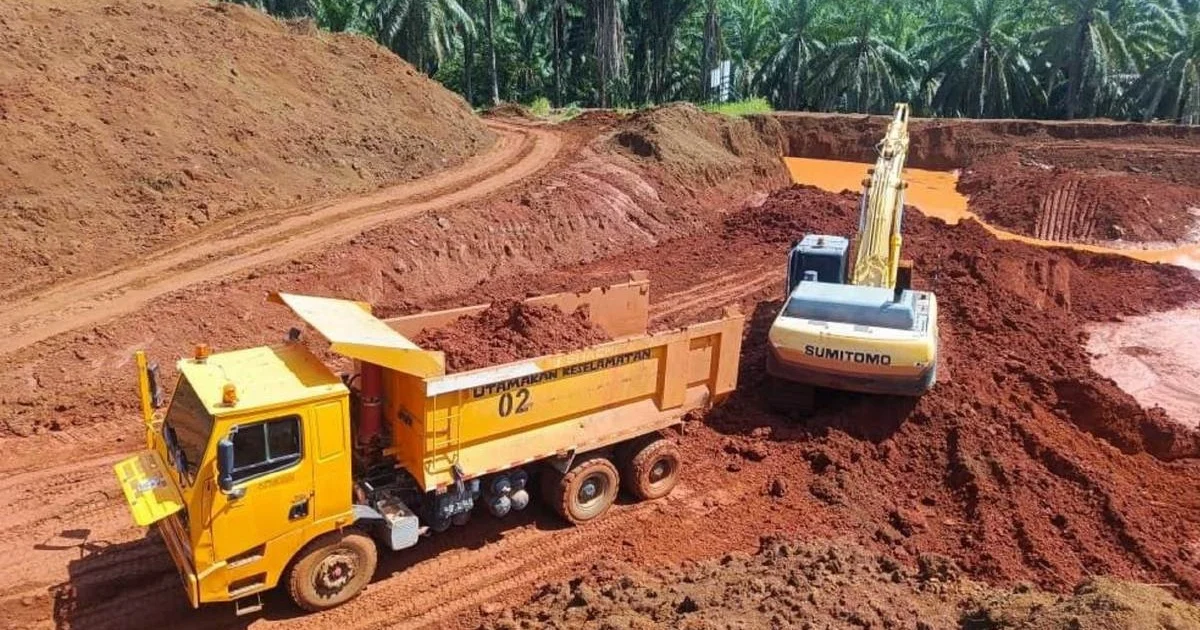
A significant crackdown on illegal mining has disrupted operations at a Felda plantation in Bukit Goh, Kuantan, with nine people taken into custody and substantial assets confiscated following a coordinated raid by enforcement authorities. The operation resulted in the seizure of approximately 10,000 tonnes of bauxite-bearing soil, alongside heavy mining machinery and lorries valued collectively at RM3.75 million, demonstrating the substantial scale of the illicit extraction activities that had been occurring at the site.
The enforcement action represents a critical intervention in curbing what has become an increasingly problematic sector in Malaysia's mining landscape. Illegal bauxite extraction has emerged as a persistent challenge, particularly in states like Pahang where Felda-managed land intersects with mining interests. The Bukit Goh location places the operation in proximity to both agricultural and forested areas, raising concerns about environmental degradation and the safety of surrounding communities that such unregulated extraction typically triggers.
The volume of material seized—10,000 tonnes of ore-bearing soil—underscores the operational sophistication that illegal mining networks have developed. These operations typically require significant investment in equipment and coordinated logistics to function effectively, which explains both the substantial machinery haul and the involvement of multiple personnel across extraction, processing, and transportation roles. The nine arrests suggest the operation encompassed various positions within the supply chain rather than a small informal outfit.
The RM3.75 million valuation attached to seized assets provides insight into the profitability that drives such illegal activities. Heavy mining machinery, excavators, and transport lorries represent considerable capital outlays that participants evidently deemed worthwhile despite regulatory risks. This economic incentive structure helps explain why enforcement agencies face recurring challenges in deterring such operations, as potential profits can outweigh anticipated penalties in participants' cost-benefit calculations.
Barang extraction operations in Malaysia have long attracted regulatory attention due to environmental and land-use implications. Unlike tin mining, which dominated Malaysia's extractive economy historically, bauxite mining represents a newer extractive frontier driven by global demand for aluminium production. The mineral's relatively accessible deposits and straightforward extraction methods make it attractive to both legitimate operators and illicit actors seeking quick returns without proper licensing or environmental safeguards.
The Felda context adds particular significance to this enforcement action. Felda plantations represent substantial land holdings designated for agricultural development and settlement, making their conversion to mining uses particularly contentious from both environmental and social perspectives. Incursions by illegal miners into such areas suggest either inadequate site security, collusion by parties with access to the land, or insufficient monitoring of boundary compliance—issues that Felda management will need to address systematically.
Enforcement operations of this magnitude typically require cooperation between multiple agencies, potentially including the Mineral and Geoscience Department Malaysia, state environmental authorities, police, and local government enforcement teams. The coordination needed to execute raids simultaneously at extraction and related sites, secure evidence, and process arrests reflects substantial investigative groundwork preceding the operational phase. Such coordinated responses remain essential given the distributed nature of illegal mining networks.
The confiscation of extraction and transport equipment directly impacts operational viability for mining networks. Removing heavy machinery creates substantial barriers to resuming activities without significant re-investment, providing an immediate disruption that extends beyond the arrest of individual personnel. However, such seizures require secure storage and eventual disposition—either through destruction, public sale, or alternative allocation—which demands ongoing administrative resources.
Malaysia's experience with illegal mining enforcement reveals recurring patterns: penalties often prove insufficient to deter participation, replacement personnel fill arrested workers' roles quickly, and networks adapt operational locations when pressure intensifies at particular sites. Addressing these enforcement challenges requires complementary strategies including improved land surveillance, community monitoring schemes, stronger penalties that genuinely affect profitability calculations, and disruption of downstream market linkages that create demand for illegally extracted material.
For Pahang State and local Kuantan authorities, this operation represents a temporary victory that requires follow-up monitoring. Historical precedent suggests that without sustained enforcement presence and systematic investigation of downstream market actors who purchase illegally extracted bauxite, new operations may materialise elsewhere within weeks or months. The real test of enforcement effectiveness lies in whether this raid initiates a broader campaign or remains an isolated intervention.
The environmental implications remain substantial. Unregulated bauxite extraction removes topsoil, disrupts drainage patterns, and leaves degraded landscapes that require expensive rehabilitation. The 10,000 tonnes confiscated represents material that will not be processed through informal channels lacking environmental controls, preventing immediate contamination of waterways and surrounding agricultural lands. However, if the underlying market demand persists unaddressed, similar volumes will likely be extracted elsewhere unless enforcement intensity increases substantially.
Facilities engaged in downstream bauxite processing and export merit particular scrutiny from enforcement authorities. These operations require legitimate buyers who verify supply chain legality; if such verification becomes genuinely consequential and non-compliance carries meaningful commercial consequences, the market incentives supporting illegal extraction diminish substantially. Coordination between Malaysia's enforcement agencies and trading partners who import Malaysian bauxite products could amplify enforcement effectiveness beyond what unilateral domestic operations achieve.
The Kuantan raid illustrates both the scope of illegal mining challenges Malaysia confronts and the enforcement capability authorities can mobilise when operations are detected and investigated adequately. Translating isolated enforcement successes into sustained reductions in illegal extraction requires systematic attention to the economic and operational factors sustaining such activities. Without such comprehensive approaches, bauxite mining enforcement will remain reactive rather than strategic, responding to discovered operations rather than preventing their emergence across Malaysia's mining landscape.

