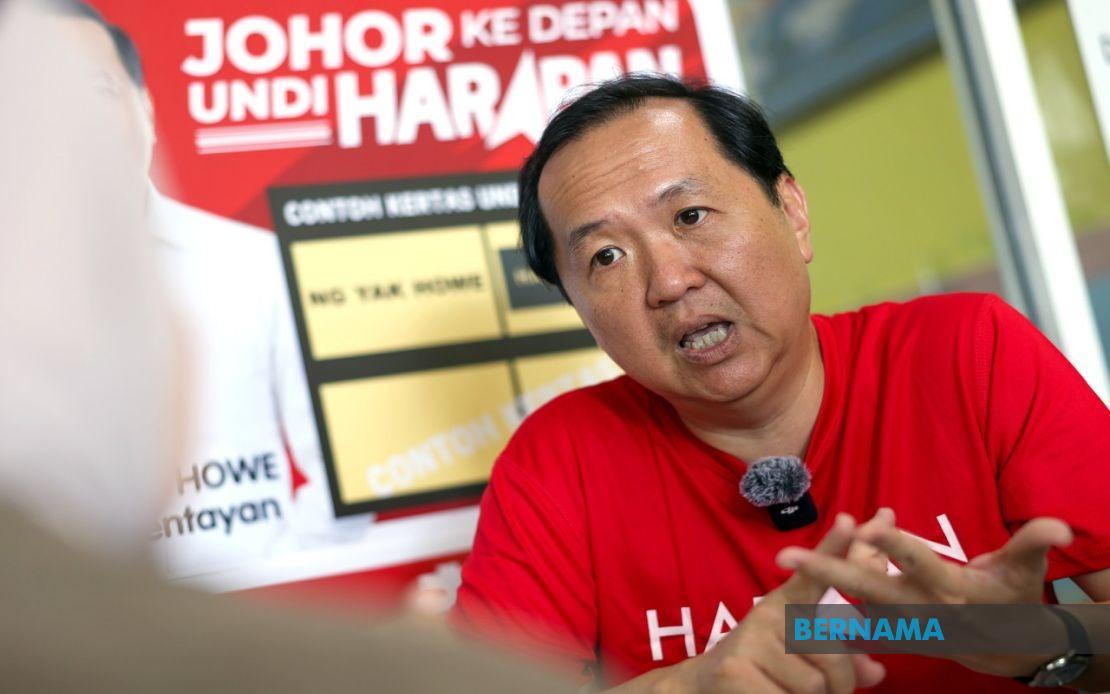
Ng Yak Howe, the Pakatan Harapan candidate seeking a third consecutive term representing the Bentayan state seat in Johor, has made the revitalisation of Muar town centre his campaign centrepiece as the state elections approach on July 11. The incumbent assemblyman has identified the deterioration of the commercial heart of Muar as a pressing challenge requiring immediate intervention, particularly given the substantial portion of the constituency that falls within the town's boundaries.
The phenomenon affecting Muar mirrors challenges facing many historic commercial districts across Malaysia, where the gravitational pull of suburban shopping malls and modern developments has hollowed out traditional town centres. Ng's constituency encompasses more than half of the Muar town core, providing him with a direct stake in reversing what has become a vicious cycle of declining patronage and business closures. The problem manifests most acutely during evening hours, when the area transforms from a bustling daytime commercial hub into a largely deserted landscape punctuated by darkened storefronts and shuttered office buildings.
The challenge extends beyond mere aesthetics or nostalgia for a bygone era of commerce. A weakened town centre represents lost economic opportunity and tax revenue, reduced employment in traditional retail and service sectors, and a diminished quality of life for residents who benefit from vibrant, walkable neighbourhoods. Younger residents, in particular, have gravitated toward suburban areas perceived as offering better amenities, more convenient parking, and modern shopping experiences, leaving Muar's older quarters struggling to compete.
Ng's approach combines targeted promotional campaigns with collaborative efforts across party lines to inject spending power back into local businesses. Working alongside Bakri Member of Parliament Tan Hong Pin, he has championed voucher schemes and lucky draw initiatives designed to incentivise consumers to patronise remaining retailers and service providers in the town centre. These consumer stimulation tools represent a pragmatic, short-term intervention aimed at sustaining existing businesses while longer-term revitalisation efforts take root.
The scale of the challenge is evident in the raw figures. With 18 per cent of premises remaining vacant in the town centre, Muar faces a genuine structural issue requiring more than cosmetic solutions. This vacancy rate signals underlying weakness in the commercial fundamentals of the area, suggesting that simple promotional campaigns alone may prove insufficient without accompanying infrastructure improvements, business support services, or mixed-use development strategies that could diversify the economic base beyond traditional retail.
Ng's professional background as a former quality assurance engineer with more than a decade of industry experience may inform his analytical approach to the problem, though economic revitalisation differs substantially from manufacturing quality control. His quarter-century involvement in politics has presumably equipped him with accumulated relationships and institutional knowledge that could facilitate coordination between state and local government, private sector partners, and community stakeholders essential for executing a comprehensive town centre recovery programme.
The straight contest for the Bentayan seat pits Ng against Barisan Nasional candidate Chua Lee Huat, with 34,205 registered voters holding the outcome in their hands. This bipolar contest reflects the increasingly polarised nature of Malaysian electoral politics, where three-cornered fights have become less common in many constituencies. The electoral stakes carry implications beyond Johor, as the state election forms part of the broader political jockeying that will shape Malaysia's political landscape in the coming years.
Muar town centre revival sits within the wider context of urban regeneration debates across Southeast Asia, where several countries grapple with similar town centre decay as development spreads outward. Solutions implemented elsewhere, ranging from cultural districts and heritage preservation initiatives to temporary pedestrianisation projects and business incubator schemes, could offer models for Malaysian municipalities to consider. The success or failure of revival efforts in places like Muar will likely influence policy thinking in other states facing comparable challenges.
The broader Johor state election context involves 172 candidates contesting across 16 seats, with early voting scheduled for July 7 preceding the main polling day. The scale of the contest underscores the significance that voters place on state-level governance, particularly in economically important states like Johor that contribute substantially to national output. Campaign promises addressing local economic concerns such as Ng's town centre initiative resonate with voters whose livelihoods depend on sustained commercial vitality within their constituencies.

