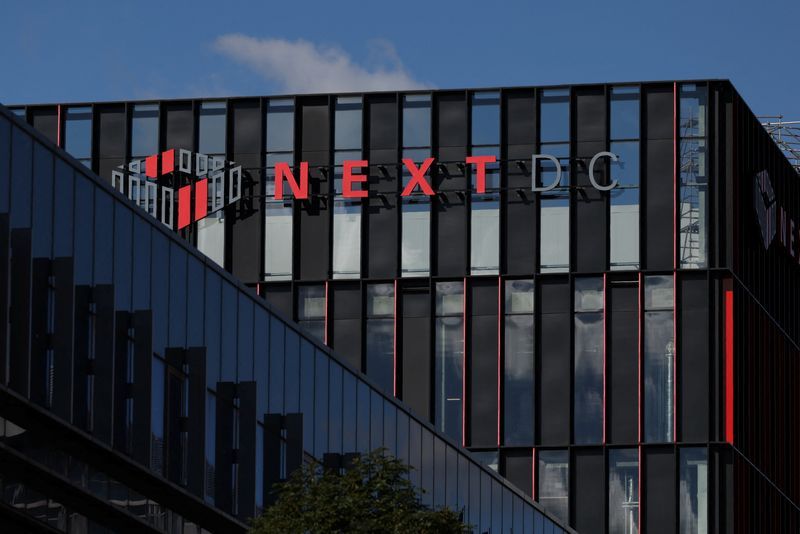
Australia's NextDC, a major data centre operator, has released figures that underscore an uncomfortable truth at the heart of the artificial intelligence boom: the computational resources driving the sector's explosive growth come with a mounting environmental cost. The company's latest results, announced late Thursday, reveal deteriorating efficiency across two critical metrics that governments and regulators now monitor as barometers of whether data centre expansion remains sustainable in resource-constrained regions.
Water consumption per unit of processing capacity, measured by the Water Usage Effectiveness ratio, climbed to 2.40 litres per kilowatt-hour in the year ending June, up from 2.25 the previous year. Meanwhile, the Power Usage Effectiveness ratio, which tracks how much additional electricity data centres consume on cooling and support systems beyond their primary computing functions, rose to 1.49 from 1.44. These twin deteriorations mark the third consecutive year both metrics have moved in the wrong direction, signalling a structural challenge rather than a temporary anomaly.
NextDC, which competes against regional heavyweights including Blackstone-backed AirTrunk and Infratil-owned CDC, attributed part of the increase to newly constructed facilities running cooling infrastructure before their IT systems reached full capacity. The company also acknowledged that a comprehensive audit uncovered previously undetected water leaks and measurement errors across its portfolio. This explanation matters because it suggests NextDC's underlying operational efficiency may not be as poor as the headline figures imply—yet it also reveals the company has only recently begun systematically tracking its resource consumption accurately, raising questions about industry-wide data quality.
For Malaysian and Southeast Asian policymakers, NextDC's experience carries immediate relevance. The region faces similar pressures as Australia: limited water supplies in certain areas, grid capacity constraints, and rising electricity costs. Vietnam, Thailand, and Malaysia have all attracted significant data centre investment in recent years, often justified as catalysts for economic development and digital infrastructure. Yet if major operators like NextDC struggle to improve their efficiency even as demand surges, Southeast Asian governments may face mounting complaints from local communities competing for the same water and electricity resources.
The broader political context amplifies this concern. Across the globe, a patchwork of governments and municipalities has begun implementing restrictions on data centre construction. Some regions have frozen new approvals pending environmental impact assessments; others have proposed outright bans. The European Union, parts of the United States, and several Asian jurisdictions have signalled that unrestricted data centre growth is incompatible with climate commitments and water security goals. These moves reflect genuine public anxiety that tech companies are externalizing the environmental costs of AI innovation onto communities with limited ability to negotiate.
Canberra's response illustrates how the issue has moved into mainstream policy debate. Australian policymakers are considering mandatory, nationally consistent standards that would govern data centres' energy and water consumption, alongside restrictions on their geographic locations. More strikingly, the government has proposed requiring data centres to build new renewable energy capacity rather than simply drawing from existing grids. Such mandates, if implemented, would reshape the economics of data centre development and signal that the era of unfettered expansion is ending.
NextDC's financial results, which showed a sharp turnaround to a A$82.1 million profit from a A$60.5 million loss the year prior, demonstrate that improved efficiency has not constrained profitability. Revenue climbed 16 percent, while underlying EBITDA—a measure of operational cash generation—rose 15 percent to A$248.8 million, beating analyst expectations. The market rewarded this performance, with NextDC shares rising 3.3 percent by mid-session Friday. This disconnect between operational strain and financial success is crucial: it suggests the company has not yet faced material penalties for its rising resource consumption, and therefore lacks immediate economic incentives to reverse the trend.
For the data centre sector across Asia-Pacific, the challenge becomes increasingly acute. AI workloads are fundamentally more computationally intensive than traditional cloud services, and they show no signs of abating. Major technology companies and emerging AI startups are expanding capacity across the region to serve growing local demand and to hedge against geopolitical risks. Yet as NextDC's figures illustrate, efficiency improvements have not kept pace with volume growth, and in some cases may be illusory—masked by accounting adjustments or offset by the commissioning of new, less-optimized facilities.
The policy responses now crystallizing in Australia and elsewhere suggest that the burden of efficiency improvements will increasingly fall on operators rather than being absorbed by communities. If Canberra follows through on its proposal to require data centres to build dedicated renewable capacity, other governments may follow suit. This would substantially raise the capital requirements for new data centre projects and might redirect investment toward regions with abundant renewable energy or superior grid infrastructure. Southeast Asian countries with strong hydro resources or growing solar capacity may benefit from such shifts, while others could face reduced investment.
Moreover, the environmental tension surrounding data centres has begun shaping political economy in unexpected ways. Environmental groups, local communities, and even some investors now scrutinize data centre expansion with the same intensity previously reserved for coal plants or chemical refineries. NextDC's transparent disclosure of worsening efficiency metrics, while perhaps intended to show responsible stewardship, simultaneously provides ammunition for advocates arguing that the AI boom's resource intensity is incompatible with sustainability targets. This framing will likely intensify pressure on policymakers to act.
The fundamental question animating this debate is whether technological efficiency gains can outpace demand growth. Historically, computing efficiency has improved exponentially—data centres today consume far less energy per gigabyte than they did a decade ago. Yet NextDC's three-year trend in the opposite direction suggests that AI-driven workloads are outstripping those gains, at least temporarily. If this pattern proves durable, it implies that future data centre growth will require either greater resource availability or more restrictive regulation.
For stakeholders across Southeast Asia—from governments seeking to attract technology investment to communities concerned about water security—the lesson from NextDC's results is clear: the AI boom's resource demands can no longer be treated as externalities to be absorbed by local systems. Whether through regulatory mandates, market-based incentives, or negotiated development agreements, the true cost of computation must be priced and managed. Failure to do so risks triggering the same political backlash now constraining data centre expansion in Australia and beyond.

