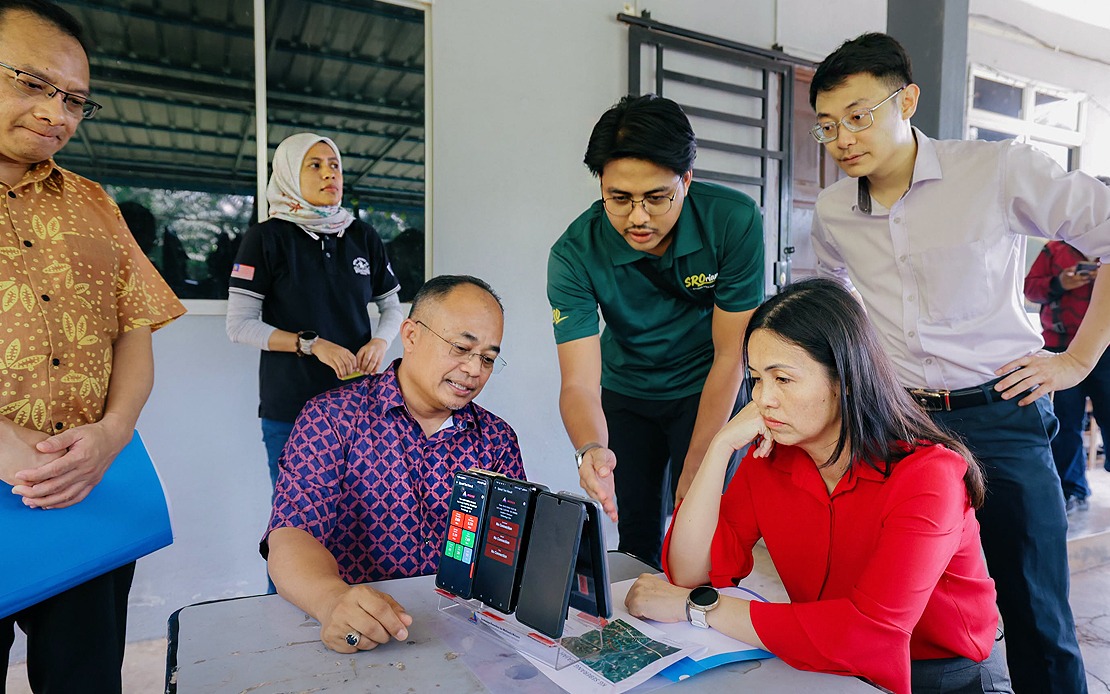
Residents of Kampung Seberang Gajah in Tangkak have endured persistent internet connectivity problems that have limited their access to digital services and economic opportunities. The situation is set to improve substantially as the Malaysian Communications and Multimedia Commission (MCMC) has approved plans for a dedicated telecommunications tower to serve the area, addressing a longstanding gap in coverage that has frustrated both households and local businesses seeking reliable connectivity.
Deputy Communications Minister Teo Nie Ching acknowledged during a recent survey visit that the existing infrastructure in the region is fundamentally inadequate for current demand. Although two telecommunications towers already operate in proximity to the village, their transmission reach and capacity fall short of serving the surrounding population effectively. This mismatch between available infrastructure and actual requirements is a common challenge in rural Malaysia, where population distribution and terrain often make coverage gaps difficult and expensive to bridge.
The Malaysian Communications and Multimedia Commission has taken decisive action by directing telecommunications service providers to construct a new tower specifically designed to enhance coverage across Kampung Seberang Gajah and adjacent communities. This intervention represents a regulatory commitment to closing digital divides in underserved areas, a priority increasingly recognized as essential for rural economic development and social inclusion. The MCMC's directive carries weight in compelling providers to invest beyond their immediate profit calculations, reflecting public policy pressure to ensure equitable access to telecommunications infrastructure.
Construction planning has progressed to an advanced stage, with design and logistical arrangements substantially finalized. However, the project remains dependent on securing formal authorization from the local municipal authority before physical work can commence. This permitting stage, while necessary for urban planning coordination and safety compliance, represents a potential bottleneck that Deputy Minister Teo urged authorities to accelerate. The urgency reflects frustration among villagers and government officials that regulatory procedures, however well-intentioned, can create unnecessary delays in delivering essential services.
The survey conducted by Teo, accompanied by MCMC officials and telecommunications company representatives, served both practical and political purposes. By visiting the site personally and meeting with stakeholders, the Deputy Minister demonstrated government responsiveness to rural grievances while gathering firsthand information on technical requirements and implementation challenges. Such visits underscore political commitment to closing connectivity gaps, a messaging dimension that matters as much as the infrastructure itself in rural constituencies.
The delegation included Bukhari Yahya, Head of the State Affairs Sector, and Rizal Abd Malek, MCMC Southern Region Office director, reflecting institutional seriousness about the project. Multiple government agencies coordinating on a single infrastructure challenge indicates recognition that telecommunications development requires alignment across communications regulators, local authorities, and state-level officials. This multi-stakeholder engagement, while potentially adding bureaucratic complexity, also increases accountability and reduces likelihood of project abandonment if individual officials change.
Teo's call for expedited permitting and construction work acknowledges that time delays compound rural residents' disadvantage. Every month without improved connectivity represents foregone educational opportunities for students seeking online learning resources, lost business transactions for entrepreneurs, and reduced access to government digital services increasingly delivered online. This economic cost of delay, though difficult to quantify precisely, justifies regulatory pressure to compress timelines where possible without compromising safety or planning integrity.
The broader context of internet infrastructure expansion in Malaysia reveals persistent regional inequality. While urban centres enjoy competitive telecommunications markets with abundant coverage options, rural areas like Tangkak often depend on government intervention or regulatory mandates to attract investment. Market forces alone prove insufficient because rural populations generate lower revenue density, making commercial tower construction marginally profitable or uneconomical without subsidy or compulsion. The MCMC's role in directing providers to build this tower reflects recognition that pure market mechanisms fail to deliver universal access objectives.
For Kampung Seberang Gajah residents, successful completion of this project will unlock multiple benefits. Students will access online educational platforms and distance learning opportunities previously unavailable. Small business owners can participate in e-commerce and digital payment systems. Households gain better access to government services, telemedicine, and information resources. These benefits extend beyond convenience to fundamental economic opportunity, as digital literacy and connectivity increasingly determine labor market competitiveness and entrepreneurial potential. The tower thus represents more than infrastructure; it constitutes a bridge toward fuller economic integration for a previously isolated community.
The project's success or failure will likely influence government policy toward similar underserved areas across Malaysia. If execution proceeds smoothly and connectivity improvements meet expectations, this model may inspire similar interventions elsewhere. Conversely, delays or technical difficulties could raise costs or discourage future such commitments. Consequently, stakeholders including the MCMC, local authorities, telecommunications providers, and villagers have mutual interest in ensuring prompt, successful completion. The political will demonstrated by high-level government participation suggests commitment to overcoming obstacles, though historical experience with rural infrastructure projects counsels realistic caution about timeline predictions.

