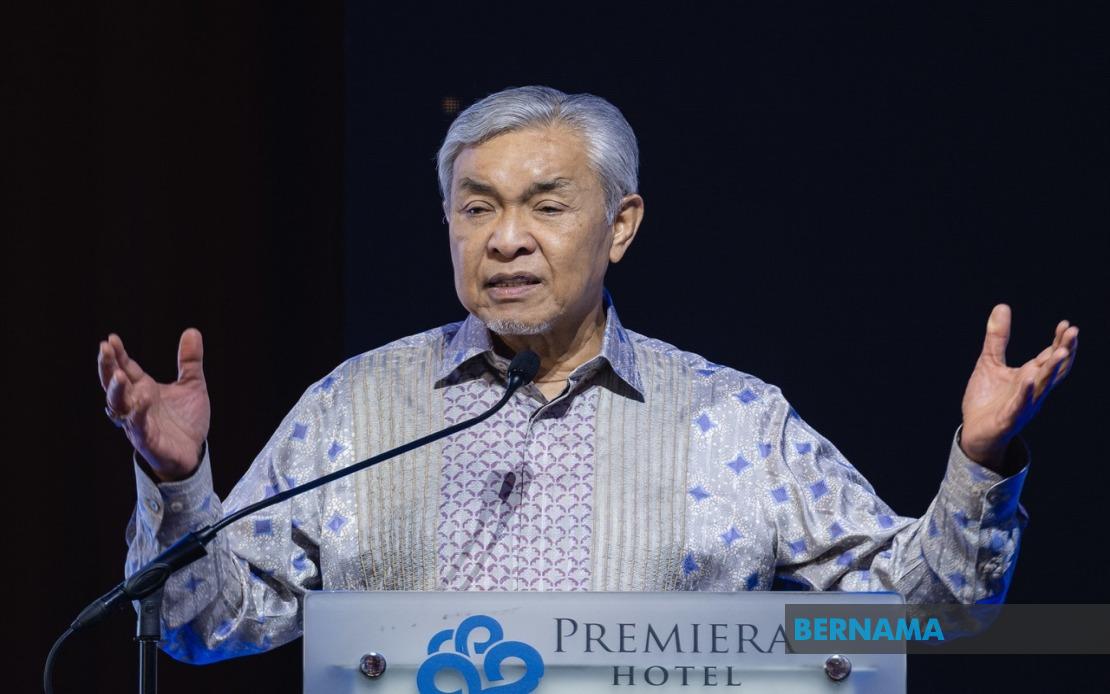
Deputy Prime Minister Datuk Seri Dr Ahmad Zahid Hamidi has signalled that the government will seriously consider funding new rural road projects in Sabah and Sarawak during the 2027 budget cycle, particularly those aimed at linking isolated communities with major urban centres. Speaking at the Ministry of Rural and Regional Development's annual excellence awards ceremony in Kuala Lumpur, Ahmad Zahid, who also holds the portfolio of Rural and Regional Development Minister, emphasized that his ministry remains committed to infrastructure projects that enhance accessibility in underserved regions.
The Deputy Prime Minister clarified that the ministry views rural road construction as a core responsibility, with the explicit aim of bridging the connectivity gap between remote settlements and established towns. He stated that any outstanding requests for such infrastructure will be forwarded for budgetary consideration once preliminary vetting is completed, subject to the normal approval procedures stipulated by the Ministry of Finance and the Public Works Department. This staged approach suggests that while the government acknowledges the urgency of rural connectivity, final allocation will depend on fiscal capacity and adherence to standard administrative protocols.
For Malaysian readers in East Malaysia, this announcement carries significant weight given the geographical and infrastructural challenges that characterize Sabah and Sarawak. The two states, which together represent over one-third of Malaysia's land area, continue to face substantial connectivity deficits in their interior regions. Many rural communities in these states remain dependent on poor-quality roads or waterways for access to essential services, markets, and economic opportunities. Ahmad Zahid's commitment suggests recognition at federal level that improved road infrastructure is foundational to broader development objectives in these regions.
Beyond the immediate infrastructure focus, Ahmad Zahid articulated a philosophical shift in how the Ministry of Rural and Regional Development should approach its mandate. He introduced the concept of a "new discipline" that demands rigorous evaluation of existing programmes and ruthless culling of ineffective initiatives. Rather than simply expanding the portfolio of rural development projects, the ministry should concentrate resources on proven interventions that demonstrably improve rural living standards. This performance-based approach reflects wider public sector reform objectives and suggests that future budget allocations will be increasingly tied to measurable outcomes.
The Deputy Prime Minister's vision extends beyond conventional infrastructure development. He stressed that rural development in the contemporary context must evolve to encompass income generation and employment creation, moving away from a purely bricks-and-mortar mentality. This signals that new rural roads, while important, should be evaluated not merely as access corridors but as economic enablers that facilitate commerce, agricultural marketing, tourism, and small business development. For Sabah and Sarawak, where many interior communities rely heavily on primary industries and smallholder agriculture, improved road access directly translates to better market access and higher farm-gate prices.
Ahmad Zahid also underscored the importance of mindset transformation within the public service, particularly regarding reform initiatives. He differentiated between digital transition and genuine institutional reform, arguing that the latter requires a more fundamental shift in organizational culture. This distinction has implications for how rural development programmes are designed and implemented. It suggests that future rural road projects may incorporate improved maintenance protocols, community engagement mechanisms, and integration with broader economic development plans rather than being treated as standalone construction contracts.
The integration of lifelong learning, innovation, and integrity as core principles for ministry staff reflects an attempt to professionalize rural development administration. As Southeast Asian economies increasingly compete for investment and talent, the quality of public service delivery becomes crucial. For Sabah and Sarawak, where development has historically been constrained by both resource limitations and administrative capacity challenges, this emphasis on staff excellence and accountability could yield substantial dividends. Better-trained officials should produce more effective project planning, superior implementation oversight, and enhanced community outcomes.
The timeline for these considerations remains somewhat open-ended, with the formal consultation phase still underway. The Ministry of Rural and Regional Development must engage with various stakeholders including state governments, local authorities, and community representatives before finalizing proposals for federal budget submission. This consultative process, while potentially extending the decision timeline, also provides an opportunity for priorities to be properly calibrated against actual ground-level needs rather than bureaucratic assumptions. For residents of underserved rural areas, this deliberative approach offers hope that their infrastructure needs will receive serious consideration based on evidence rather than political expediency.
From a regional perspective, Ahmad Zahid's pronouncement reflects broader Malaysian development strategy focused on reducing urban-rural disparities and ensuring that all citizens benefit from national economic growth. Sabah and Sarawak, as crucial components of the Malaysian federation, have long articulated the need for improved infrastructure as a prerequisite for competitive development. The Deputy Prime Minister's remarks suggest that federal recognition of this reality is translating into concrete budgetary planning, though final allocations will ultimately depend on the fiscal environment and competing national priorities when Budget 2027 is formally presented.
The emphasis on connecting remote areas to major towns carries implications beyond mere road construction. Such linkages typically catalyze broader economic integration, with downstream benefits including improved access to healthcare, education, and government services. For rural communities in Sabah and Sarawak that currently operate in relative isolation, road connectivity often proves transformative. Young people gain access to higher education and employment opportunities in urban centres, agricultural products reach larger markets, and businesses can operate on a less localized basis. These multiplier effects make rural road investment a high-impact policy tool for addressing regional disparities.
Looking forward, the government's approach to rural development in East Malaysia will merit close monitoring. Ahmad Zahid's commitment to performance-based allocation and meaningful development outcomes represents a departure from previous models that sometimes prioritized project completion over actual socioeconomic impact. If implemented rigorously, this approach could fundamentally improve the quality and effectiveness of rural infrastructure investment. However, the true test will come when Budget 2027 is unveiled and specific allocations are announced for Sabah and Sarawak projects. Community leaders and development advocates in these states will likely assess the announced funding against outstanding infrastructure needs to gauge whether federal commitments translate into meaningful action.

