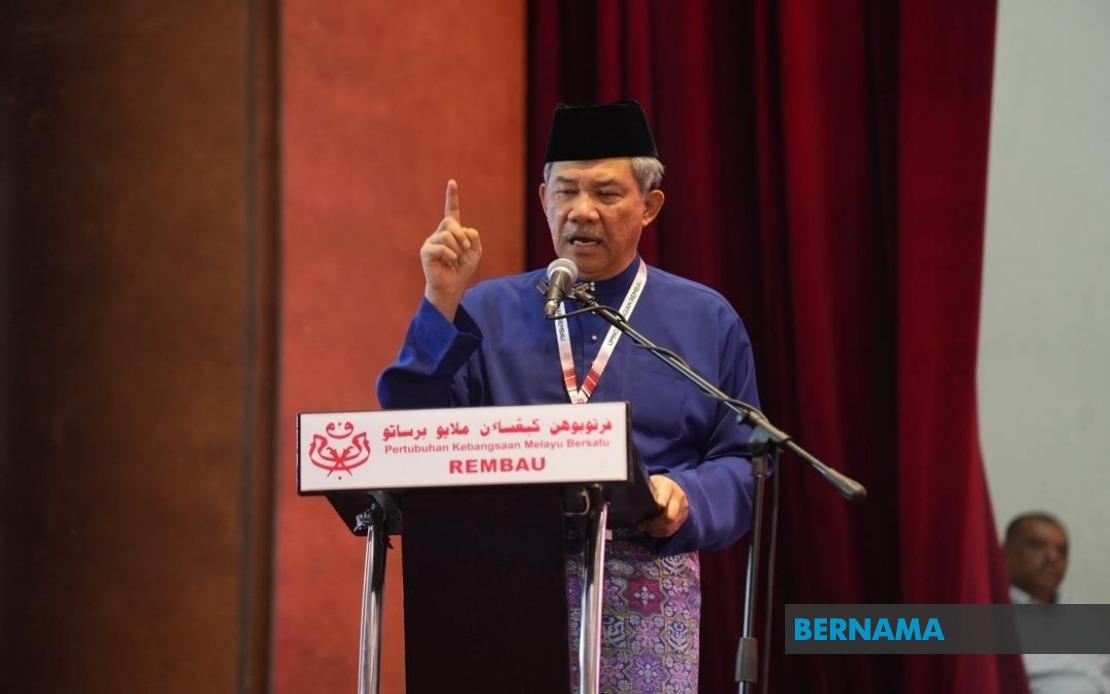
The Barisan Nasional coalition expressed optimism on Wednesday about the ability of Negeri Sembilan's newly appointed executive council members to serve the state competently. Datuk Seri Mohamad Hasan, the coalition's deputy chairman and also Rantau state assemblyman, voiced his confidence that the 10 freshly sworn-in members would provide strong support to Menteri Besar Antonis Edward and discharge their responsibilities across their assigned portfolios with the public interest in mind.
The comments came shortly after all appointees completed their oath-taking ceremony before the Yang Dipertuan Besar of Negeri Sembilan, Tuanku Muhriz Tuanku Munawir, at Istana Besar Seri Menanti in Seremban. The symbolic occasion marked the formal establishment of the state's administrative leadership structure under the new configuration, signalling the start of fresh governance initiatives for the central Malaysian state.
Mohamad emphasised that executive council members carry a dual function within the democratic system, acting simultaneously as conduits for information flow and policy implementation. He described the exco role as fundamentally bridging the gap between state government and ordinary citizens. This positioning, he suggested, requires exco members to both educate communities about government directives and simultaneously channel public concerns, suggestions, and observations back to decision-makers. The framework reflects how Malaysian state governance depends on these intermediary officials to translate high-level policy into practical action while remaining responsive to grassroots feedback.
The deputy chairman stressed that effective policy communication represents a critical responsibility of executive council members. Government decisions often involve complex rationales and long-term objectives that citizens may not immediately comprehend. Exco members, stationed closer to communities and equipped with administrative authority, must therefore function as clear-eyed explainers of government reasoning. Without this interpretive role, public misunderstandings about policy direction can fester, potentially undermining support for legitimate initiatives and creating unnecessary friction between the state administration and constituents.
Equally important, Mohamad noted, is the intelligence-gathering dimension of the exco position. By maintaining direct contact with residents across their respective areas, exco members become conduits for identifying emerging problems, collecting community suggestions, and documenting public sentiment on various issues. This feedback loop, if properly operated, allows state governments to refine their approaches, identify overlooked challenges, and adapt administrative practices to address genuine public needs rather than pursuing initiatives divorced from ground realities.
To equip the newly appointed exco members for these responsibilities, Mohamad advised that each should undertake comprehensive briefings from the government departments operating within their portfolios. These structured sessions would familiarise appointees with the existing programmes, institutional structures, budget frameworks, personnel arrangements, and regulatory requirements governing their areas of responsibility. Without such foundational knowledge, even well-intentioned exco members risk implementing policies inefficiently or failing to leverage existing resources optimally.
The Rantau assemblyman also highlighted the importance of maintaining productive working relationships between exco members and the administrative departments under their supervision. Government departments, staffed by career officials with institutional memory and technical expertise, require clear direction and political support from exco leadership. Conversely, exco members depend on departmental officials to execute policies effectively. When relations between political appointees and civil servants deteriorate, policy implementation suffers, and public services deteriorate. Mohamad's emphasis on sustaining these relationships reflects an understanding that Malaysian governance depends on genuine partnership between elected politicians and professional administrators.
The confidence expressed by the BN deputy chairman appears grounded in the party's extensive experience governing Malaysian states across multiple electoral cycles. The coalition has developed institutional mechanisms for training and preparing new exco members, drawing on accumulated knowledge about what makes state governments function effectively. Nevertheless, the appointment of new officials always carries inherent uncertainty. Individual competence, commitment levels, and capacity to navigate complex bureaucratic environments varies among appointees, and past exco appointments have occasionally resulted in underperformance or controversies.
Negeri Sembilan's state administration operates within the broader context of Malaysia's federal system, where state governments retain significant autonomy over certain policy domains including education implementation, public health delivery, and local economic development. The 10 newly appointed exco members will therefore hold considerable influence over how these areas develop within the state. Their effectiveness in coordinating with federal programmes and managing state-level resources will meaningfully impact the quality of life for Negeri Sembilan residents across multiple dimensions.
Looking beyond the immediate exco appointments, Mohamad addressed the possibility of an election in neighbouring Melaka, indicating that the timing of any electoral contest would depend entirely on whether the Melaka Chief Minister decided to seek the Yang Dipertua Negeri's consent to dissolve the State Legislative Assembly. The matter underscores how Malaysian states retain significant autonomy in determining the political timing of electoral processes, provided constitutional requirements are met. Whether Melaka proceeds with an election remains an open question dependent on political calculations within that state's ruling coalition.
The successful swearing-in of Negeri Sembilan's exco members represents a routine but significant milestone in Malaysian state governance. While individual appointments attract relatively limited national attention compared to federal political developments, these state-level administrative appointments accumulate over time to shape the quality and direction of public service delivery that ordinary Malaysians experience daily. The competence and commitment of executive council members therefore ultimately determines whether government policies genuinely improve public welfare or merely exist as paper directives disconnected from implementation realities.

