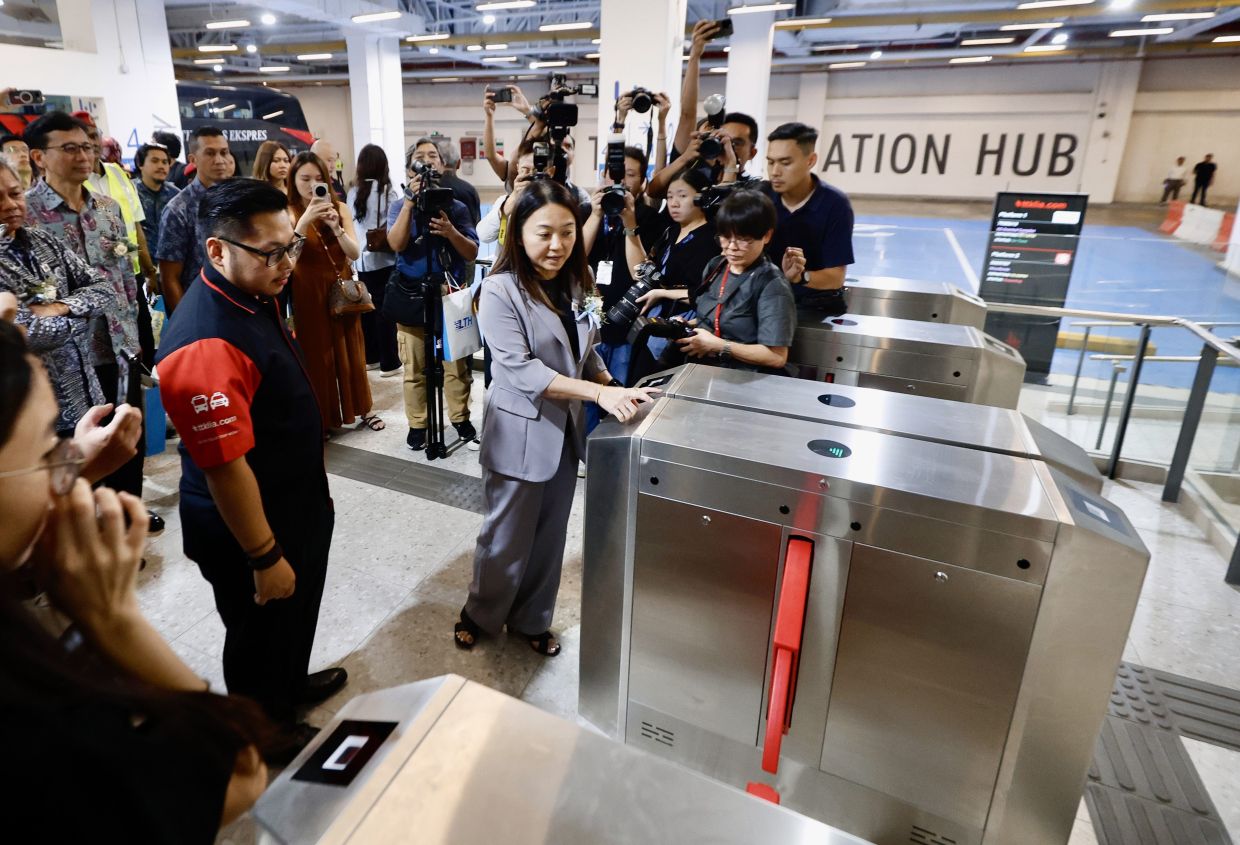
Kuala Lumpur's latest attempt to streamline urban mobility has taken shape with the opening of the LaLaport Transportation Hub at Bukit Bintang City Centre, a purpose-built facility designed to serve as a central boarding point for express bus services across the capital. The hub, which commenced phased operations in February and was formally launched on Thursday, July 16, will eventually accommodate approximately 30 licensed bus operators under a unified structure managed by the Land Public Transport Agency (Apad). This consolidation represents a significant step in Malaysia's broader effort to modernize public transport infrastructure and reduce reliance on private vehicles in congested urban centres.
The facility's projected capacity of 3,000 daily passengers, with potential to expand to 10,000 commuters, addresses a critical gap in Kuala Lumpur's transport ecosystem. Minister Hannah Yeoh, speaking in her capacity as Minister in the Prime Minister's Department (Federal Territories), underscored the urgency of prioritizing urban mobility solutions, citing alarming traffic data from Kuala Lumpur City Hall. The capital records an average of 1.2 million vehicles entering daily, while an estimated 5.5 million journeys flow in and out of the city throughout any given day. These figures illustrate why coordinated transport infrastructure has become essential for managing congestion and maintaining the city's economic vitality.
Located on Level LG1 of LaLaport BBCC's East Atrium, the transport hub occupies a strategically significant position within the commercial development. The facility features 11 dedicated bus bays accommodating various express services, complemented by an air-conditioned waiting lounge that shields passengers from Kuala Lumpur's tropical heat and unpredictable weather. Ticketing counters and self-service machines provide flexible payment options, while real-time passenger information screens displaying live bus schedules enable commuters to make informed decisions about their journeys. These design elements reflect contemporary best practices in transport hub management, prioritizing passenger comfort and accessibility.
A defining advantage of the LaLaport hub lies in its seamless integration with Kuala Lumpur's existing rapid transit network. Situated immediately adjacent to the Hang Tuah interchange, the facility connects directly to the Light Rail Transit (LRT) and Monorail networks through a sheltered pedestrian walkway. This multi-modal connectivity transforms the hub into a genuine interchange rather than merely an isolated bus station, enabling passengers to transfer between different transport modes without exposure to the elements. For commuters planning journeys across the city, such connectivity dramatically reduces travel time and enhances the appeal of public transport relative to private vehicles.
Beyond conventional express bus services, the hub offers a diversified range of transport options tailored to different traveller needs and budgets. Airport shuttle van services connecting to both Kuala Lumpur International Airport's Terminal 1 and Terminal 2 cater to leisure and business travellers, representing a critical link between the city centre and the nation's primary international gateway. Demand-responsive transport services, representing an emerging segment of public transit, provide flexible routing options for commuters requiring non-standard journeys. The inclusion of designated pick-up and drop-off areas for conventional taxis and e-hailing services acknowledges the complementary role of ride-sharing platforms in contemporary urban transport ecosystems, rather than viewing them as competitors to be excluded.
The phased operational approach that began in February demonstrates pragmatic infrastructure management, allowing operators and authorities to identify and resolve operational challenges before full capacity deployment. This incremental rollout permits adjustment of scheduling, staff training, and signage based on actual passenger patterns rather than purely theoretical projections. For Malaysian readers familiar with transport infrastructure projects elsewhere in the region, this methodical approach contrasts with some rushed openings that encountered teething problems requiring expensive remediation. The formal July launch represents the completion of initial stabilization phases rather than a rushed inauguration.
The implications of the LaLaport hub extend beyond mere convenience for individual commuters. By consolidating bus services at a purpose-designed facility with modern amenities, authorities signal their commitment to enhancing public transport's competitive position relative to private vehicles. In Southeast Asian cities increasingly grappling with congestion, air quality degradation, and infrastructure strain, successful integration of express bus services with rapid transit networks provides a replicable model. For other Malaysian cities—particularly Petaling Jaya, Shah Alam, and Selangor's other major centres—the LaLaport template offers a reference point for planning similar facilities.
The hub's capacity to expand from 3,000 to 10,000 daily passengers reflects realistic assessment of demand growth as awareness and confidence in integrated public transport develops among Kuala Lumpur's commuting population. This flexibility in design represents substantial progress compared to legacy transport infrastructure that frequently encounters capacity constraints shortly after opening. For Malaysian policymakers evaluating future transport investments, designing for scalability has emerged as a critical consideration, acknowledging that behavioural shifts toward public transit adoption often require years rather than months to fully materialize.
The consolidation of approximately 30 independent bus operators under a unified facility structure introduces administrative and operational coordination requirements that should theoretically improve service reliability and frequency. When bus operators compete within a fragmented system, passengers often experience scheduling conflicts, duplicated routes, and gaps in coverage. The structured environment of an integrated hub, managed through a licensing arrangement with Apad, creates conditions for more coordinated service planning. However, realizing these coordination benefits requires sophisticated management systems and genuine cooperation among operators whose historical relationships may have been characterised more by competition than collaboration.
For Malaysian commuters accustomed to private vehicle dependence, the LaLaport hub represents institutional acknowledgment that viable alternatives to car ownership exist for regular city journeys. The combination of comfortable waiting facilities, real-time information systems, convenient connections to rapid transit, and additional services such as airport shuttles and demand-responsive options creates a compelling transportation experience. Whether this facility ultimately achieves its projected passenger volumes will substantially depend on complementary investments in urban planning that prioritizes transit-oriented development around major hubs and discourages car-dependent sprawl.
The launch of the LaLaport Transportation Hub reflects broader regional momentum toward modernizing public transport infrastructure across major Southeast Asian cities. As urbanization accelerates throughout the region and environmental concerns mount, transport hubs integrating multiple services and modes represent increasingly essential components of city-wide mobility strategies. The facility's success in Bukit Bintang will likely influence transport planning decisions across Malaysia and potentially inform similar initiatives in neighbouring countries navigating comparable congestion and infrastructure challenges.

