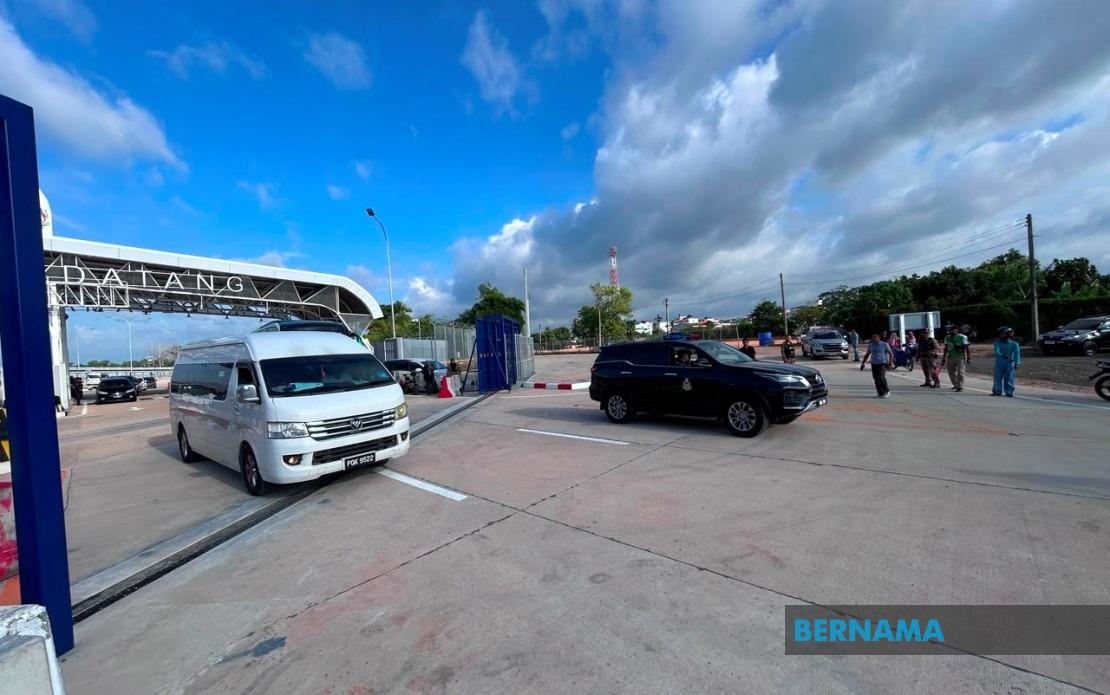
The newly constructed road corridor connecting Bukit Kayu Hitam's Immigration, Customs, Quarantine and Security Complex in Kedah with Thailand's Sadao Customs, Immigration and Quarantine facility commenced public operations on July 11, marking a significant advancement in bilateral infrastructure development. The route, which began handling traffic from 6 am that morning, represents an investment in regional connectivity aimed at transforming how thousands of travellers and commercial vehicles cross the Malaysia-Thailand border each week. The initiative follows formal inauguration by Malaysian Prime Minister Datuk Seri Anwar Ibrahim and Thai counterpart Anutin Charnvirakul, underscoring the political importance both governments attach to seamless regional mobility.
The infrastructure project was conceived primarily to address longstanding congestion problems that have plagued this major international crossing, particularly during peak travel periods including school holidays and public holidays. Weekend journeys between Malaysia and Thailand have historically been characterised by extended delays and gridlocked approaches to clearance facilities, undermining the commercial attractiveness of cross-border trade and deterring leisure travellers. By creating a dedicated, purpose-built corridor with separate traffic streams and improved checkpoint facilities, planners aim to fundamentally alter the experience of crossing at this location. The new infrastructure also signals official commitment to facilitating increased people-to-people movement between the two nations, supporting both tourism and business development in the border region.
Feedback from early users proved overwhelmingly positive, with travellers reporting notably improved conditions compared to the previous congested arrangement. Penang resident Mohd Faizal Ahmad, a regular traveller to Thailand, characterised the new route as substantially better organised with markedly greater convenience for Malaysian motorists. He observed that previous journeys, particularly during school holiday periods, had involved significant delays, and expressed confidence that the new infrastructure would meaningfully reduce travel times. Such observations from actual users provide practical validation of the project's core objectives, suggesting that the engineering solutions implemented address the specific congestion patterns that had plagued cross-border movement.
Commercial transport operators also recognised substantial operational improvements embedded in the new corridor design. Lorry driver Wan Muhammad Shahid Wan Mohd Desa highlighted that the expanded roadway creates systematic separation between heavy goods vehicles and private automobiles when approaching the Sadao checkpoint, enabling superior traffic management compared to previous arrangements where all vehicle classes competed for the same limited space. The previous system forced heavy vehicles departing the Bukit Kayu Hitam ICQS towards Danok to share road space with general traffic, creating cascading congestion for both arriving and departing vehicles. The new dedicated lanes and improved junction design appear to have successfully resolved these bottlenecks, suggesting that infrastructure design specifically accounting for vehicle classification can yield substantial efficiency gains in border operations.
Malaysian and Thai officials designed the new checkpoint facilities themselves to enhance the border crossing experience, not merely to move vehicles more quickly. Thai national Mat Li Daman, who frequently travels between the two countries, praised the substantially enlarged and more comfortable Sadao facility, particularly noting the expanded capacity for documentation processing and vehicle declaration procedures. The previous structure, characterised as cramped and physically constrained, had created unpleasant working and waiting conditions. The new building design reflects lessons learned from years of operational experience, with dedicated areas for different transaction types and improved environmental conditions supporting more efficient bureaucratic processing. Daman expressed hope that these enhanced facilities would benefit residents of both countries who have historically regarded each other as neighbours, suggesting that infrastructure improvements carry symbolic value beyond mere operational efficiency.
The project sits within a broader strategic framework emphasising border efficiency and facilitation of legitimate cross-border commerce and movement. Both governments recognised that their shared frontier required modernisation to support growing bilateral trade and tourism flows while maintaining necessary security and customs oversight. The development strategy prioritised separating cargo operations from passenger flows, expanding processing capacity at both terminals, and creating traffic patterns that minimise conflicts between different user groups. This comprehensive approach extends beyond simply widening roads or adding lanes; it represents holistic rethinking of how modern borders can function as connective rather than restrictive infrastructure.
For Malaysia specifically, the new link represents investment in economic corridor development that aligns with the broader Southern Border Regional Development Plan involving Kedah, Perlis, and Satun province in Thailand. Border infrastructure improvements directly support trade facilitation initiatives and regional economic integration objectives pursued by both governments. The reduced congestion and improved facility standards lower transaction costs for businesses moving goods across the frontier, potentially increasing competitiveness of cross-border supply chains and encouraging investment in border-proximate industrial or commercial activities. Enhanced people movement capacity similarly supports tourism development in both countries, with easier passage across the border potentially driving increased visitor flows and associated economic benefits for hotels, restaurants, and attractions on both sides.
The opening also reflects evolving regional attitudes toward cross-border cooperation, with infrastructure development serving as tangible expression of bilateral goodwill and shared development aspirations. Thailand and Malaysia have worked progressively to expand cooperation mechanisms addressing border management, and physical infrastructure improvements constitute concrete manifestations of these diplomatic relationships. The successful completion and timely opening of this project demonstrates both countries' commitment to practical cooperation that benefits ordinary citizens and business communities rather than remaining confined to high-level political discourse. Early smooth operations suggest that both Malaysian and Thai authorities have coordinated effectively on technical protocols, vehicle flow management, and staffing arrangements necessary for the new system to function seamlessly.
Looking forward, the new corridor's success may influence future border infrastructure planning both bilaterally and within the broader Southeast Asian region. As countries increasingly recognise that porous, efficient borders facilitate legitimate commerce and movement while maintaining security, projects like the Bukit Kayu Hitam-Sadao link become models for other cross-border developments. The initiative demonstrates that congestion at international borders need not be inevitable or acceptable, and that investment in properly designed infrastructure can substantially improve cross-border experiences for millions of annual travellers. For Malaysia specifically, the corridor's success enhances the country's reputation as a regional hub facilitating Asia-Pacific connectivity and trade flows, supporting broader positioning within ASEAN economic integration processes.
The early operational success also validates the planning and design decisions that guided the project's development and construction phases. Engineers incorporated lessons from similar border facilities across the region, adapting international best practices to the specific geographical and operational context of the Malaysia-Thailand frontier. The separation of commercial and passenger traffic, expanded checkpoint facilities, and dedicated lanes for different vehicle types collectively address identified problems in evidence-based manner. As the facility matures and operational data accumulates, authorities will likely identify refinements and optimisations, but the fundamental improvements in congestion management and user experience appear already evident from initial operations. The project ultimately demonstrates that strategic infrastructure investment, pursued through bilateral cooperation and grounded in clear understanding of operational challenges, can effectively transform cross-border movement dynamics for thousands of daily travellers and goods movements.

