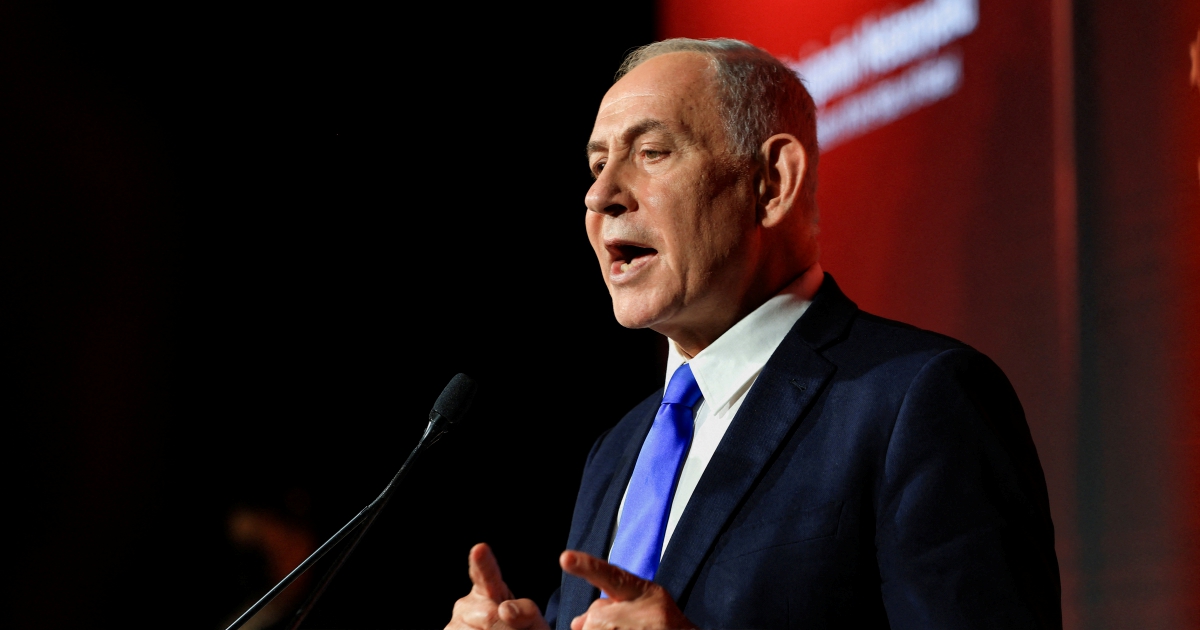
Israeli Prime Minister Benjamin Netanyahu reaffirmed on Sunday that Israeli military personnel deployed to southern Lebanon would maintain their presence for whatever duration the strategic situation demands, a statement that underscores the open-ended nature of the current Israeli intervention in the region. Alongside this declaration, Netanyahu renewed Israel's long-standing commitment to blocking Iran's path toward nuclear capability—a dual-front messaging approach that reflects the interconnected security challenges dominating Israeli strategic thinking.
The commitment to an indefinite presence in southern Lebanon marks a significant escalation in rhetoric regarding Israeli military operations in the country. Rather than articulating a specific timeline or concrete exit conditions, Netanyahu's language suggests a posture of sustained engagement contingent on undefined security objectives. This formulation differs markedly from the initial framings of military operations, which typically emphasize temporary interventions with clear operational endpoints. The phrase "as long as necessary" effectively delegates the decision of withdrawal to an assessment of unspecified criteria that remain under Israeli control.
For Malaysia and Southeast Asian observers, Netanyahu's statement carries implications beyond the immediate Israeli-Lebanese dynamic. The broader regional architecture in the Middle East, where several ASEAN members maintain significant economic and diplomatic interests, faces continued uncertainty. Israeli military operations in Lebanon directly affect regional stability and could influence broader geopolitical alignments, trade patterns, and security calculations across the eastern hemisphere. The extended nature of such operations typically increases opportunities for regional actors to align or realign their positions accordingly.
The southern Lebanese frontier has historically served as a contested space between Israeli security interests and various armed groups, including Hezbollah. Israel's deployment there represents a continuation of decades of military engagement in the region, though the current operation reflects contemporary tensions between Israel and Iran-affiliated forces. Netanyahu's insistence on maintaining forces in the territory until strategic objectives are achieved suggests that Israeli security planners view the situation as inherently unstable and requiring direct military oversight to prevent threats from materializing.
Concurrently, Netanyahu's reiteration of Israel's commitment to preventing Iranian nuclear advancement reflects an enduring priority that has dominated Israeli defense policy for nearly two decades. This objective has been pursued through military operations, diplomatic pressure, and covert actions. The synchronous articulation of both commitments—sustained presence in Lebanon and nuclear non-proliferation regarding Iran—indicates how interconnected these challenges appear from Jerusalem's perspective. Israeli decision-makers clearly perceive Iran-affiliated activities in Lebanon and Iranian nuclear advancement as related security phenomena requiring parallel attention.
The Iranian nuclear dimension adds substantial complexity to the Lebanese equation. Iran's influence across the Levantine region, particularly through proxy forces and non-state actors, has created a strategic environment where Israeli security concerns extend far beyond traditional border security. From an Israeli standpoint, activities in southern Lebanon directly relate to constraining Iranian strategic reach and protecting Israeli citizens from threats emanating from Iranian-aligned groups. This explains why Netanyahu couples announcements regarding military presence with statements about nuclear non-proliferation—the two represent complementary aspects of a broader strategy to limit Iranian regional influence.
For Malaysian policymakers and observers monitoring regional developments, Netanyahu's statements underscore the volatility characterizing Middle Eastern geopolitics. The commitment to indefinite military presence in another nation's territory, while justified through security rhetoric, nevertheless represents the kind of sustained foreign military engagement that can perpetuate regional tensions rather than resolve underlying conflicts. Southeast Asian nations with interests in maintaining stable international norms regarding territorial integrity and military intervention may find reason to carefully consider the precedents being established.
The open-ended nature of Netanyahu's commitment also raises questions about diplomatic off-ramps and negotiated solutions. When military forces commit to remaining in foreign territory "as long as necessary," exit strategies often become obscured, making eventual disengagement potentially more contentious. This dynamic has parallels in other regional conflicts that have seen military interventions become protracted rather than achieving rapid resolution. The absence of clearly defined success criteria makes it difficult for international stakeholders to track progress or encourage movement toward diplomatic resolution.
From a broader strategic perspective, Netanyahu's dual commitment reveals how Israeli security planners view the relationship between military presence and deterrence. By maintaining forces in southern Lebanon, Israel signals resolve and capacity to enforce its security preferences in the region. Simultaneously, by emphasizing the nuclear threat posed by Iran, Netanyahu grounds this military presence within a larger narrative of defensive necessity. Whether this combination of military presence and deterrent messaging achieves its intended effects remains uncertain, but the strategy clearly reflects Israeli assessment that sustained military engagement is preferable to withdrawal from a territory it views as strategically significant.
The sustainability of such operations over extended periods depends on multiple factors including domestic Israeli political tolerance for continued military commitment, the financial costs of deployment, and the military capacity required to maintain presence against potential resistance. Regional actors, including Lebanese authorities, neighboring states, and armed groups operating within Lebanon, will also influence how the situation evolves. Netanyahu's statement essentially signals that Israel intends to remain a significant factor in Lebanon's security dynamics for the foreseeable future, regardless of other parties' preferences regarding Israeli military presence on Lebanese soil.
%22%2F%3E%3C%2Fpattern%3E%3C%2Fdefs%3E%3Crect%20width%3D%22100%25%22%20height%3D%22100%25%22%20fill%3D%22url(%23ph14kuwg)%22%2F%3E%3Crect%20width%3D%22100%25%22%20height%3D%22100%25%22%20fill%3D%22url(%23ph14kuwp)%22%2F%3E%3Ctext%20x%3D%2250%25%22%20y%3D%2250%25%22%20text-anchor%3D%22middle%22%20dominant-baseline%3D%22central%22%20fill%3D%22rgba(255%2C255%2C255%2C0.95)%22%20font-family%3D%22Georgia%2C%20'Times%20New%20Roman'%2C%20serif%22%20font-weight%3D%22700%22%20font-size%3D%22170%22%20letter-spacing%3D%22-0.02em%22%3ETambirat%3C%2Ftext%3E%3C%2Fsvg%3E)
%22%2F%3E%3C%2Fpattern%3E%3C%2Fdefs%3E%3Crect%20width%3D%22100%25%22%20height%3D%22100%25%22%20fill%3D%22url(%23ph1635wg)%22%2F%3E%3Crect%20width%3D%22100%25%22%20height%3D%22100%25%22%20fill%3D%22url(%23ph1635wp)%22%2F%3E%3Ctext%20x%3D%2250%25%22%20y%3D%2250%25%22%20text-anchor%3D%22middle%22%20dominant-baseline%3D%22central%22%20fill%3D%22rgba(255%2C255%2C255%2C0.95)%22%20font-family%3D%22Georgia%2C%20'Times%20New%20Roman'%2C%20serif%22%20font-weight%3D%22700%22%20font-size%3D%22194%22%20letter-spacing%3D%22-0.02em%22%3EBintulu%3C%2Ftext%3E%3C%2Fsvg%3E)