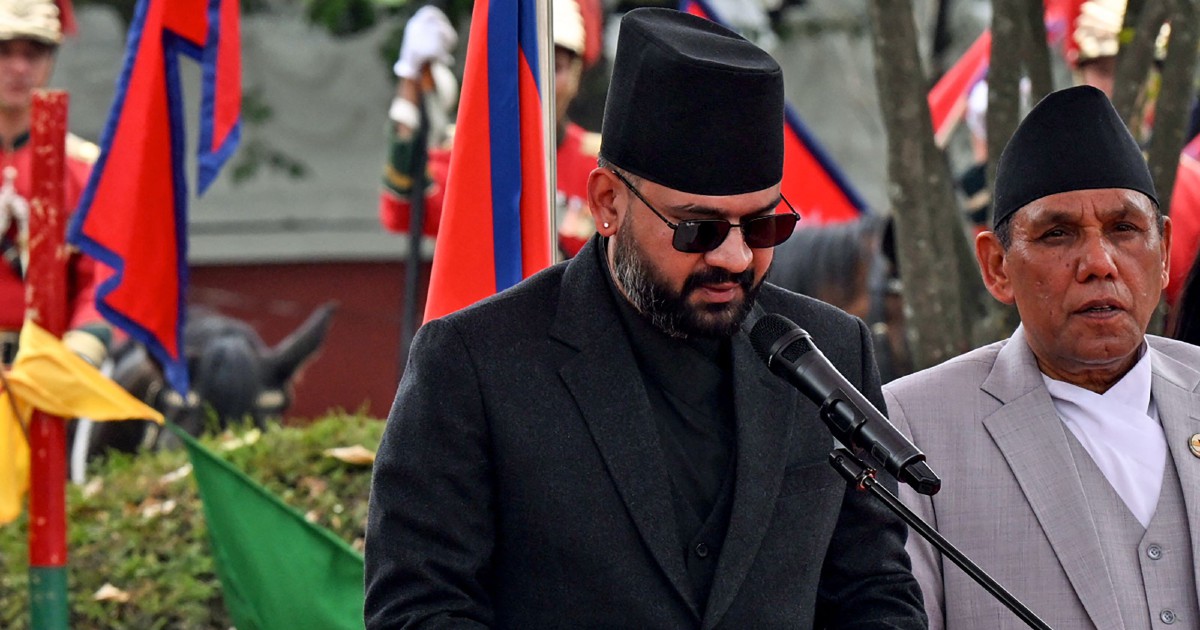
Nepal's political landscape has undergone substantial transformation under Prime Minister Balendra Shah since he assumed office roughly three months ago, bringing with him promises of comprehensive governmental modernisation that have manifested through swift administrative reshuffling and institutional reorganisation. The 36-year-old leader, who rose to prominence in Nepal's entertainment industry before transitioning into politics, has proven to be an administrator focused on action rather than public communication, consolidating power through structural changes while maintaining considerable distance from public appearances and media engagement.
Shah's approach to governance stands in marked contrast to the traditional political theatre that characterises Nepali politics, where public visibility and rhetorical flourishes typically dominate leadership styles. His reluctance to engage extensively with media or make frequent public statements has created an unusual dynamic in which tangible policy shifts and administrative restructuring proceed without the accompanying narrative that usually frames such changes for public consumption. This communication deficit has left many ordinary Nepalis uncertain about the broader vision underpinning the government's concrete actions, even as civil servants and political observers note the scope of institutional transformation occurring within ministries and administrative bodies.
The cabinet reshuffles orchestrated under Shah's leadership have been extensive, with multiple ministerial portfolios reassigned and bureaucratic hierarchies recalibrated to centralise authority and streamline decision-making processes. These administrative overhauls have prompted speculation among Nepal's political commentators about the Prime Minister's ultimate objectives, with some interpreting the changes as necessary institutional reform whilst others view them as concerning concentrations of executive power. The speed with which these modifications have proceeded has prevented meaningful public debate about their implications, with parliament receiving limited briefing materials and the general population accessing information primarily through fragmented news reports rather than comprehensive government communications.
For Malaysian and Southeast Asian observers, Shah's premiership illustrates broader questions about leadership styles in the region's developing democracies, particularly the tension between efficient administrative action and transparent democratic governance. Nepal's experience offers cautionary lessons about the risks of implementing major institutional changes without sustained public dialogue, potentially eroding democratic accountability even when undertaken with reformist intentions. The Nepali precedent warrants attention from regional policymakers navigating similar governance challenges.
Shah's background as an entertainment figure-turned-politician introduces an unconventional dimension to his leadership that extends beyond mere style into fundamental questions about political legitimacy and institutional credibility. Unlike traditional political operators who cultivate relationships through extensive networking and media visibility, Shah appears to operate through administrative directives and quiet consolidation of institutional authority. This approach has generated uncertainty about his long-term political viability, given that sustained power in parliamentary democracies typically requires managing coalition partners and maintaining public support through ongoing engagement.
The 100-day milestone has prompted reflection within Nepal's political establishment about the sustainability of Shah's governance model, with political analysts questioning whether his preference for administrative action over public communication can indefinitely substitute for the relationship-building and consensus-making that characterise effective parliamentary leadership. Several coalition partners have expressed concerns about their exclusion from significant decision-making processes, suggesting potential fracturing of the governing coalition despite its initial stability.
International observers have noted that Shah's tenure raises important questions about institutional resilience in Nepal's democracy, particularly whether his administration's rapid institutional changes constitute necessary rationalisation or problematic concentration of power. Foreign diplomatic missions have maintained cautious engagement with the government whilst monitoring developments that might affect Nepal's democratic stability and regional positioning.
The economic implications of Shah's policy direction remain partially obscured by limited government communication, with business leaders and investors expressing frustration about unclear regulatory directions and inconsistent policy signals from different ministerial offices. This informational vacuum has complicated private sector planning and investment decisions during a period when Nepal's economy requires foreign investment and business confidence to accelerate growth.
Within the context of regional geopolitics, Nepal's internal political dynamics carry significance for relations with India and China, both of which maintain substantial strategic interests in Himalayan stability. Shah's consolidation of executive authority and apparent distancing from traditional coalition-based politics could alter Nepal's diplomatic approaches and strategic calculations, though his limited international profile makes such assessments preliminary.
As Nepal's government approaches the six-month mark of Shah's tenure, observers will be watching whether his administrative restructuring yields tangible improvements in governmental efficiency and public service delivery or whether the absence of public engagement and political consensus-building eventually constrains his ability to maintain governing authority. The coming months will likely prove decisive in determining whether his unconventional approach to leadership represents a viable alternative to traditional political engagement or a concerning departure from democratic norms that prioritise transparency and public participation in governance decisions.

