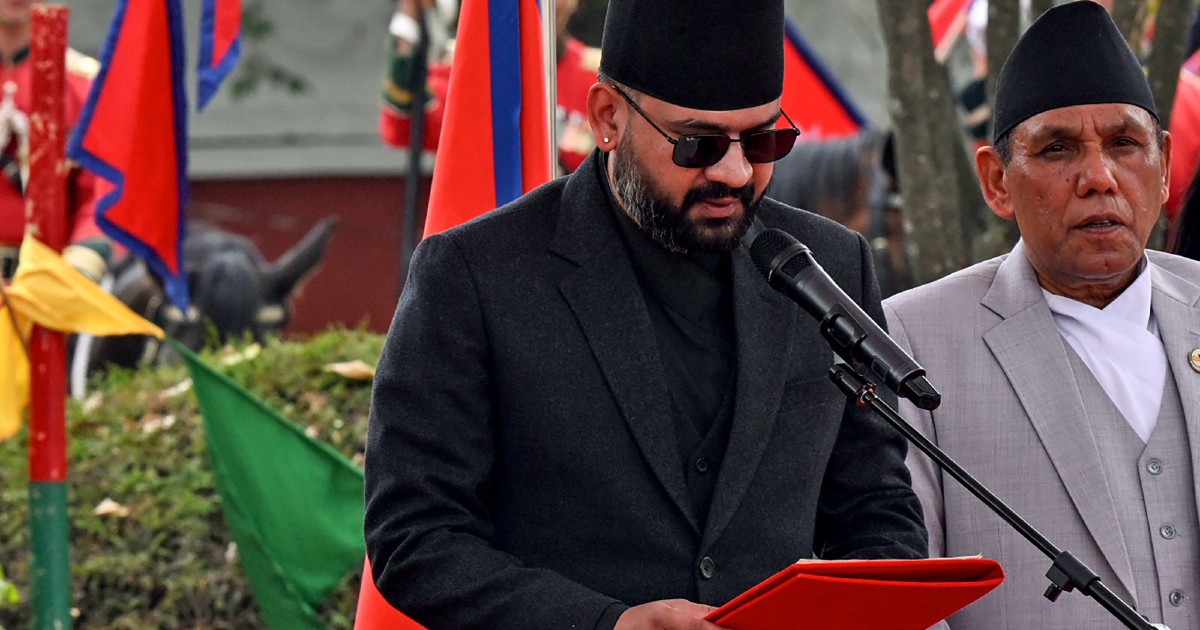
Nepal's Prime Minister Balendra Shah will be allowed to keep his trademark dark sunglasses on while participating in parliamentary sessions, an official clarified on Tuesday, settling a dispute that had arisen when the parliament speaker initially counselled against the practice.
The decision represents an accommodation that balances parliamentary decorum with individual health considerations. Government officials confirmed that Shah's continued use of eyewear in the legislative chamber is justified by genuine medical reasons, effectively overturning the speaker's earlier reservations about the appropriateness of wearing sunglasses during formal parliamentary proceedings.
The matter highlights evolving attitudes within Nepal's legislature regarding dress codes and personal accommodations. Historically, parliamentary chambers across South Asia have maintained strict protocols governing what members may wear while conducting official business, with an emphasis on formal attire and visible identification of speakers. The acceptance of medical exceptions represents a modernisation of these conventions.
Shah's signature sunglasses have become a recognisable element of his public persona throughout his political career. The eyewear is not merely a fashion statement but appears deeply connected to his personal identity and public image. This familiarity has meant that the question of whether he could wear them in parliament attracted attention beyond typical procedural matters.
The parliament speaker's initial guidance against the sunglasses reflected traditional interpretations of parliamentary conduct standards. Speakers in legislatures worldwide often enforce dress codes and protocols intended to maintain the dignity and formality of legislative chambers. However, this approach must occasionally accommodate health-related circumstances that supersede general rules.
Nepal's parliament, like many legislative bodies in the region, continues to adapt its procedures and policies to contemporary needs. The decision to permit Shah's sunglasses based on medical justification suggests the institution is willing to examine whether existing conventions remain appropriate when legitimate health considerations are presented.
For Malaysian observers, the incident offers insight into how South Asian parliaments navigate the tension between institutional traditions and individual circumstances. Malaysia's own parliament has similarly grappled with modernising dress codes and accessibility requirements while preserving the formal character expected in legislative spaces. The principle of medical accommodation has become increasingly recognised across Southeast Asian democracies as a reasonable exception to broader rules.
The resolution also demonstrates how official clarification can resolve procedural ambiguities without requiring formal rule amendments. Rather than pursuing lengthy parliamentary reform processes, officials simply acknowledged the medical basis for Shah's eyewear use, allowing business to proceed without distraction from procedural questions.
This accommodation reflects broader international trends in workplace policies. Many institutions now routinely accept that health-related needs—whether medical conditions affecting vision, light sensitivity, or other physiological factors—can justify exceptions to standard dress or appearance protocols. Parliamentary environments are increasingly recognising that such flexibility serves institutional functioning rather than undermining it.
The incident underscores how personal identity and parliamentary protocol intersect in contemporary politics. As political leaders develop distinctive public personas, questions arise about the extent to which legislatures should accommodate the visual markers of those identities. The resolution in Shah's case suggests acceptance that such accommodation need not compromise parliamentary seriousness or effectiveness.
Looking forward, the decision may establish precedent for similar requests from other parliamentary members facing health-related circumstances. By permitting the exemption on clear medical grounds, Nepal's parliament has created a framework that other legislators facing comparable situations might reference when seeking their own accommodations.
The matter also reflects how procedural questions often require delicate navigation of competing values. Parliament speakers must enforce standards that maintain institutional dignity while remaining responsive to genuine individual needs. In this case, that balance appears to have been struck through official acknowledgement of the medical justification underlying Shah's choice to wear sunglasses during legislative sessions.

