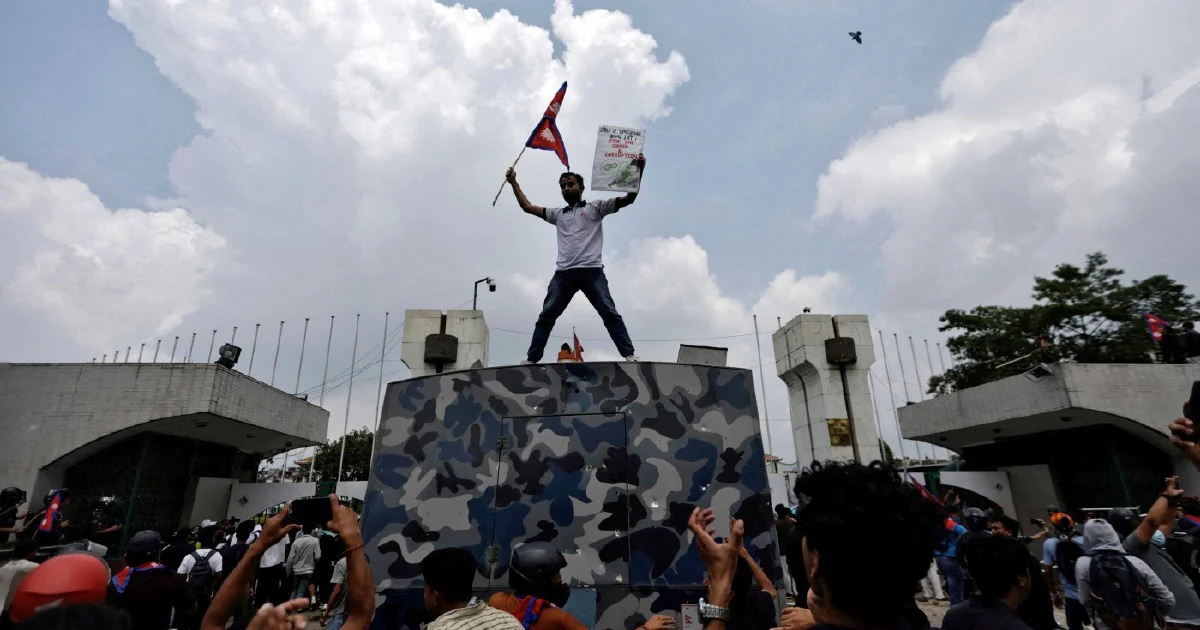
Bishnu Prasad Paudel, who previously held the position of finance minister in Nepal, was taken into custody late Monday evening following allegations of money laundering, according to statements from law enforcement authorities. The arrest marks a significant development in the Himalayan nation's intensifying campaign to address financial misconduct and alleged graft within the previous government's ranks, particularly under a leadership dominated by younger, Gen Z-aligned politicians who have made transparency a central campaign pledge.
The timing of Paudel's detention reflects a broader political shift occurring within Nepal's corridors of power. The current administration has been notably vocal about dismantling what its supporters characterise as entrenched systems of corruption that flourished during earlier tenures. By directing investigative resources toward high-profile figures from previous administrations, the government is attempting to demonstrate tangible commitment to its anti-corruption mandate, a narrative that has resonated with voters frustrated by decades of governance challenges.
Money laundering represents one of the most serious financial crimes in Nepal's legal framework. Such allegations typically involve concealing the origins of illicit funds by channelling them through legitimate financial systems, a practice that undermines economic integrity and diverts resources from productive sectors. Given Paudel's previous stewardship of the nation's finances, the charges carry particular weight and institutional significance. The arrest could potentially open doors to wider investigations into the management of public resources during his tenure in office.
Finance ministers hold considerable discretionary authority over budget allocation, monetary policy, and financial oversight mechanisms. When such officials face allegations of money laundering, it raises uncomfortable questions about potential abuse of institutional positions for personal enrichment. Investigators will likely scrutinise transactions, bank records, and asset declarations from Paudel's period in office, examining whether any public funds or financial authority was leveraged inappropriately.
Nepal's approach to tackling historical corruption issues carries regional implications for Southeast Asia and South Asia more broadly. The arrest demonstrates that even senior government figures can face legal consequences, a message that reverberates across the region where similar governance challenges plague multiple nations. However, observers will closely monitor whether these investigations maintain prosecutorial integrity or become vehicles for political score-settling, a concern that invariably accompanies high-profile arrests in developing democracies.
The younger generation of politicians currently guiding Nepal has explicitly positioned itself as a force for institutional renewal. Unlike their predecessors, these leaders have grown up in contexts shaped by rapid democratisation, digital transparency tools, and heightened public awareness regarding financial accountability. Their commitment to anti-corruption efforts appears genuine to many constituents, though implementation challenges remain considerable within a complex bureaucratic system.
For Malaysian readers and observers across Southeast Asia, Nepal's unfolding situation offers instructive parallels. Several nations in the region have recently witnessed similar transitions of power accompanied by anti-corruption investigations into previous administrations. The success or failure of Nepal's efforts—whether they result in genuine accountability or devolve into political vendetta—will provide valuable lessons regarding the viability of anti-corruption mandates in developing democratic contexts.
The financial crimes sector has grown increasingly sophisticated throughout South Asia in recent years. Money laundering operations now frequently employ technology, trade-based mechanisms, and cross-border transactions to obscure illicit origins. Prosecutors investigating cases like Paudel's must demonstrate capability in forensic accounting and international financial tracking, requiring substantial institutional investment and expertise.
Nepal's law enforcement agencies face mounting pressure to demonstrate that arrests translate into convictions and meaningful sentencing, rather than becoming arrested investigations that collapse under legal scrutiny. The credibility of the government's anti-corruption campaign depends not merely on high-profile arrests but on sustained prosecutorial effectiveness and transparent judicial processes. Any perception that investigations lack rigour or independence could undermine public confidence and invite accusations of political manipulation.
The broader economic context matters significantly here. Nepal's financial sector, tourism industry, and international investment climate all depend partly on perceptions of institutional integrity. Large-scale corruption allegations against senior officials can affect foreign investment decisions and credit ratings. Conversely, effective anti-corruption enforcement can gradually rebuild institutional trust and improve the country's standing within international financial networks.
As investigators proceed with examining evidence against Paudel and potentially expanding inquiries into associated figures, regional observers will assess whether Nepal's government can sustain its reform agenda without succumbing to political opportunism. The distinction between legitimate accountability and selective persecution remains crucial to the legitimacy of any anti-corruption initiative.
The months ahead will prove decisive in determining whether this arrest represents the beginning of systemic change or merely high-profile symbolism. International observers, including financial oversight bodies and development institutions engaged with Nepal, will scrutinise procedural fairness, evidentiary standards, and ultimate judicial outcomes. For citizens and policymakers across Southeast Asia watching these developments, the case exemplifies ongoing tensions between democratic accountability and institutional capacity within developing nations attempting genuine governance reform.