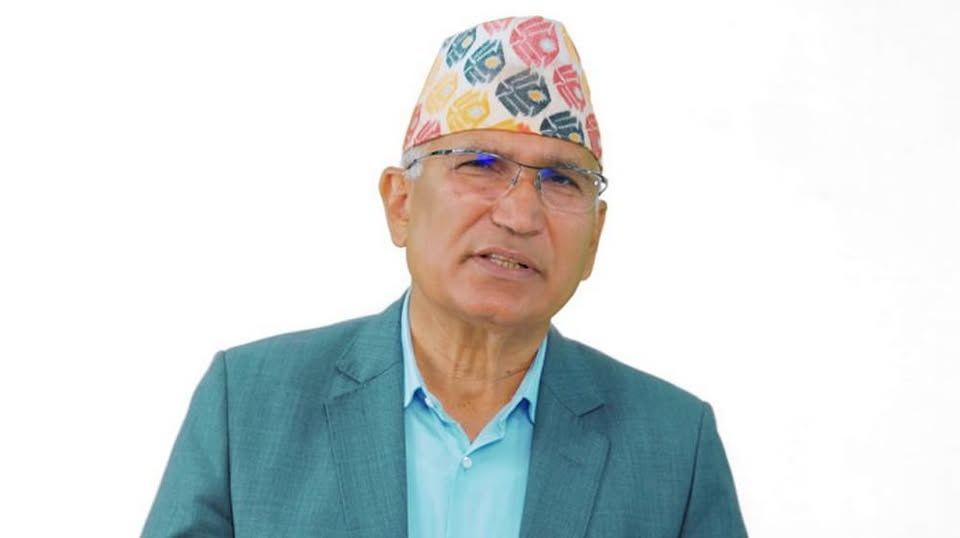
Nepal's police force moved against former finance minister Bishnu Paudel this week, detaining him as part of an expanding money-laundering investigation that underscores the country's intensifying crackdown on financial misconduct. The arrest of Paudel, who also holds the position of vice-chair within the Communist CPN-UML party, represents the latest significant development in Nepal's troubled political landscape since popular upheaval fundamentally reshaped the nation's governance structures. Officials confirmed the Monday detention, with Nepal Police spokesman Abhi Narayan Kafle indicating that investigators would examine the scope of Paudel's involvement in illicit financial flows.
Paudel's association with former prime minister KP Sharma Oli links the case to the administration that collapsed amid unprecedented civil unrest. The September uprising against Oli's leadership, initially sparked by public frustration over temporary internet restrictions, evolved into a broader condemnation of entrenched corruption and persistent economic hardship. That tumultuous period saw security forces deploy heavy-handed responses against demonstrators, culminating in a catastrophic toll of at least 76 fatalities and over 2,500 injured across two days of violence. The upheaval ultimately forced a transition in executive power, creating space for new leadership to establish itself as fundamentally different from its discredited predecessor.
Balendra Shah, elected prime minister in March following the turmoil, rose to power on an explicit mandate to dismantle corrupt networks and restore public confidence in institutional integrity. Shah's unconventional background—transitioning from hip-hop performance to political office—symbolised to many voters a genuine break with Nepal's traditional power structures. His administration's early actions suggested serious intent to pursue accountability, including the March arrest of Oli himself alongside former interior minister Ramesh Lekhak, detained on suspicion of authorising the brutal suppression of 2025 protests. However, neither man faced formal charges despite intense questioning, and both steadfastly rejected allegations regarding orchestration of the crackdown.
Oli's response to Paudel's arrest reveals the fractious political divisions now consuming Nepal's parliament. Characterising the detention as a "political stunt," the former premier alleged that Shah's government had abandoned democratic norms in favour of authoritarian governance. This accusatory framing resonates within opposition circles, where concerns about selective prosecution and weaponisation of anti-corruption mechanisms against political rivals have circulated increasingly. CPN-UML publicity director Niraj Acharya attempted to project party unity and constitutional deference, pledging adherence to legal procedures while simultaneously attacking what he termed the government's "discriminatory behaviour." Such rhetorical positioning attempts to maintain pressure on Shah's administration while avoiding claims of obstruction.
The arrest occurs alongside additional revelations of systematic financial malfeasance within state institutions. Nepal's anti-corruption watchdog, the Commission for Investigation of Abuse of Authority, has filed formal charges against sixteen individuals implicated in an alleged $66 million procurement fraud centred on the nation's electronic passport programme. Spokesman Suresh Neupane characterised the allegations as involving "embezzlement in e-passport procurement," suggesting organised theft of public resources through government contracting mechanisms. The inclusion of the passport department's chief among the accused indicates penetration of the scheme into senior administrative echelons, raising questions about whether corruption has been systematically embedded within critical government functions.
For Malaysia and the broader Southeast Asian region, Nepal's unfolding anti-corruption campaign offers cautionary lessons about the intersection of popular mobilisation, political transition, and institutional reform. The 2025 upheaval demonstrated how corruption grievances, when combined with economic anxiety and perceived governmental unresponsiveness, can generate explosive social instability with tragic human consequences. Yet the subsequent prosecution phase reveals the complexity of translating public anger into sustainable institutional change. Malaysia's own experience with governance challenges and reform efforts provides instructive parallels regarding the difficulty of establishing independent, credible accountability mechanisms that function without becoming vehicles for political revenge.
Nepal's trajectory also illustrates how economic struggle amplifies susceptibility to corrupt elite networks. The country's persistent poverty, limited revenue generation, and heavy reliance on remittances create conditions where procurement fraud and money laundering flourish, as officials exploit weak oversight mechanisms to extract wealth. This dynamic mirrors challenges confronting other South Asian and Southeast Asian economies where state capacity for enforcement remains limited despite formal legal frameworks. The $66 million embezzlement scandal represents resources that could have strengthened Nepal's education, infrastructure, or healthcare systems—outcomes that underscore the opportunity costs of institutional failure.
The timing of multiple arrest waves raises questions about whether Nepal's new administration can maintain prosecutorial momentum without succumbing to partisan pressures. International observers and domestic civil society organisations will scrutinise whether investigations focus on genuinely substantiated criminality or whether they selectively target opposition figures while insulating government allies. Shah's government faces the unenviable task of pursuing accountability credibly while simultaneously avoiding the impression that courts have become instruments of political domination. This balance proves particularly delicate in Nepal, where previous transitions have produced cycles of retribution rather than systematic institutional reform.
Moving forward, Nepal's anti-corruption agenda will be tested by its capacity to prosecute cases methodically, provide due process protections, and establish transparent evidentiary standards that withstand legal scrutiny. The country's judiciary must demonstrate sufficient independence to resist external pressure while delivering outcomes perceived as legitimate by diverse constituencies. For regional observers, including Malaysian analysts tracking governance trends across Asia, Nepal's experience underscores that anti-corruption campaigns require institutional maturity, international support, and sustained political commitment extending beyond initial reform enthusiasm.