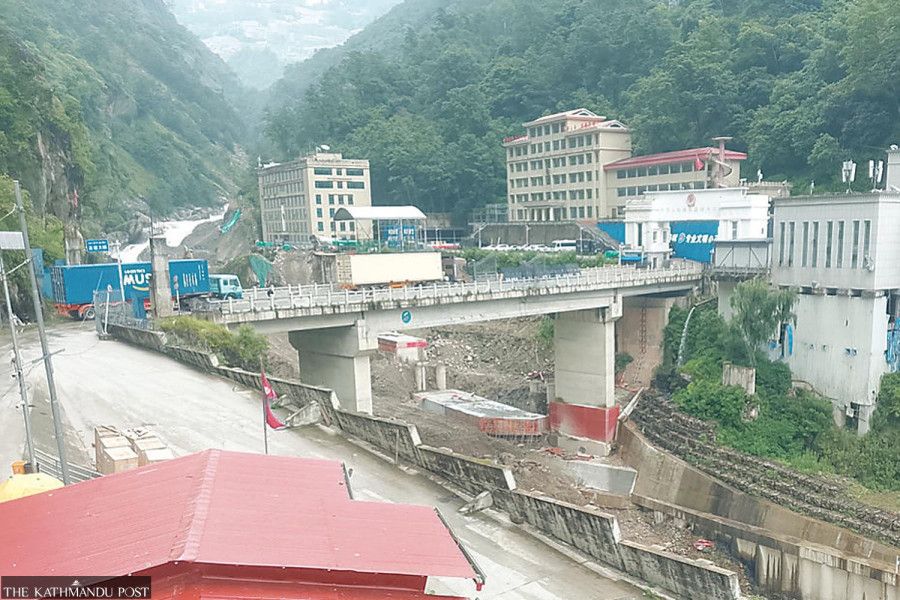
Nepal's trade lifeline to China teeters precariously each monsoon season, with landslides and flooding regularly cutting off critical border crossings and halting cargo flows. The disruptions arrive at particularly inopportune moments—this year coinciding with the nation's peak festival season when consumer demand for imported goods peaks—forcing traders and shoppers alike to absorb spiralling costs. The two main overland corridors that connect Nepal's markets to Chinese suppliers traverse rugged, unstable mountainous terrain intersected by powerful river systems, creating persistent vulnerability to seasonal weather patterns that have become almost predictable in their unpredictability.
The geographic challenge is undeniable. Roads threading through steep slopes adjacent to fast-flowing rivers like the Bhotekoshi face near-constant threats from earth movements and washouts. Rasuwa district officials characterise landslides as an expected annual phenomenon, with the main highway effectively becoming impassable during heavy rains. Yet infrastructure specialists argue that geography alone cannot explain the chronic nature of these disruptions. The recurring pattern reflects decades of structural underinvestment and engineering failures rooted in inadequate planning and maintenance protocols.
According to geotechnical experts, the design philosophy behind Nepal's mountain roads has historically glossed over the broader environmental context surrounding infrastructure projects. Rather than conducting thorough slope investigations or implementing protective measures during construction phases, engineers have focused narrowly on carving routes through difficult terrain without addressing underlying stability concerns. This systemic gap represents a fundamental misalignment between infrastructure design and the realities of monsoon-affected landscapes. Recent government efforts to budget separately for slope studies and stabilisation work mark a conceptual shift, yet implementation remains sluggish and incomplete.
The financial requirements to address the worst-affected sections remain modest by major infrastructure standards. Trade officials estimate that stabilising the most problematic landslide-prone corridor would demand approximately Rs200 million in investment—a relatively manageable sum for a nation's trade infrastructure. Yet even contracted projects have languished. A Rs480 million repair initiative for a particularly vulnerable stretch was abandoned after China offered to undertake the work itself; years have passed without either nation committing resources, leaving the section deteriorating further.
Tatopani, positioned at the terminus of the Araniko Highway and operational since 1967, exemplifies the crisis. The crossing now sits completely shuttered due to landslides affecting the Tatopani-Bahrabise corridor. This represents not a unique occurrence but rather the culmination of eight to ten years of recurring monsoon damage of varying severity. The 2015 earthquake devastated the broader region, and recovery remains incomplete. Most significantly, China has not reopened the crossing to outbound Nepali cargo since the earthquake, effectively halting exports through this channel despite the nation's historical reliance on it. In functional periods, the crossing accommodated 30 to 40 trucks daily and was projected to generate Rs25 billion in annual revenue—aspirations now impossible given current conditions.
With established northern routes compromised, traders have diverted shipments through Kerung on the Chinese side, a detour carrying severe economic penalties. Transport costs from Kerung to Kathmandu have more than tripled—rising from roughly Rs90,000 to approximately Rs300,000 per consignment—while delivery timelines have extended dramatically. Seasonal goods destined for winter markets now arrive months late, generating additional detention charges for containers stranded along extended supply chains. This logistical degradation arrives precisely when Nepal's trading community cannot absorb extra costs, during the festival shopping season when imported goods drive consumer expenditure.
Rasuwagadhi, Nepal's second major crossing point, faces parallel infrastructure crises despite different immediate triggers. The Syabrubesi-Rasuwagadhi corridor, opened by the Nepali Army in 2018, was slated for upgrading under a 2019 Nepal-China implementation agreement utilising Chinese grant assistance. Construction remains stalled at incomplete stages. The 16-kilometre stretch continues experiencing seasonal flooding and washouts. Last July, a flash flood on the Lhende River destroyed the Miteri Bridge and severely damaged the customs facility. A temporary Bailey bridge now occupies the crossing point but functions at roughly half the capacity of the original structure, collapsing daily container traffic from 60 to 70 units to merely 30 to 40.
The Integrated Check Post at Rasuwagadhi remains unfinished after years of construction, with progress stalled at approximately 60 per cent completion. Customs operations continue functioning from improvised facilities rather than purpose-built infrastructure, creating operational bottlenecks and processing delays. Former planning officials point to inadequate customs infrastructure as a fundamental constraint on northern trade expansion. This combination of physical disruption and incomplete administrative facilities creates compounding delays that extend throughout supply chains.
The newer Korala crossing, opened for international commerce during the previous fiscal year, offers limited relief. The facility handles only constrained cargo volumes and remains far less significant than the two primary routes. Consequently, the overall impact of supply chain disruptions extends well beyond northern border districts. Rerouting goods through Kerung alone adds an estimated 20 to 25 per cent to product costs by the time merchandise reaches end consumers in Kathmandu and beyond. Freight operators anticipate overall logistical costs rising to approximately 30 per cent this year, up from 22 per cent previously—imposing substantial burdens during the crucial Teej, Dashain, and Tihar festival period when imported goods command peak demand.
The disruptions simultaneously expose deeper structural imbalances within Nepal-China bilateral trade. The Tatopani and Rasuwagadhi crossings together processed more than Rs93 billion in imports during the previous fiscal year, yet exports to China remained below Rs2 billion. This extreme asymmetry reflects not merely physical connectivity constraints but deeper deficiencies in Nepal's export readiness. The nation lacks certified laboratory testing facilities and quarantine infrastructure necessary to satisfy Chinese phytosanitary standards. Additionally, Nepal's national trade strategy fundamentally privileges export goods oriented toward Indian markets rather than Chinese consumers, creating institutional misalignment with northern trade corridor development.
Trade diplomacy experts contend that the underlying impediments are fundamentally diplomatic in nature. Nepal's historical negotiating focus has concentrated disproportionately on Indian trade relationships, leaving northern infrastructure systematically under-prioritised in long-term planning and budgetary allocation. This diplomatic asymmetry translates into physical infrastructure gaps and institutional under-preparedness for China trade expansion. Addressing these crises requires not merely engineering solutions to seasonal disruptions but rather comprehensive diplomatic repositioning that elevates northern trade partnerships within Nepal's strategic priorities. Without such fundamental reorientation, seasonal monsoon disruptions will continue compounding structural disadvantages, inflicting recurring costs on traders and consumers throughout South Asia's regional supply networks.

