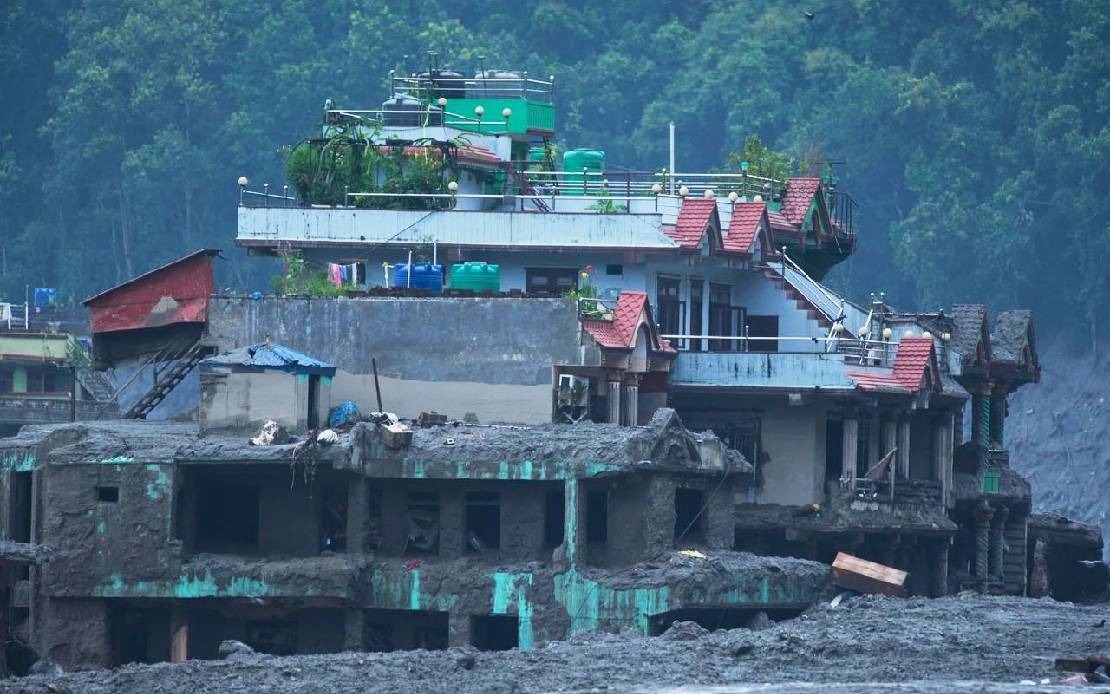
Nepal's government is mounting an urgent international appeal for reconstruction funding and specialised technical assistance following a devastating flood that tore through the nation's mountainous borderlands with Tibet on Wednesday. Finance Minister Swarnim Wagle disclosed to Reuters that preliminary assessments indicate the impoverished Himalayan nation of 30 million people will require between US$4 billion and US$5 billion to rebuild infrastructure destroyed in the deluge, though officials cautioned that damage surveys remain ongoing and the final figure could shift as assessments deepen.
The catastrophe originated when a glacier collapse unleashed a massive torrent combining rock, ice, mud and debris that raced through mountain river systems with devastating force. The resulting wall of material obliterated buildings, severed bridges, and destroyed power installations across a wide swath of terrain. The confirmed death toll stands at 626 in Nepal and seven in China's Tibet region, with the actual number potentially rising as recovery operations continue. The scale of destruction and displacement has shocked the region, with nearly 3,000 individuals unaccounted for, comprising approximately 2,426 in Nepal and at least 554 in Tibet's Gyirong County. Among the missing are at least 540 foreigners, predominantly Hindu pilgrims from India who were undertaking religious journeys in the area when the disaster struck.
Search and rescue operations face significant operational constraints due to the continuing unsettled weather conditions across the disaster zone. Narendra Pariyar, the senior district administrator for the heavily impacted Rasuwa district, explained to Reuters that teams suspended active searching on Saturday owing to persistent rainfall and thick fog that render rescue efforts extremely hazardous. Instead of pushing rescue missions forward in dangerous circumstances, authorities have redirected resources toward coordinating overland transportation infrastructure to evacuate survivors and recovered individuals to Kathmandu, the national capital, where medical facilities and coordination centres are concentrated.
The challenge of managing human remains has emerged as a grim secondary crisis. With fatalities occurring three days before recovery acceleration, many bodies have undergone significant decomposition, complicating identification processes substantially. District administrators have implemented mass burial protocols prioritising public health safeguards and disease containment, stipulating that bodies will be interred in designated open spaces following essential legal procedures. The Chitwan district administration announced procedures to collect DNA samples from remains prior to burial, establishing an archive that may facilitate future identification as investigation continues.
In Kathmandu's Maharajgunj Medical Campus, families of missing persons have gathered in a desperate search for answers. Relatives examine photographs of recovered bodies displayed on hospital gates and boundary walls, attempting visual identification when official records remain incomplete. Of 49 bodies transported to the hospital, authorities had successfully identified merely seven by late in the crisis period, underscoring the identification backlog overwhelming the medical system.
An additional hazard has complicated response efforts: a substantial lake formed across the Nepal-China border when the flood blocked river channels. Authorities briefly halted rescue operations on Friday when this expanding water body threatened to overflow downstream into Nepal's Lhende Khola and Trishuli rivers, potentially generating secondary flooding. By Saturday, Chinese authorities reported the immediate overflow danger had diminished, with satellite imagery indicating water was gradually draining through natural channels and reducing the reservoir volume. Nevertheless, Nepal's government continues monitoring two upstream lakes in the disaster zone; officials warned that comprehensive flood risk mitigation cannot be declared until both water bodies have completely drained, as any new surge could remain catastrophic.
Foreign Minister Shisir Khanal articulated Nepal's specific technical requirements to international partners. Rather than requesting general search and rescue manpower, Khanal emphasised that Nepal requires specialised expertise in rescuing individuals trapped within collapsed mountain tunnels, restoring transport corridors where bridges have been destroyed, establishing communication networks in isolated regions, performing forensic identification of remains, conducting DNA analysis, and managing body storage facilities capable of handling extended preservation periods. Khanal indicated Nepal had already formally requested such targeted technical assistance from bilateral partners, acknowledging that domestic capacity and institutional expertise cannot adequately address the multifaceted challenges of this scale.
India has emerged as the most responsive immediate neighbour to Nepal's distress signal. New Delhi has dispatched three aircraft carrying approximately 60 tonnes of humanitarian relief material, including blankets, pharmaceuticals, packaged food supplies and water purification chemicals essential for preventing waterborne disease outbreaks. Beyond immediate relief shipments, India's government has pledged to deploy a specialised team capable of tunnel extraction operations and a comprehensive medical contingent to address injuries and illnesses among survivors. India's disaster response force remains on standby, while New Delhi has additionally offered prefabricated bridge modules and technical engineering teams to facilitate rapid restoration of severed transportation and communication linkages across the flood-damaged landscape.
China's official response, while formally acknowledging the bilateral humanitarian dimension, has remained more circumscribed in its public commitments. Beijing has called for emergency humanitarian assistance to affected regions and activated mechanisms for international rescue cooperation, though Chinese authorities have provided limited operational detail regarding specific aid packages or technical teams destined for Nepal. The opacity surrounding Beijing's assistance plans contrasts with India's detailed public enumeration of relief measures, reflecting different diplomatic communication styles between the regional powers.
For Malaysia and broader Southeast Asia, Nepal's catastrophic experience carries resonant implications. The region faces escalating climate-related hydrological hazards, particularly in areas where mountain glaciers and high-altitude water systems are rapidly transforming under warming conditions. Nepal's crisis demonstrates how infrastructure vulnerability intersects with geographic isolation to amplify disaster impacts; many Southeast Asian mountain communities face analogous exposure to glacier-melt flooding, landslides triggered by heavy precipitation, and infrastructure gaps that constrain emergency response capabilities. The international coordination challenges evident in Nepal's response—spanning border coordination, forensic resource constraints, and supply chain logistics for emergency assistance—mirror difficulties that would confront regional disaster response networks during large-scale cross-border calamities.
The scale of Nepal's estimated reconstruction requirement, ranging from US$4 billion to US$5 billion for a nation with a GDP around US$40 billion annually, underscores the fiscal burden that climate-triggered natural disasters impose on developing economies. This proportion of national economic capacity rivals or exceeds reconstruction burdens that major disasters have imposed on Southeast Asian nations previously. The financing requirement signals that bilateral development partnerships and multilateral development bank mechanisms will face intensified pressure to mobilise concessional resources for climate resilience and post-disaster reconstruction across the region in coming years.

