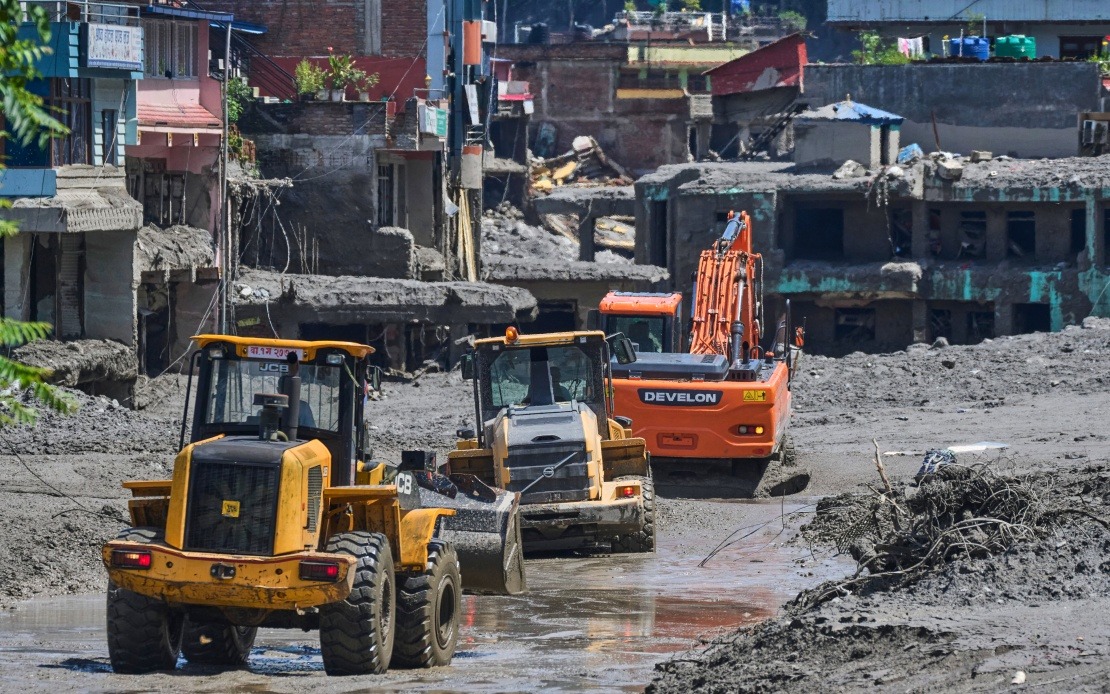
Nepal's government has elevated emergency response operations to the highest priority level following the devastating flood that swept through the Bhote Koshi River on Wednesday, killing multiple residents and destroying substantial infrastructure across vulnerable hill communities. According to the Embassy of Nepal in Kuala Lumpur, the disaster has prompted a coordinated national response involving security agencies and civilian authorities working to locate survivors, provide urgent assistance, and quantify the full scope of the humanitarian crisis that has unfolded.
The flooding has impacted four mountainous districts with particular severity: Rasuwa, Nuwakot, Dhading, and Gorkha, regions that lie along the river's course and are home to communities with limited disaster preparedness infrastructure. These areas, already vulnerable to seasonal weather patterns common across the Himalayan foothills, faced a sudden deluge that authorities are still assessing. Initial reports indicate both significant loss of life and extensive destruction of homes, roads, bridges, and other essential infrastructure that these communities depend upon for basic services and commerce.
Search and rescue teams continue deploying across affected zones, focusing on locating missing persons and extracting those stranded by floodwaters. The Nepali government's security agencies are working in coordination with local authorities to access remote communities where communications have been disrupted and damage assessments remain incomplete. This phase of the response is critical, as the window for locating survivors typically closes within days following such disasters. Simultaneously, relief teams are attempting to deliver emergency provisions to those who have lost shelter and sustenance.
Recognizing that the immediate crisis response will necessitate substantial financial resources, Nepal's Prime Minister's office has issued a nationwide appeal requesting domestic and international support. This represents a standard but significant acknowledgment that government resources alone may prove insufficient to address both emergency needs and the longer-term rehabilitation that such disasters demand. The appeal targets individuals, organizations, businesses, and philanthropic entities capable of contributing financial assistance toward the dual goals of supporting safe relocation of displaced populations and funding comprehensive recovery and reconstruction initiatives.
In reaching out to its diaspora communities, the Nepali Embassy in Kuala Lumpur has channeled the Prime Minister's appeal toward Nepali nationals working or residing in Malaysia, local Nepali associations, business organizations, and humanitarian-minded individuals throughout the Southeast Asian region. This reflects the importance Malaysia holds as a destination for Nepali migrants and workers, many of whom maintain strong ties to their home communities and families. The embassy's outreach underscores how transnational networks become activated during national crises, with diaspora members often serving as crucial funding sources for disaster relief efforts.
To facilitate contributions, the Nepali government has designated specific bank accounts through which financial support can be directed. The Prime Minister's Disaster Relief Fund and Prime Minister's Relief Fund both maintain dedicated accounts at Rastriya Banijya Bank and Nepal Bank Limited, with corresponding account numbers and QR codes published through the embassy's official communications. This institutional mechanism provides clarity and assurance to potential donors that their contributions will reach appropriate government channels rather than bypassing official oversight.
For Malaysian-based Nepali communities, this appeal carries particular resonance given that many remit funds regularly to families in Nepal. The flood disaster transforms routine financial transfers into emergency humanitarian support, redirecting resources that might have supported everyday household needs toward survival and reconstruction. Family networks activated by the disaster naturally seek official channels to maximize their collective impact, and the embassy's provision of account details and QR codes facilitates rapid mobilization of these community resources.
The flooding represents the broader vulnerability that mountainous regions across South and Southeast Asia face as climate patterns intensify and extreme weather events become more frequent. Nepal's position along major river valleys makes it particularly susceptible to flash floods during monsoon seasons, and climate change has intensified precipitation patterns in recent years. This disaster will likely intensify discussions within Nepal about disaster preparedness infrastructure, early warning systems, and climate adaptation strategies, issues that resonate across the broader regional context as countries grapple with balancing development with environmental resilience.
For Malaysian policymakers and humanitarian organizations, the Nepal flooding serves as a reminder of regional vulnerability to natural disasters and the importance of disaster preparedness cooperation within ASEAN and beyond. While Nepal operates outside the ASEAN framework, it shares common exposure to climate and geological risks with several Southeast Asian nations. Malaysian experience in disaster management and post-disaster rehabilitation, developed through its own flooding experiences, represents potential knowledge that could inform regional best practices and mutual assistance frameworks.
The coordination between Nepal's government authorities, international diplomatic missions, and diaspora communities demonstrates how global interconnection functions during humanitarian crises. The Embassy of Nepal in Kuala Lumpur serves simultaneously as political representation, crisis communicator, and mobilizer of transnational resources. This multifaceted diplomatic role has become increasingly central to how nations respond to major disasters, particularly when domestic resources require supplementation by international contributions channeled through both official and community-based networks.

