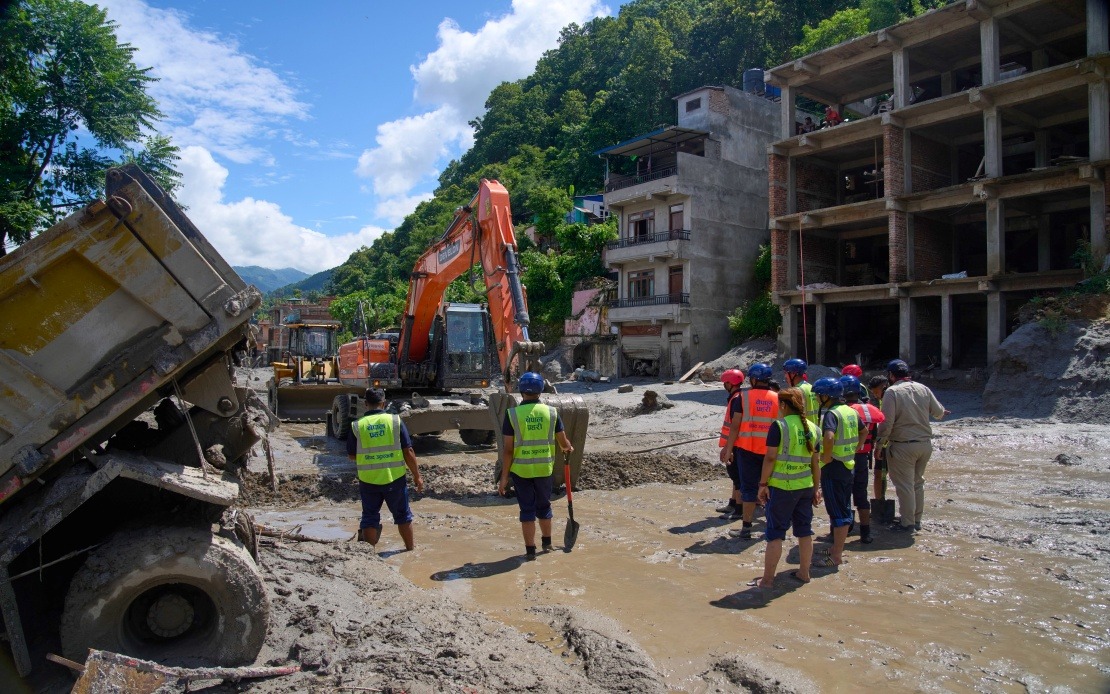
Nepal's Foreign Ministry has activated an Emergency Response Team to manage a rapidly unfolding humanitarian crisis following catastrophic flooding along the Bhotekoshi River in Rasuwa district. The coordinated response mechanism was established to handle the complex logistical and consular challenges arising from the disaster, which struck on Wednesday morning and has created one of the region's most significant search and rescue operations in recent memory.
The floods have proven devastatingly lethal, with confirmed fatalities reaching 359 by Thursday evening according to preliminary reports from Nepali authorities. The true scale of the human tragedy remains unclear, as rescue teams continue operations in difficult terrain where many bodies remain unrecovered and numerous individuals are still reported missing. Among those rescued, at least 31 people have been extracted from flood waters, yet the majority of those unaccounted for remain trapped in remote areas or have been swept downstream into inaccessible regions.
The missing persons situation reflects the international nature of the disaster. Over 800 individuals remain unaccounted for, with the majority being nationals from India and Nepal, though significant numbers of foreign tourists from various countries were in the area when the floods struck. This geographic and nationality distribution has created substantial coordination challenges, as multiple governments and consular services must work simultaneously to verify identities, trace missing persons, and notify families across borders.
The Emergency Response Team has been tasked with functioning as the central information hub for all missing persons inquiries. The team will verify claims regarding affected foreign nationals, liaise with operational search and rescue units actively working in flood-affected zones, and facilitate consular support services. By consolidating information flows through a single coordinating body, Nepal's Foreign Ministry aims to prevent duplicate search efforts and conflicting public statements that could complicate rescue operations or delay critical notifications to families.
To facilitate information collection, Nepal's authorities have established multiple communication channels for the public and diplomatic services. Individuals with knowledge of missing persons or affected nationals can report details through two dedicated phone lines: +977-9744441227 and +977-9744441228, both equipped to receive WhatsApp messages for urgent situations. An email address, [email protected], has also been activated for more detailed written reports. The ministry has specifically requested diplomatic missions, international organizations, affected families, and members of the general public to utilize these channels to provide any verified information about missing foreign nationals.
Malaysia's diplomatic engagement with Nepal regarding this crisis remains constrained by incomplete information. Foreign Minister Datuk Seri Mohamad Hasan stated that the precise number of Malaysian nationals unaccounted for has not yet been confirmed through official Nepali channels. This informational gap underscores the broader coordination difficulties confronting the region, as Nepali authorities grapple with simultaneous demands to conduct rescue operations, establish casualty counts, process missing persons reports, and manage international consular inquiries.
The Bhotekoshi River floods represent a significant humanitarian event with implications extending throughout South Asia and Southeast Asia. The disaster occurred in a region known for tourism activity, suggesting that many of the missing foreigners were travelers, trekkers, or tourists visiting Nepal during the peak season. This mixture of casualties and missing persons spanning multiple nationalities creates unprecedented diplomatic and administrative complexity, requiring sustained coordination between Nepal's government agencies and foreign missions based in Kathmandu.
The formation of the Emergency Response Team reflects Nepal's recognition that managing such a large-scale international disaster exceeds standard consular procedures. By establishing a dedicated task force with clear mandates for information verification, interagency coordination, and family notification, the Foreign Ministry aims to provide timely updates to anxious families abroad while supporting ongoing rescue operations. This approach mirrors international best practices developed following previous major disasters affecting foreign nationals.
For Malaysian readers and officials, the ongoing uncertainty surrounding the number of missing Malaysians presents both an immediate consular challenge and a reminder of the risks associated with adventure tourism in Nepal. The Malaysian Foreign Ministry's coordination with Nepali authorities through this Emergency Response Team remains critical for eventually establishing definitive counts of affected citizens and determining whether additional assistance or evacuation support is required for surviving Malaysians in the region.
The Bhotekoshi River disaster, while geographically centered in Nepal, carries regional significance for Southeast Asian governments whose citizens frequently visit the Himalayan nation. The success or challenges experienced in coordinating this response may influence how regional governments prepare consular emergency protocols and bilateral disaster coordination frameworks for future transnational catastrophes. The establishment of Nepal's Emergency Response Team represents an important institutional adaptation to the realities of modern cross-border humanitarian emergencies.

