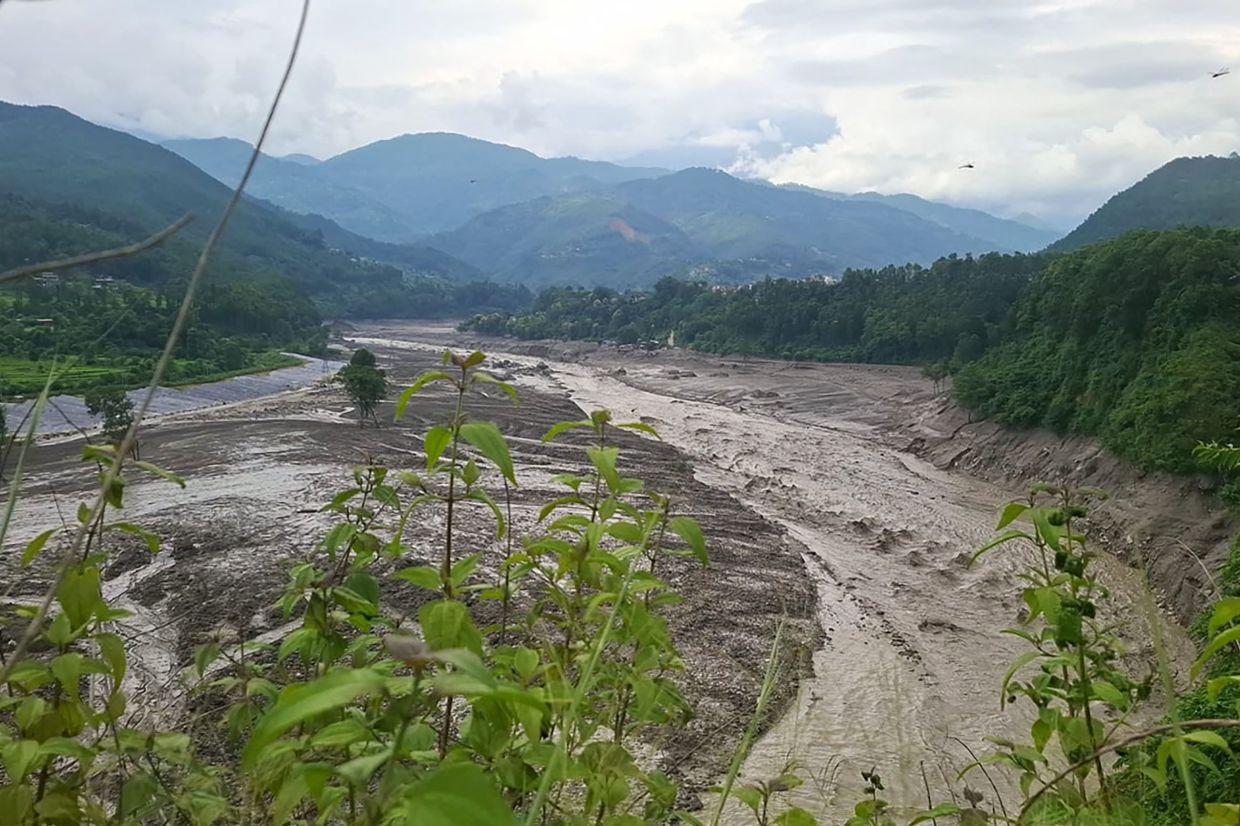
A devastating flash flood swept through Nepal on Wednesday morning, bringing death and destruction to multiple districts and leaving at least 22 people confirmed dead while hundreds remain unaccounted for. The Bhotekoshi River surged around 9am local time, engulfing villages, severing critical infrastructure connections, and destroying numerous hydropower installations across the region. Among those caught in the deluge were 384 tourists from around the world, many of whom were en route to or returning from pilgrimage sites in Tibet. The scale of the human toll continues to climb as search operations extend across affected areas, with authorities scrambling to locate survivors and assess the full extent of damage.
Malaysian nationals are among the missing, adding urgency to regional rescue coordination. Malaysia's Foreign Ministry reported that 11 Malaysians believed to be in the Rasuwa district have not been accounted for since the floods struck, prompting contact between Kuala Lumpur and Nepal's capital Kathmandu. The embassy has been liaising with travel agencies in an attempt to piece together the movements of missing citizens and identify safe locations to search. This incident underscores how natural disasters in the Himalayan region pose direct risks to Malaysian travellers and underlines the importance of robust regional early warning systems and coordination mechanisms.
The majority of the 384 missing tourists were drawn from countries across South and Southeast Asia, with 291 hailing from India, the United States, the United Kingdom, and other nations. Most were believed to be pilgrims heading to Mount Kailash in Tibet, one of the most sacred destinations in Hindu religious tradition and a major draw for spiritual seekers throughout the diaspora. Additionally, South Korean workers employed on a hydropower construction project were among those reported missing, illustrating how the disaster affected both transient visitors and established foreign workers engaged in infrastructure development.
The immediate destruction was staggering in scale. In Nuwakot, identified as one of the worst-hit districts, towering residential and commercial buildings were buried under massive quantities of mud and debris. Vehicles ranging from trucks to passenger vans were swept away or entombed under layers of sediment, while critical transport links were severed. Officials subsequently issued urgent warnings to residents across multiple districts, cautioning them to avoid proximity to three major river systems: the Bhotekoshi, Trishuli, and Narayani. These warnings reflected concerns that additional surges or secondary flooding events could occur as water continued to flow downstream.
Nepal's government moved quickly to seek international assistance for the monumental rescue and recovery challenge. Sasmit Pokharel, the government spokesperson, indicated that both India and China had been formally requested to mobilize rescue resources. India's Prime Minister Narendra Modi responded swiftly by engaging with Nepal's Prime Minister Balendra Shah, pledging comprehensive humanitarian support and emphasizing that Indian rescue and relief teams were actively coordinating with their Nepali counterparts. The statement reflected India's deep security and humanitarian ties with its northern neighbour and its capacity to rapidly deploy specialized rescue capabilities.
China launched large-scale search operations on its side of the border, particularly in the Tibetan region of Gyirong, according to state broadcaster CCTV. Chinese President Xi Jinping ordered authorities to intensify search and rescue efforts, while also directing the evacuation of residents from high-risk zones in adjacent areas. Although Chinese authorities did not release casualty figures from their territory, the scale of operations indicated significant concern about potential victims on the Tibetan plateau.
The root cause of this catastrophe appears to be a glacier avalanche that scientists identified as the trigger for the catastrophic flooding. Experts at the Kathmandu-based International Centre for Integrated Mountain Development attributed the disaster to an ice and rock avalanche from a glacier on Nepal's side that obstructed the Lhende Khola River, a tributary of the Bhotekoshi. This natural dam suddenly gave way, releasing a violent surge of water, mud, and debris that cascaded downstream with devastating force. Saswata Sanyal, a disaster risk reduction specialist at the research organization, characterized the event as part of an emerging pattern: the Lhende Khola had experienced significant flooding twice within just fourteen months, each time triggered by glacier-related mechanisms.
Climate change has fundamentally transformed the hazard profile of the Himalayan region, accelerating processes that were once far more stable. The Hindu Kush Himalaya zone, spanning Nepal and adjoining countries including India, is warming at a rate markedly faster than the global average due to anthropogenic greenhouse gas emissions. This accelerated warming has triggered a cascade of interconnected impacts: glaciers are melting at unprecedented rates, extreme rainfall events are intensifying, and the frequency of devastating landslides and flash floods is climbing. Research conducted in Kathmandu earlier this year revealed that ice loss across the Hindu Kush Himalaya region has doubled since the year 2000, driven almost entirely by rising global temperatures.
The 2023 disaster bears troubling similarities to floods that struck the same region just twelve months prior, when a glacial lake in Tibet overflowed due to elevated temperatures in the mountains. That earlier event killed nine people and damaged critical binational infrastructure, including a key bridge linking Nepal and China. The recurrence of such severe events within such a compressed timeframe suggests that the region has entered a new era of heightened hydrological volatility, where large-scale floods may become far more common features of the seasonal calendar rather than rare occurrences.
For Southeast Asian nations including Malaysia, this disaster carries sobering lessons about the widening geographic range of climate-related hazards. As temperatures across Asia's high mountain systems continue to rise, the cascading risks to populations downstream—whether through unprecedented flooding, altered water availability, or disrupted monsoon patterns—will intensify. The incident also highlights the vulnerability of regional tourism networks and the importance of developing sophisticated early warning systems that can communicate rapidly across borders. Researchers emphasize that in an increasingly warming Himalaya, early warning capabilities represent the frontline of adaptation, yet such systems remain inadequate across much of the region. The challenge now extends beyond immediate rescue and recovery to fundamental questions about how Asian nations will collectively prepare for a climate future in which such events may become routine occurrences.

