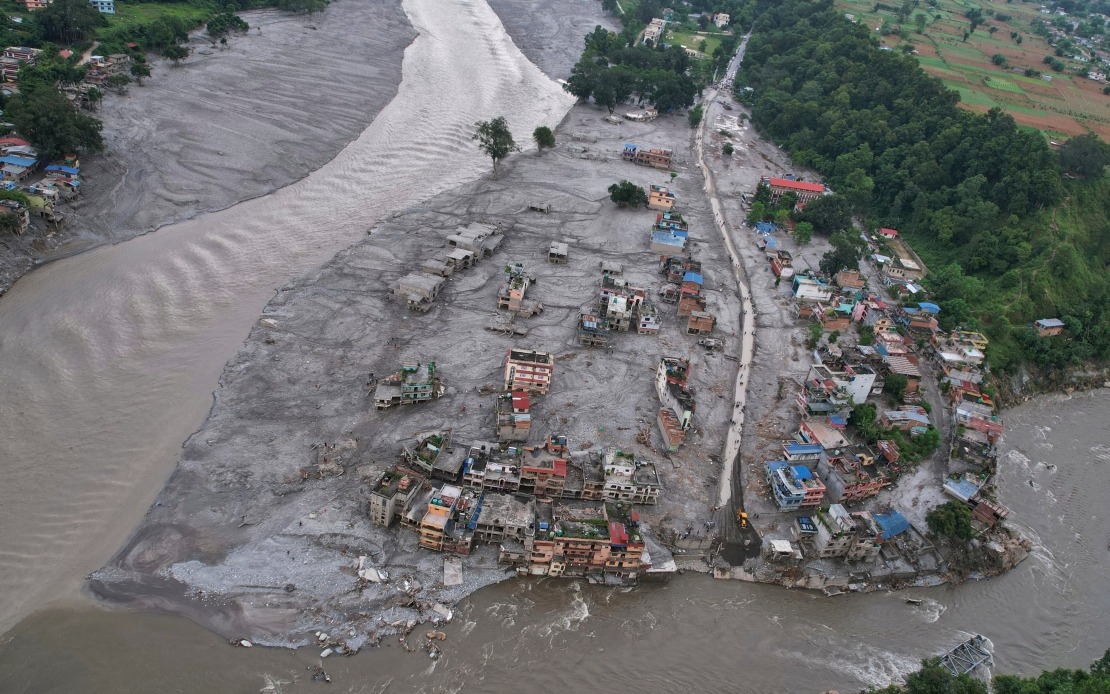
Nepal remains undecided about accepting additional international search and rescue support as it grapples with the aftermath of devastating floods that struck its central and northern regions on Wednesday, when swollen Bhote Koshi and Trishuli rivers inundated surrounding areas and caused massive casualties. The Southeast Asian nation is conducting a comprehensive assessment of its rescue needs before committing to further foreign assistance, according to the charge d'affaires of the Malaysian Embassy in Kathmandu, Mohd Firdaus Azman, who confirmed that Nepalese authorities have indicated they will evaluate conditions before taking on SAR missions from additional countries.
Currently, Nepal has opened its doors to search and rescue teams from four nations: Australia, China, India and South Korea. The decision to accept assistance from these specific countries reflects Nepal's pragmatic approach, as each has nationals employed at flood-affected hydropower installations across the disaster zone. These facilities represent critical infrastructure projects, several still under construction, whose disruption has compounded the humanitarian crisis. The acceptance of SAR missions from these four nations demonstrates how shared national interests can facilitate rapid international coordination during mass casualty events.
Malaysia has emerged among numerous countries offering to assist Nepal in its search and rescue operations, reflecting the region's commitment to mutual aid during natural disasters. Prime Minister Datuk Seri Anwar Ibrahim announced that Malaysia is actively coordinating the delivery of humanitarian aid to Nepal and exploring the possibility of deploying the Malaysian Special Search and Rescue Team (SMART) to the affected region. This represents a significant commitment, as SMART is among Southeast Asia's most experienced disaster response units, having been deployed to major emergencies throughout the region. However, Nepal's cautious stance means any Malaysian deployment remains contingent upon Kathmandu's assessment of additional manpower requirements.
The scale of the disaster has created an unprecedented emergency situation, particularly affecting the industrial workforce concentrated in Nepal's hydropower sector. Media reports indicate that more than 900 workers across 11 hydropower projects, including facilities still in development phases, have become trapped in tunnels and underground powerhouses following the floods. Many of these workers are foreign nationals, adding complexity to the rescue and recovery operation. The concentration of so many people in underground facilities presents distinct challenges for rescue teams, as accessing these locations requires specialized equipment and expertise to ensure operations do not endanger trapped personnel further.
The human toll has been staggering, with confirmed reports indicating at least 633 deaths across Nepal and China as of Saturday, while nearly 3,000 individuals remain missing. Among the missing are several hundred foreign nationals whose countries are monitoring the situation closely and liaising with Nepalese authorities. This dramatic loss of life underscores why Nepal is proceeding deliberately in accepting external assistance—the nation must ensure that additional rescue teams can be effectively deployed rather than duplicating existing efforts or straining limited coordination capacity.
For Malaysia specifically, the disaster carries direct implications given the substantial number of Malaysian nationals in the affected areas. The Malaysian Foreign Ministry reported that 55 Malaysians in Nepal and 36 Malaysians in China were uncontactable as of Saturday evening, raising concerns about their safety and whereabouts. These figures underscore the interconnectedness of Southeast Asian societies and the significance of disasters that strike the region's vulnerable populations, whether citizens abroad or migrant workers. Malaysia's proactive coordination of aid delivery reflects both humanitarian commitment and the practical reality that many Malaysian citizens may require assistance.
Nepal's decision to assess the situation before accepting additional SAR missions represents sound disaster management practice, though it requires patience from nations eager to contribute. Each new rescue team deployment demands coordination infrastructure, accommodation, supply chains, and command structures—resources that can become overwhelmed if too many uncoordinated missions arrive simultaneously. By evaluating specific needs before accepting more assistance, Nepal aims to ensure that international support amplifies rather than complicates rescue efforts. This measured approach reflects lessons learned from previous major disasters in the region.
The concentration of rescue teams from four major regional powers—China and India as Nepal's immediate neighbors, alongside Australia and South Korea—indicates how geopolitically significant Nepal's emergency has become. China and India, in particular, maintain substantial stakes in Nepal's development, including hydropower projects that represent major investments. Their rapid deployment of SAR capabilities demonstrates the speed at which major powers can mobilize resources when their nationals and strategic interests are directly affected. For Malaysia and other nations, Nepal's deliberate pace in accepting assistance creates a holding pattern that requires maintaining deployment readiness.
The broader implications for disaster response coordination in South and Southeast Asia are noteworthy. Nepal's situation illustrates how extreme weather events, increasingly common in mountainous regions vulnerable to sudden flooding, create complex international responses. The need for clear communication between affected nations and potential responders—as evidenced by Nepal's insistence on assessing requirements before accepting aid—will likely become standard practice as climate-driven disasters intensify across the region. For Malaysia, this underscores the importance of maintaining robust disaster response capabilities and international coordination mechanisms.
Looking forward, Nepal's assessment process may take days given the scope of the disaster and ongoing complications from damaged infrastructure. Malaysia's SMART team and other standby resources must remain in heightened readiness, as circumstances can shift rapidly in flood recovery operations. The lesson for the region is that while international solidarity is essential, successful disaster response requires both generous offers of assistance and recipient nations exercising careful judgment about timing and coordination. Nepal's cautious approach, while potentially frustrating to eager donors, may ultimately prove more effective in saving lives and successfully recovering citizens trapped in the flood waters.

