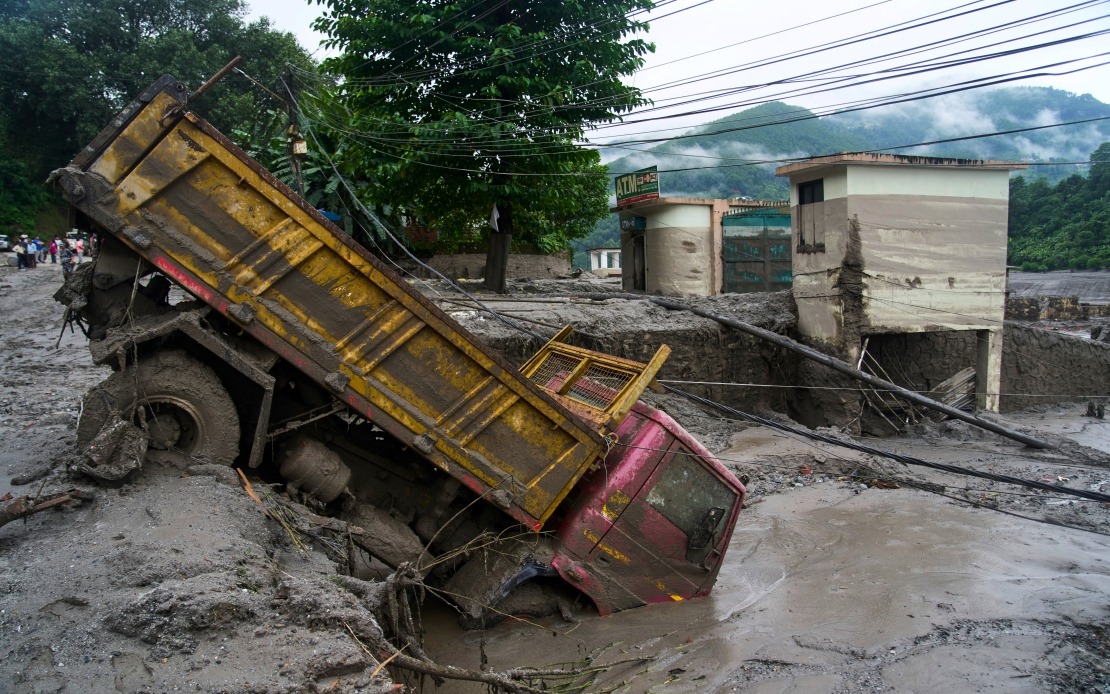
Nepal's National Disaster Risk Reduction and Management Authority (NDRRMA) has sounded the alarm over an imminent fresh flood threat in the Bhote Koshi River valley, raising concerns that the disaster-stricken nation faces another round of humanitarian crisis in the same region devastated by flooding earlier this week. The alert, issued on Friday, came after authorities detected a significant surge in water volume mixed with substantial quantities of debris and mud flowing through the same stretch of the Bhote Koshi River in Rasuwa district where a catastrophic flash flood struck on 26 August, leaving hundreds dead and missing.
The fresh warning underscores the volatile and unpredictable nature of mountain rivers in the Himalayan foothills, where geological conditions and rainfall patterns can trigger successive waves of flooding within short timeframes. For regional observers including those monitoring disaster preparedness in South Asia, Nepal's situation illustrates the cascading risks posed by extreme weather events in mountainous terrain, where initial disasters often presage secondary flooding as water accumulated in upper reaches continues flowing downstream. The NDRRMA's notification signals that rescue operations remain far from complete, with considerable uncertainty about whether conditions have stabilized or merely entered a temporary lull.
Authorities have explicitly instructed all personnel engaged in rescue and relief operations throughout the Bhote Koshi and Trishuli river corridors to maintain heightened vigilance and readiness. The directive carries particular weight given that recovery efforts have been ongoing since the initial catastrophe, with rescue teams still actively searching river channels and downstream deposits for survivors and remains. Personnel have been instructed to relocate immediately to safer elevations should they detect any warning signs, whether visual indicators such as unusual discoloration of water or acoustic signals that might indicate surging flows.
The human toll from the initial flooding has reached staggering proportions. Official figures now place the confirmed death count at 475 individuals, though the total remains incomplete as hundreds of additional persons are recorded as missing. The scale of disappearances suggests many bodies remain trapped within river systems or buried beneath mud and debris deposits throughout the affected valleys. Search and recovery operations have expanded significantly across multiple drainage systems as authorities attempt to account for the missing and locate human remains.
For Malaysia and other Southeast Asian nations with monsoon-dependent geography and significant river systems, Nepal's experience offers sobering lessons about flood preparedness and response coordination. While Malaysia's terrain and climate differ markedly from Nepal's mountainous environment, both regions face challenges related to sudden water volume increases during peak rainfall seasons. The Nepalese scenario demonstrates how initial disasters can generate secondary hazards, a pattern that resonates with Malaysian flood management concerns, particularly in peninsular regions prone to flash flooding in narrow river valleys.
The Bhote Koshi River serves as a crucial waterway through densely populated sections of Rasuwa district, and its flooding creates cascading impacts across downstream communities and infrastructure. The river's connection to the broader Trishuli system means that hazards in the upper reaches eventually affect populations and critical installations throughout the lower valley. This interconnected river network dynamic means that warning systems must function across multiple jurisdictional boundaries and coordinate response efforts across geographically dispersed areas.
The NDRRMA's fresh alert reflects the current scientific understanding that the 26 August flood, while devastating, may not represent the maximum danger window. Mountain hydrology in Nepal's terrain means that accumulated water from the initial event, combined with ongoing runoff and potential additional rainfall, could generate renewed surges. Climate monitoring data and river gauge readings have apparently indicated sufficient change in conditions to warrant formal public warning, suggesting that technical assessments identified quantifiable increases in flow rates or debris load.
For disaster management professionals across Asia, Nepal's unfolding situation demonstrates the importance of sustained monitoring beyond the acute emergency phase. The capacity to detect secondary flood threats, communicate warnings effectively, and mobilize response resources for successive disasters determines whether initial death tolls represent the full extent of flooding impacts or merely the opening chapter of a prolonged crisis. The NDRRMA's decision to issue explicit public guidance reflects both the technical assessment of renewed danger and recognition that affected populations require clear instruction about protective actions.
The broader regional implications extend beyond immediate humanitarian concerns. Flooding patterns in Nepal's river systems carry transboundary dimensions, with water eventually reaching India through the Ganges system. Cross-border coordination regarding flood warnings and discharge management represents an ongoing diplomatic and technical challenge. For downstream nations including India and Bangladesh, as well as for regional risk assessment frameworks, understanding the progression of Nepal's flooding helps contextualize broader monsoon-season hazard patterns affecting South and Southeast Asia.
As rescue operations continue and authorities reassess flood risks in real time, the situation underscores how natural disasters in mountainous regions can generate extended periods of instability rather than discrete, time-bounded events. The fresh alert suggests that communities in the Bhote Koshi valley should prepare for potentially months of elevated risk, with each rainfall event requiring reassessment and potential reactivation of emergency response protocols. For Nepal's government and international humanitarian partners, the challenge now involves sustaining operational capacity and public attention across a prolonged crisis period while simultaneously managing the discovery of additional fatalities and the mounting social and economic costs of reconstruction.

