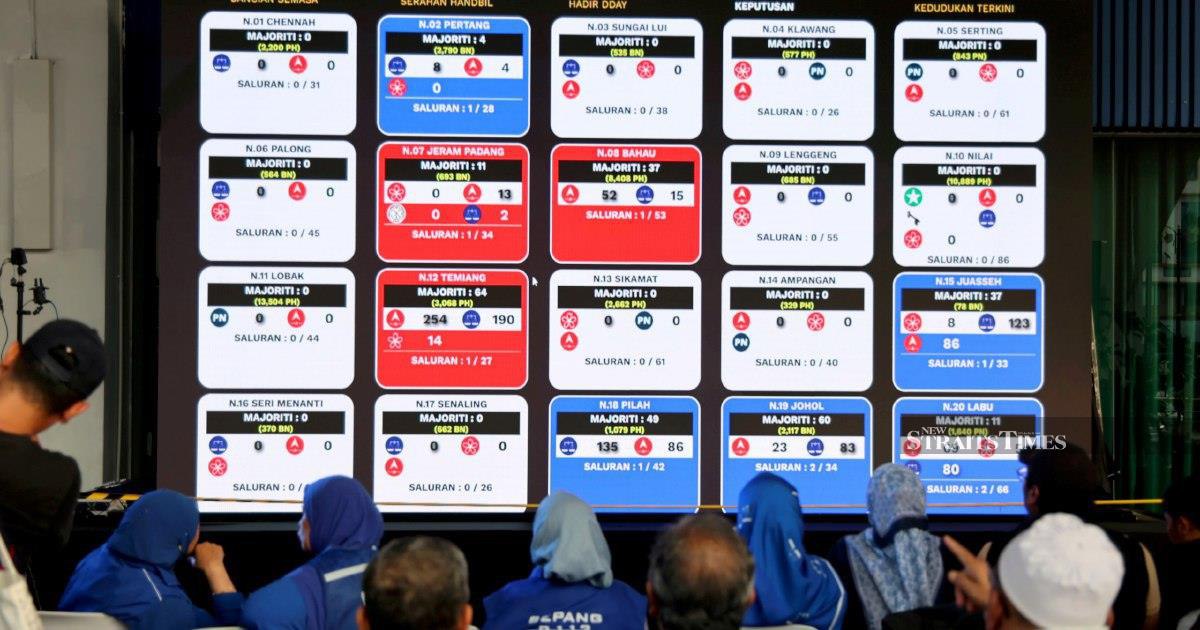
The Negri Sembilan state election delivered a sobering message for Pakatan Harapan, with results indicating that the coalition faces formidable obstacles in its efforts to secure sustained backing from Malay-majority communities. Beyond the headline vote tallies, the election exposed fundamental weaknesses in how the opposition bloc is perceived and trusted by Malay-Muslim constituencies, a demographic group that remains crucial to any party's viability in Malaysian politics.
Pakatan Harapan's performance in Negri Sembilan underscores a challenge that has dogged the coalition since its historic 2018 federal victory. Despite governing Malaysia and undertaking various policy initiatives, the party grouping has struggled to convert that national mandate into durable support among the Malay electorate, particularly in state-level contests where local factors and religious messaging wield considerable influence. The Negri Sembilan results suggest this remains an unresolved vulnerability that could constrain the coalition's electoral prospects in future contests.
The coalition's difficulties with Malay voters reflect a complex interplay of factors. Rival parties have successfully framed the opposition as insufficiently committed to Islamic causes and Malay-centric policies, messaging that resonates powerfully in state contests where religious and ethnic sentiment runs particularly high. Additionally, splinter movements and competing visions within Pakatan Harapan itself have muddied its positioning, making it harder for the coalition to present a unified, compelling appeal to communities that prize strong representation of their interests.
For Malaysian political observers, the Negri Sembilan outcome represents an important data point in understanding the coalition's electoral trajectory. Since 2018, Pakatan Harapan has held federal office but faced setbacks in several state contests, a pattern suggesting that opposition to the previous ruling order was not automatically translating into long-term voter loyalty. The Negri Sembilan election reinforces this pattern, indicating that the coalition's national platform has not insulated it from losing ground among key voter blocs at the state level.
The Malay voter challenge also carries implications for Malaysia's broader political balance. Should Pakatan Harapan continue to struggle in securing substantial Malay-Muslim backing, the coalition could find itself increasingly confined to non-Malay areas, a realignment that would fundamentally reshape Malaysian electoral dynamics. This would likely entrench a more polarised political environment and reduce the incentive for coalition parties to pursue inclusive, cross-community messaging and governance.
For Southeast Asian watchers, Malaysia's internal political dynamics matter because they affect the region's stability and the trajectory of its democratic institutions. A political landscape in which major coalitions are locked out of particular demographic groups fosters fragmentation and reduces the opportunity for bridge-building across communal lines. The Negri Sembilan results thus carry implications that extend beyond Malaysia's borders.
Pakatan Harapan's internal cohesion also factors into its Malay voter challenge. The coalition brings together parties with sometimes competing organizational bases and strategic visions, making it difficult to articulate messaging that simultaneously appeals to Malay-Muslim and multi-ethnic constituencies. When individual coalition parties prioritize their own electoral interests over collective strategy, the overall appeal of the grouping suffers, particularly among voters sceptical of the coalition's stability and commitment.
The road forward for Pakatan Harapan will likely require deliberate efforts to rebuild trust among Malay communities. This could involve more explicit policy positioning on Islamic governance, clearer articulation of how the coalition represents Malay interests, and potentially structural changes to how coalition partners coordinate on campaigning and messaging. Without such recalibration, the Negri Sembilan pattern may repeat across future contests.
State elections, while sometimes overlooked in national political analysis, serve as important barometers of voter sentiment and coalition viability. The Negri Sembilan outcome suggests that Pakatan Harapan cannot assume that past electoral victories or current federal authority automatically translate into state-level backing. Each contest requires renewed effort to convince voters, particularly in communities where the coalition's appeal remains contested and other political actors remain well-positioned to mobilize alternative sentiment.
Looking forward, the Negri Sembilan results may prompt reflection within Pakatan Harapan about whether its current approach to coalition management, campaign strategy, and policy positioning is sufficient to rebuild the Malay voter base that proved critical to its 2018 federal breakthrough. Electoral mathematics in Malaysia remain heavily weighted toward the ability to secure Malay-Muslim votes, and a coalition unable to do so at scale faces inherent constraints on its governing prospects.
The broader lesson from Negri Sembilan is that Malaysian politics continues to be shaped by deep demographic cleavages and competing claims over representation of particular communities. Pakatan Harapan's struggle to bridge the divide reflects not merely campaign shortcomings but deeper questions about how the coalition can credibly position itself as genuinely representative of Malay interests while simultaneously maintaining its multi-ethnic character and commitment to secular governance principles.

