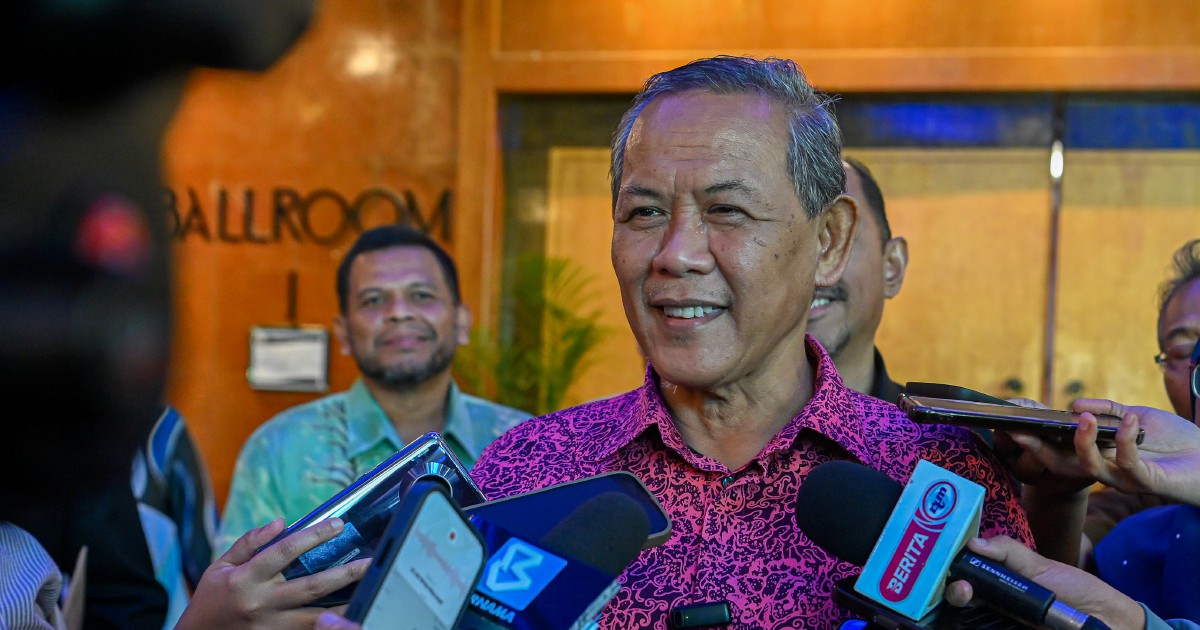
Negri Sembilan Menteri Besar Datuk Seri Aminuddin Harun has pressed the electorate to assess the state administration's substantive efforts to address the persistent flooding challenges in Linggi, cautioning against allowing the issue to become a political football as the 16th state election approaches. Speaking in Seremban, the chief minister sought to reframe public discourse away from blame-casting and toward concrete evaluation of mitigation strategies already under implementation in the flood-prone district.
The Linggi river basin, which encompasses several low-lying residential and commercial areas within Seremban's jurisdiction, has endured recurrent inundation during monsoon seasons for decades. Communities in affected neighbourhoods have repeatedly lost homes, possessions, and livelihoods to flash flooding, making the issue deeply personal and politically sensitive as opposition parties prepare their electoral campaigns. Aminuddin's intervention suggests the government recognises both the severity of voter frustration and the risk that opposition candidates might exploit accumulated grievances to mobilise support in traditionally stronghold constituencies.
The timing of Aminuddin's statement reflects broader Malaysian electoral dynamics, where environmental management and disaster resilience have become increasingly consequential vote-drivers, particularly in states where monsoon flooding regularly disrupts daily life. Negri Sembilan's vulnerability to seasonal inundation makes it an ideal battleground for parties to contest the competence narrative. By publicly urging residents to weigh tangible governmental action against rhetoric, Aminuddin appears attempting to inoculate the ruling coalition against accusations of negligence whilst simultaneously cautioning voters against opposition promises that may prove hollow once elections conclude.
The reference to mitigation works already underway indicates the government has begun or plans to implement technical solutions to Linggi's drainage and flood management infrastructure. Such measures typically encompass river deepening and widening, construction of retention ponds, installation of flood barriers and pump stations, or comprehensive catchment area revisions. Without additional specifics from the statement, the precise nature of these interventions remains unclear, though their mere mention suggests the administration wishes to establish that action, not merely acknowledgement, characterises its response.
For Malaysian voters accustomed to facing monsoon and inter-monsoon flooding across peninsular constituencies, Aminuddin's appeal carries particular resonance. Communities that experience annual inundation often become cynical about political promises, having heard similar pledges from multiple administrations over many election cycles without corresponding material improvements. The chief minister's exhortation to evaluate concrete measures rather than accept unsubstantiated claims therefore appeals to pragmatism born from repeated disappointment. This approach implicitly concedes that previous solutions have been inadequate—a tacit admission that may carry political cost but establishes credibility through honesty.
The call to resist politicisation also reflects deeper governance challenges facing Malaysian states managing climate-related hazards. As precipitation patterns shift and urban expansion increases impervious surfaces, flood risk intensifies in areas poorly equipped with modern drainage infrastructure. Competition between political parties to claim credit for solutions often results in fragmented, poorly-coordinated responses that fail to address root causes. When Aminuddin emphasises that voters should judge outcomes rather than rhetoric, he arguably advocates for a more technocratic evaluation framework that transcends partisan division—though such non-political approaches remain rare in Malaysian electoral contexts where virtually every policy domain becomes contested terrain.
Negri Sembilan's geographic position makes it particularly vulnerable to monsoon effects originating from both the southwest and northeast atmospheric circulation patterns. The Linggi river, which drains substantial portions of the state's interior hills, concentrates runoff from expansive catchment areas, exacerbating flood risk in downstream communities where residential density has increased substantially over recent decades. Solutions therefore require integrated watershed management extending across multiple drainage basins and potentially multiple administrative jurisdictions—a coordination challenge that transcends any single political administration's capacity, suggesting that genuine mitigation requires long-term, cross-party commitment.
Electoral timing substantially influences how officials communicate about environmental challenges. The 16th Negri Sembilan state election, whilst not imminent, likely features prominently in the calculations of both the ruling Pakatan Harapan coalition and opposition figures as they strategise messaging around governance competence. Aminuddin's intervention preemptively establishes an evaluation framework favourable to incumbent performance, whilst attempting to delegitimise opposition campaigning centred on grievance mobilisation without corresponding policy substance. This rhetorical strategy, however, only succeeds if the underlying mitigation works demonstrably reduce flooding frequency and severity in Linggi within a timeframe voters perceive as meaningful.
From a Southeast Asian comparative perspective, chronic urban and peri-urban flooding reflects common challenges across the region as rapid urbanisation, inadequate drainage infrastructure investment, and intensifying rainfall patterns converge. Thailand, Indonesia, and the Philippines have all grappled with similarly politically sensitive flooding disasters where administrative culpability becomes electorally consequential. Aminuddin's invocation of evidence-based evaluation mirrors appeals made by regional administrations facing similar pressures, suggesting that Malaysian policymakers increasingly recognise that infrastructural credibility depends upon transparent, measurable outcomes rather than rhetorical positioning.
The chief minister's broader message implicitly acknowledges that Malaysian voters, particularly those in flood-prone regions, have grown sufficiently sophisticated to distinguish between hollow promises and genuine commitment. Communities that survive multiple inundation cycles understand intimately that engineering solutions require proper design, adequate funding, skilled execution, and long-term maintenance—factors that transcend electoral cycles. By calling for judgment based on substantive performance rather than partisan appeal, Aminuddin positions the government as confident in its technical capacity and committed to measurable delivery, framing opposition messaging as exploitative populism unmoored from engineering reality. Whether voters ultimately accept this framing will substantially influence Negri Sembilan's electoral outcome.

