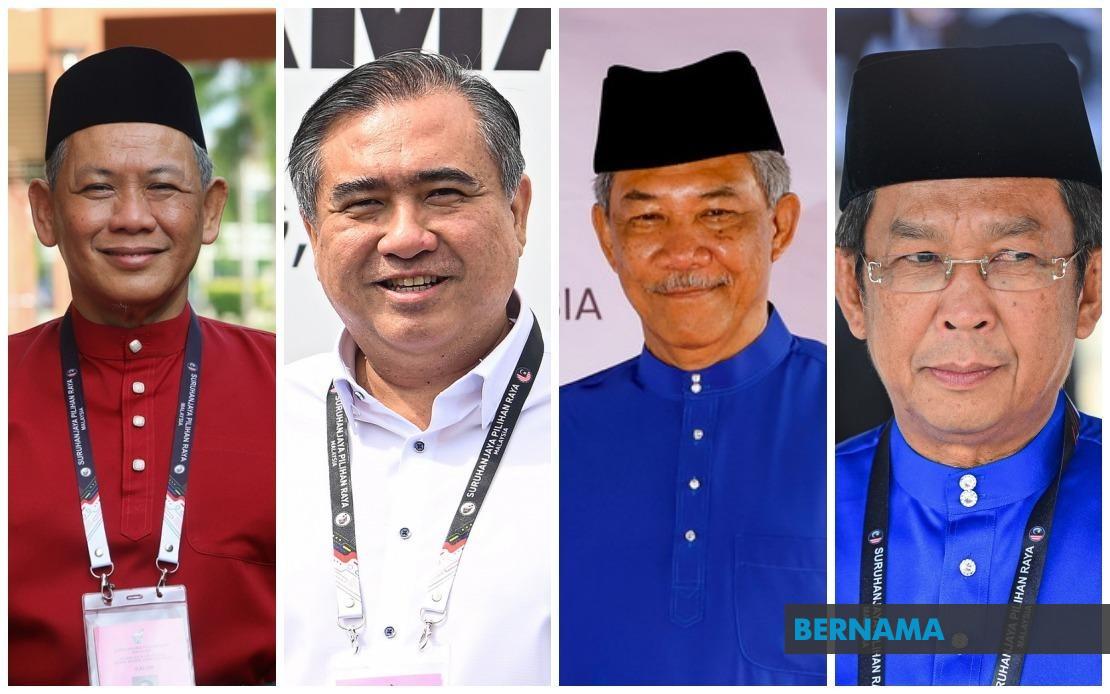
The 16th Negeri Sembilan state election has set the stage for an unusually contested battle among the nation's political elite, with several high-profile incumbents and candidates finding themselves in unexpectedly precarious positions as nomination day concluded on July 18. The contest marks a significant departure from conventional patterns, where established party machinery typically ensures comfortable margins for senior figures. This time, the dynamics of Malaysian politics—characterised by fluid coalition alignments and shifting voter preferences—have created opportunities for challengers across the political spectrum to mount genuine threats.
Pakatan Harapan's caretaker Menteri Besar Datuk Seri Aminuddin Harun, who doubles as PKR vice-president and coalition chairman in the state, finds himself in a three-way contest in Linggi against Barisan Nasional's incumbent Datuk Mohd Faizal Ramli and Bersatu candidate Datuk Zamri Md Said. The presence of a Bersatu challenger reflects the broader fragmentation within opposition politics, with the Mahathir-led party continuing to pursue a trajectory independent of the PH framework. Such triangular contests significantly complicate the incumbent's path to victory, as vote splitting becomes a critical variable in determining outcomes. Aminuddin's status as caretaker leader adds additional pressure, as his personal performance at the constituency level will influence perceptions of PH's broader management capability in the state.
In Chennah, a seat that DAP has controlled since 2013, Transport Minister and DAP secretary-general Anthony Loke encounters unexpected resistance from Negeri Sembilan MCA Youth chief Siow Kong Choon, fielded by BN. This challenge is particularly noteworthy given DAP's traditionally strong performance in the predominantly Chinese-populated constituency. The resurgence of MCA as a competitive force suggests renewed grassroots mobilisation by BN in areas where they had retreated, and indicates that Chinese voters may be reconsidering their political allegiances after years of PH governance. Loke's prominence at the federal level as Transport Minister has not necessarily translated into assured local dominance, illustrating the persistent gap between national profile and constituency-level support.
Perhaps the most symbolically significant contest involves 70-year-old Mohamad Hasan, UMNO deputy president and Foreign Minister, facing Dr Azizul Hakim Mahdi in Rantau. Mohamad, affectionately known locally as Tok Mat, has represented the constituency continuously since 2004 and remains deeply embedded in Rantau's political identity. The choice of a much younger challenger by PH signals an intentional generational challenge to entrenched incumbency. At half Mohamad's age, Dr Azizul represents the sort of demographic shift that PH has attempted to leverage across multiple constituencies. The contest in Rantau will serve as a bellwether for whether experience and established networks can withstand the appeal of renewal and demographic change.
BN deputy chairman Datuk Seri Jalaluddin Alias, holding Pertang since 2013, must now navigate a three-cornered confrontation involving PH candidate Mohd Umry Abdul Khois and Bersatu's Mohd Faizal Fadli Mohd Idrus. The consistent ability of Bersatu to field competitive candidates across multiple constituencies reflects its continued relevance in Malaysian politics despite its relatively recent formation. For Jalaluddin, the split in opposition support offers tactical advantages even as the proliferation of challengers signals eroding consensus around his continued representation.
The Nilai constituency presents the election's most complex dynamic: a five-cornered battle featuring DAP's national deputy chairman J. Arul Kumar, BN's Datuk Lai Chien Kong, Bersatu's Datuk V. Saravana Kumar, Berjasa's Zamani Ibrahim, and independent candidate Omar Mohd Isa. Such fractionalised contests create scenarios where candidates can prevail with significantly reduced vote shares, fundamentally altering the traditional calculus of electoral competition. Arul Kumar's position as DAP's national deputy chairman, combined with his incumbent status, provides institutional resources that other candidates may lack. However, the presence of multiple credible contenders—particularly the Bersatu candidate sharing similar demographic appeal—complicates the pathway to victory.
Sri Tanjung similarly features five candidates, with PH's incumbent Dr G. Rajassekaran contending against BN's A. Achutan, independents Saravanan Arumugam and Islah Wahyudi Zainudin, and Bersatu's Leevineshwaraan Murugan. Notably, Murugan, at just 23 years old, represents the youngest candidate in the entire state election and reflects Bersatu's strategy of field new blood to attract younger voters frustrated by establishment politics. The presence of multiple independent candidates suggests localised disaffection with traditional party structures, a phenomenon that warrants monitoring as an indicator of deeper voter alienation.
With 103 candidates competing for 36 state seats, PH has fielded the maximum possible at 36 positions, while BN presents 25 candidates, Bersatu fields 24, and Perikatan Nasional contributes 11. Berjasa, ASLI, and PSM each field single candidates, while four independent tickets complete the slate. This distribution reveals that PH remains the largest competitor in terms of candidate deployment, yet the combined capacity of rival coalitions—particularly the BN-Bersatu-PN axis—suggests the voting landscape will be genuinely competitive across multiple battlegrounds.
The 14-day campaign period, commencing immediately after nominations concluded on July 18 and extending until July 31, provides a compressed window for candidate consolidation and messaging. Early voting is scheduled for July 28, with polling day set for August 1. This compressed timeline may advantage incumbents with established ground machinery over challengers attempting to build momentum from lower baseline awareness. For voters, the rapid campaign cycle means information absorption will be critical; Malaysian constituencies have historically shown that late campaign developments can significantly influence outcomes when electoral margins narrow.
The competitive texture of this election reflects broader shifts in Malaysian politics. The fragmentation of opposition politics through Bersatu's continued independence from PH, combined with BN's persistent organisational capacity, has created conditions where even senior figures cannot assume comfortable victories. This represents a departure from the more settled electoral patterns of earlier decades and suggests that Malaysian voters are increasingly willing to hold individual candidates and parties accountable regardless of seniority or national profile. For Negeri Sembilan specifically, the state has traditionally leaned toward PH and its predecessor coalition, yet the current contest suggests that margin may narrow considerably. The outcomes in flagship constituencies featuring Aminuddin, Loke, Mohamad, and Jalaluddin will carry significance extending well beyond state politics, offering early signals about voter sentiment as Malaysia approaches future federal-level contests and continues to navigate the uncertain terrain of post-2022 coalition politics.

