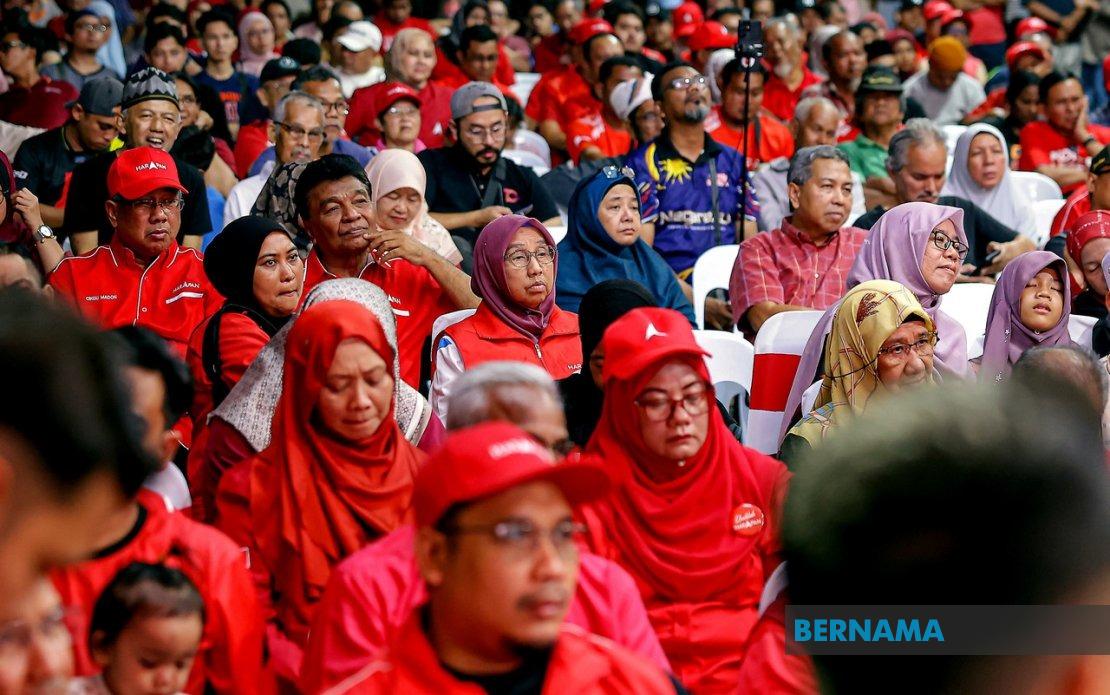
As the 16th Negeri Sembilan state election campaign enters its final week, a cohesive picture of voter expectations is crystallizing across the state. Rather than being swayed by traditional party loyalty or personality cults, residents are demanding something more fundamental: political representatives who remain genuinely reachable and capable of translating campaign promises into tangible improvements in their daily lives. This shift reflects a broader maturation in how Malaysian voters evaluate their political choices, moving beyond rhetoric toward measurable performance and authentic engagement with constituents.
A Bernama survey spanning the campaign period has identified a striking consensus among the electorate. Voters are no longer content with having merely a voice in the State Legislative Assembly; they want candidates who understand local challenges intimately and possess the political will and competence to address them. This distinction matters significantly, as it indicates that voters are thinking strategically about governance outcomes rather than participating in electoral exercises as civic rituals. The emphasis on practical delivery reflects perhaps a decade or more of accumulated frustration with unfulfilled campaign commitments across Malaysia's political landscape.
Kamarulzaman Ab Aziz, a 64-year-old retired educator, articulates a perspective that challenges conventional political wisdom in Malaysia. His willingness to vote for an outsider if that person demonstrates genuine approachability and community engagement suggests that geographical origin has become secondary to demonstrated commitment. This is particularly significant in a state like Negeri Sembilan, where strong community networks and familial political ties have historically dominated electoral dynamics. When a voter of Kamarulzaman's generation prioritizes connection and accessibility over hometown advantage, it signals a fundamental recalibration of political values among the state's population.
The cost of living crisis has emerged as perhaps the single most pressing concern uniting voters across different demographics and localities. Nurulainee Hamidon, a 37-year-old food trader in Port Dickson, captures the squeeze felt by small business operators with particular clarity. Her dilemma—rising supplier costs that force difficult pricing decisions, which in turn alienate customers—represents a common bind affecting countless micro-entrepreneurs throughout Negeri Sembilan and beyond. For traders like Hamidon, political promises must translate into concrete measures such as streamlined supply chains, reduced business licensing costs, or targeted subsidies for essential raw materials. Generic pledges to support small business lack credibility without specific mechanisms for implementation.
Rural and estate communities represent another critical voting bloc whose concerns risk being overlooked in state-level politics. M. Manisha, a 38-year-old housewife, raises a fundamental equity issue: peripheral communities, particularly those in residential estates, frequently find themselves excluded from development planning cycles. When new infrastructure, digital connectivity, or commercial opportunities are announced, rural areas often receive them as afterthoughts rather than as integral components of comprehensive development strategy. Her expectation—that whichever party assumes power will actively incorporate estate communities in planning and implementation—reflects a demand for inclusive governance that extends political concern beyond urban centers and commercially developed regions.
The emphasis on employment quality and skills-matched wages, articulated by first-time voter Mohammad Najmi Aiman, reveals generational expectations that differ markedly from their predecessors. A 22-year-old college student entering the workforce has witnessed a labor market where qualifications frequently fail to translate into appropriate compensation. His concern about comprehensive employment opportunities and fair wage determination reflects broader anxieties about economic mobility and whether educational attainment guarantees dignified livelihoods. For younger voters in Paroi and comparable constituencies, political performance will increasingly be measured against their ability to secure meaningful work at fair rates.
The call for electoral maturity and constructive political competition, voiced by Lim Kian, introduces another dimension often overlooked in analysis of voter preferences. His request that all parties maintain dignity and decorum throughout the campaign period reflects fatigue with increasingly toxic political discourse. This concern transcends partisan affiliations; voters across the spectrum appear weary of character assassinations, inflammatory rhetoric, and divisive social media campaigns. By emphasizing that whichever party ultimately governs must do so with the cooperation of all communities, Lim articulates an implicit demand for unity-oriented leadership rather than zero-sum electoral contests.
The electoral mechanics of this contest are substantial in scope. The Election Commission has registered 889,490 eligible voters, a figure comprising 867,151 regular voters alongside 16,884 military personnel and their families and 5,455 police officers and their dependents. These numbers underscore the significance of ensuring that security personnel and their relatives have meaningful political voice without creating parallel voting systems that might undermine democratic principles. The distribution of voters across these categories influences how different constituencies weight particular concerns—military and police families may prioritize salary adjustments and job security, while regular voters focus more broadly on economic and social issues.
With 103 candidates competing for 36 state assembly seats, the competition remains reasonably concentrated, suggesting that independent candidates have limited prospects compared to party-affiliated contenders. This structural reality means that voters are fundamentally choosing between established political organizations rather than genuinely independent voices. Consequently, when voters emphasize wanting approachable leaders and practical solutions, they are implicitly challenging major parties to field candidates who embody these qualities rather than simply relying on party machinery and incumbency advantages. The electoral calendar—early voting on July 28 and polling day on August 1—provides voters with approximately one week to finalize their decisions, an unusually compressed timeframe that may advantage candidates with existing name recognition and established community relationships.
The convergence of voter concerns articulated across these diverse perspectives suggests that Negeri Sembilan's electorate is entering this election with clear-eyed realism about what politicians can and should deliver. Cost of living relief, inclusive development planning, quality employment opportunities, rural advancement, and dignified political conduct represent a coherent agenda that transcends traditional party lines. Candidates who can demonstrate concrete plans addressing these issues, combined with genuine accessibility and proven track records of community engagement, appear positioned to resonate most strongly with voters. Conversely, campaigns relying on abstract slogans, divisive rhetoric, or vague promises face an electorate increasingly skeptical of rhetoric divorced from implementable policy.
For Malaysian political observers, Negeri Sembilan's electoral dynamics in 2024 offer instructive insights into evolving voter sophistication. Voters are moving beyond categorical partisan identity toward transactional evaluation of electoral choices based on anticipated governance outcomes. This trend, if it continues, could reshape how political parties in Malaysia approach campaigning, candidate selection, and policy articulation. The Negeri Sembilan experience suggests that the era of unthinking party loyalty may be giving way to more fluid political participation where performance, accessibility, and policy coherence increasingly determine electoral outcomes. How successfully parties adapt to these expectations will likely influence not only the state election results but broader patterns of political competition throughout Malaysia's electoral calendar.

