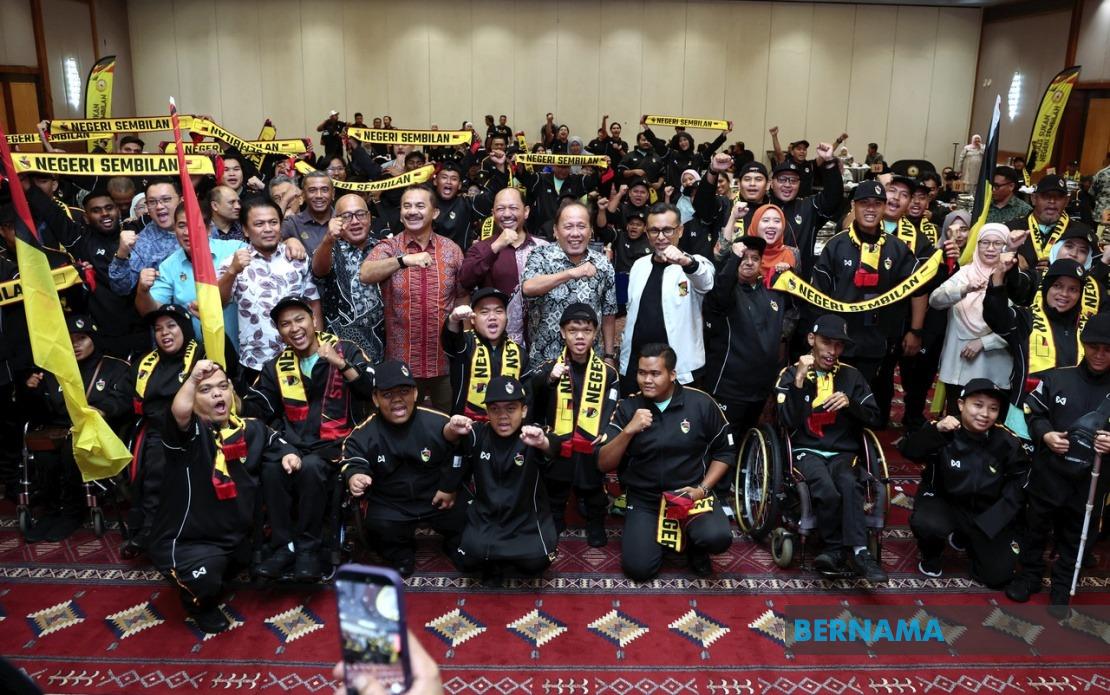
Negeri Sembilan has set its sights on securing 12 gold medals at the 2026 Para Malaysia Games, which will take place in Selangor beginning September 5. The state will send a contingent of 80 para athletes to compete in the biennial regional championships, representing a fresh opportunity to rebuild momentum after a challenging showing at the standard SUKMA 2026 Games that concluded earlier this week.
Menteri Besar Datuk Ismail Lasim framed the gold-medal objective as far more than a numerical aspiration during remarks delivered at the flag handover ceremony for the state's delegation. According to the state leader, this target embodies a comprehensive commitment spanning athlete training, discipline, and meticulous preparation undertaken over months of conditioning. Lasim expressed confidence that the benchmark could be reached, emphasising that the contingent possesses the requisite capabilities to deliver strong results across multiple events.
The timing of this announcement carries particular significance given Negeri Sembilan's recent performance at SUKMA 2026. The state's contingent claimed only seven gold medals from a total haul of 48 medals at the standard Games—a substantial decline from the 19 gold medals extracted from 56 total medals won at the corresponding edition two years prior. This represents a marked deterioration that has evidently prompted soul-searching within the state's sports administration and coaching structures ahead of the Para SUKMA platform.
Lasim used the flag ceremony occasion to appeal directly to the para athletes themselves, framing their participation not merely as individual sporting pursuits but as a collective mission to restore Negeri Sembilan's reputation in regional competition. His remarks emphasised the extraordinary resilience and fighting spirit that characterises the para-athlete community, positioning the upcoming Games as a venue where this exceptional calibre of determination could translate into visible medal success that would rehabilitate the state's competitive standing.
Historical performance data provides context for assessing the ambition embedded in the current target. At the 2024 Para SUKMA Games held in Sarawak, Negeri Sembilan's para athletes delivered a substantially stronger showing, accumulating 14 gold medals alongside 19 silver and 20 bronze medals. This track record suggests that a 12-gold target, while slightly below the 2024 result, remains grounded in demonstrated capability rather than aspirational fantasy, though it does represent a reduction that reflects realistic expectations about competition intensity and squad composition.
The state administration has signalled its commitment to supporting athlete success through material incentives. Lasim indicated that medal winners will receive financial rewards contingent on their achievements, a motivational mechanism commonly employed across Malaysian sports bodies to enhance athlete focus and demonstrate tangible state recognition for podium finishes. This approach aligns with broader Southeast Asian practice in promoting para-sport excellence.
The composition of 80 para athletes across multiple sports disciplines represents a significant mobilisation of Negeri Sembilan's para-sporting talent base. The contingent size suggests coverage across numerous events, ranging from wheelchair athletics and swimming to sitting volleyball and other recognised Paralympic sports, creating multiple pathways through which the gold-medal tally could be assembled. The breadth of participation indicates that the state sports council has conducted thorough screening and selection processes to identify competitors with genuine medal potential.
Also present at the ceremonial handover were State Youth and Sports Development Action Committee chairman Datuk Mustapha Nagoor and Negeri Sembilan Sports Council director Marhizah Abdul Razak, underscoring the institutional engagement across multiple government layers in supporting the contingent's preparation and logistics. This multi-agency coordination reflects acknowledgment that successful Para SUKMA performance demands integrated support spanning coaching expertise, medical provision, facilities access, and administrative coordination.
The contrast between the standard SUKMA 2026 results and the Para SUKMA targeting reveals an interesting dimension of Negeri Sembilan's sporting capacity. Whereas the state's mainstream Games contingent underperformed relative to historical precedent, the para-sports platform appears positioned to deliver more competitive outcomes. This divergence may reflect different squad dynamics, coaching quality, athlete motivation, or simply the particular strength of Negeri Sembilan's para-athlete roster compared to its mainstream counterparts—a pattern not uncommon across Malaysian states where excellence pockets exist unevenly across the sporting spectrum.
For the broader Malaysian sports ecosystem, Negeri Sembilan's Para SUKMA ambitions contribute to the country's comprehensive Para sport development trajectory. As Malaysia positions itself as a Southeast Asian leader in disability sport, state-level performance metrics and goal-setting exercises like Negeri Sembilan's 12-gold target serve as building blocks toward national team development and international Paralympic movement participation. Strong para-sporting foundations established at state competitions traditionally feed athletes into national representation pipelines for international disability championships.
The September 5 commencement of the Selangor-hosted Para SUKMA Games will provide definitive assessment of whether Negeri Sembilan's preparation and targeting prove sufficiently calibrated. The state's performance will offer coaching and administrative lessons applicable beyond its borders, contributing valuable data to Malaysia's emerging para-sports knowledge base regarding athlete development, competition preparation, and regional competitive standards.

