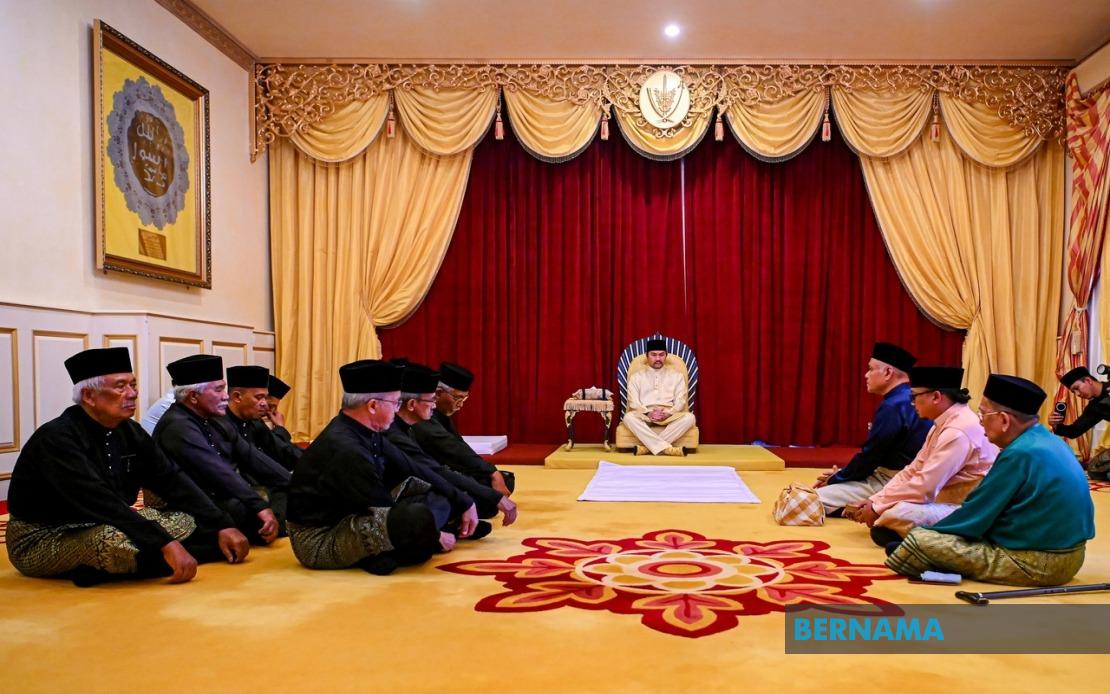
Negeri Sembilan's Yang Dipertuan Besar, Tuanku Muhriz Tuanku Munawir, has given his blessing for a formal royal audience to take place at Istana Besar Seri Menanti in Kuala Pilah tomorrow morning, marking the installation of Muhammad Faris Johari as the 11th Undang of Luak Sungei Ujong. The 29-year-old successor has been selected through customary procedures by the Buapak council, the traditional governing body responsible for such appointments within the district.
The approval came through Tunku Besar Seri Menanti Tunku Ali Redhauddin Tuanku Muhriz, who received representatives from the adat community including the Datuk-Datuk Adat and senior hereditary officials. The Tunku conveyed his father's consent for the ceremonial proceedings, known formally as the Istiadat Menghadap Menjunjung Duli Bagi Menyempurnakan Kejadian Undang Luak Sungei Ujong, which translates to the audience for honouring and perfecting the office of the Undang. This traditional ritual represents the culmination of a succession process deeply rooted in Negeri Sembilan's unique constitutional arrangements and customary practices.
The appointment follows the earlier dismissal of Datuk Klana Petra Datuk Mubarak Dohak, who had served as the 10th Undang. The Dewan Keadilan dan Undang, the state's council of justice and law, formally accepted his removal at a special sitting held at the royal palace and presided over by Tuanku Muhriz. This development underscores the constitutional checks and balances that operate within Negeri Sembilan's traditional governance framework, where the Undang serves as a paramount chief with significant ceremonial and customary authority over their respective luak, or districts.
Waris Negeri Sungei Ujong Datuk Sinda Maharaja Razlan Hamid, who represents the luak in matters of adat and tradition, confirmed that the selection process adhered strictly to established customs and practices. He emphasised that the council's decision reflected the considered judgment of traditional leaders who maintain stewardship over these ancient institutional procedures. The involvement of such figures demonstrates how Malaysia's constitutional monarchies, particularly in states like Negeri Sembilan, preserve and operationalise systems of governance that predate modern administrative structures.
Menteri Besar Datuk Seri Aminuddin Harun presided over the special sitting that formally processed the previous Undang's dismissal, illustrating the intersection of state government with traditional institutions. In Negeri Sembilan, the menteri besar and the state's royal family work within a delicate constitutional balance where customary law and modern governance remain intertwined. This ceremonial formality, while rooted in tradition, demonstrates how Malaysian states have adapted historical systems to coexist with contemporary administrative requirements.
The ceremony tomorrow will not be an isolated event but rather part of a broader pattern of succession ceremonies within Negeri Sembilan's unique political structure. The royal audience to formalise the installation of the 22nd Undang of Luak Rembau will also occur on the same day, following separate consent granted by Tuanku Muhriz. The clustering of these ceremonies within a single day reflects both logistical efficiency and the ceremonial importance that the state attaches to these traditional appointments.
For Malaysian readers unfamiliar with Negeri Sembilan's distinctive governance model, these appointments carry constitutional weight beyond mere ceremony. The Undang serves as custodian of adat within their respective districts and maintains roles in the state assembly and various customary matters. The selection process through the Buapak council ensures that these positions remain grounded in community consensus rather than political appointment, a feature that has largely preserved the legitimacy of these institutions across decades of political change.
The formal installation ceremony represents an important moment for the adat community in Sungei Ujong, reinforcing the continuity and legitimacy of traditional leadership structures. By securing the Yang Dipertuan Besar's royal sanction, the new Undang receives the constitutional authority necessary to exercise his customary functions and represent his luak in broader state matters. This layering of legitimacy—from community selection through council procedures to royal formalisation—exemplifies how Malaysian federalism accommodates traditional institutions within modern governance frameworks.
Looking forward, the installation of Muhammad Faris Johari marks a generational transition within Sungei Ujong's leadership. At 29, he represents a younger generation taking on roles steeped in centuries of tradition. His tenure will likely reflect contemporary challenges facing traditional institutions: balancing customary practices with modern administrative expectations, engaging with younger constituents while respecting ancestral protocols, and maintaining relevance in an increasingly urbanised state. The smooth transition facilitated by tomorrow's ceremony suggests that Negeri Sembilan's adat institutions retain sufficient vitality and respect to manage such successions without significant institutional disruption.
For observers of Malaysian governance, these ceremonies offer insights into how constitutional monarchies and traditional structures function beyond their ceremonial dimensions. The careful involvement of the Tunku Besar, the menteri besar, and the formal councils demonstrates that these are not mere pageantry but functioning elements of state governance with real institutional significance. The system's persistence across generations indicates that these traditional hierarchies continue to command respect among both adat communities and state authorities, even as Malaysia navigates rapid modernisation and political change.

