The 16th Negeri Sembilan State Election, scheduled for August 1, will showcase a strikingly fragmented political landscape compared to the previous 2023 polls, with the number of straight fights plummeting from 27 to just 11 across the 36 constituencies. This fundamental shift reflects deepening political fragmentation in the state, as independent candidacies and smaller party participation splinter the vote along ideological, regional, and ethnic lines. The composition of contests has fundamentally altered: three-cornered fights have surged from seven to 21 seats, while four-way contests will occur in two constituencies, and two seats will feature the unprecedented five-cornered battles that did not exist in the previous election cycle.
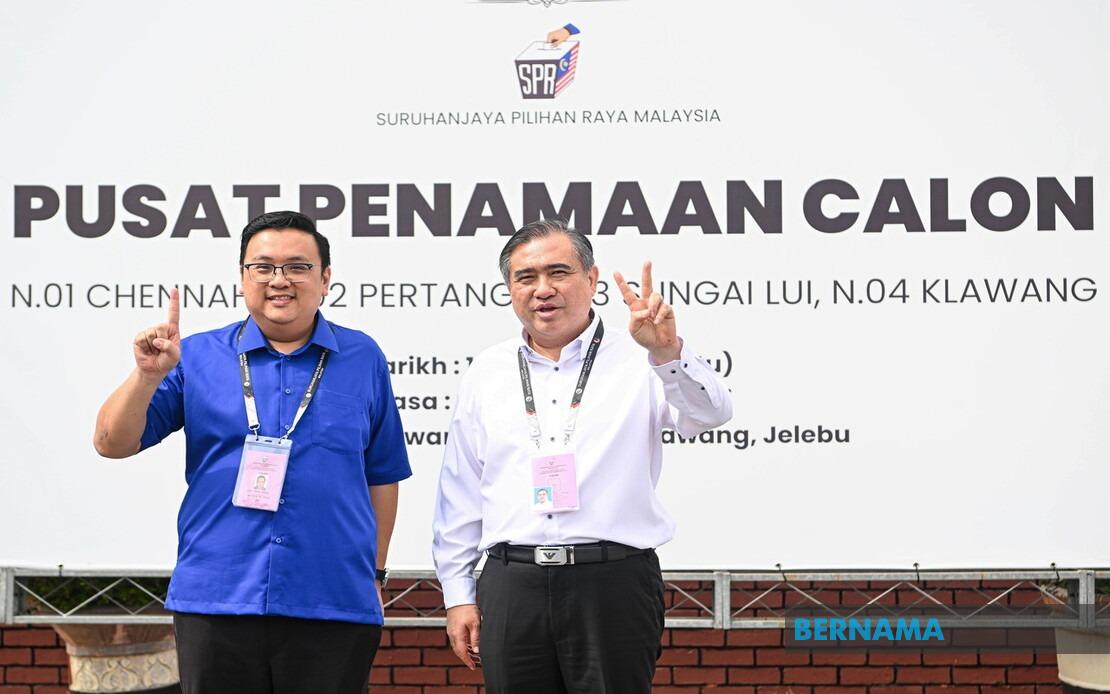
Among the remaining straight contests, several will feature Malaysia's most senior political figures in direct personal confrontations. Transport Minister Anthony Loke, who holds the position of DAP secretary-general, will defend Pakatan Harapan's colours in Chennah against Barisan Nasional's Siow Kong Choon in a constituency battle that symbolises the broader PH-BN rivalry. Similarly, in Rantau, the state's incumbent Menteri Besar will face challenges as UMNO deputy president Mohamad Hasan, who also serves as Foreign Minister, seeks to retain his seat against Pakatan Harapan candidate Dr Azizul Hakim Mahdi. These contests represent marquee matchups where national political narratives will be tested at the grassroots level.
The proliferation of three-cornered contests reveals the complex positioning of Bersatu and Perikatan Nasional within Negeri Sembilan's political ecosystem. In the Linggi constituency, PKR vice-president Aminuddin Harun, who serves as the state's Menteri Besar, will face a three-way contest against Barisan Nasional's Datuk Mohd Faizal Ramli and Bersatu's Zamri Md Said. This arrangement presents a particular challenge for Pakatan Harapan's incumbent, as the vote split could theoretically benefit a consolidated opposition. The Pertang and Klawang constituencies similarly feature three-way splits involving Bersatu candidates, suggesting a deliberate strategy by the Perikatan coalition to position itself as an alternative to both the government and Barisan Nasional rather than as a partner to either side.
The emergence of four-cornered contests introduces further complexity, with smaller parties such as Parti Orang Asli Malaysia and Parti Sosialis Malaysia fielding candidates alongside the major coalitions. In Jeram Padang, incumbent Mohd Zaidy Abdul Kadir of Barisan Nasional faces challengers from Pakatan Harapan, Bersatu, and Parti Orang Asli Malaysia, creating a scenario where indigenous representation becomes a discrete voting consideration separate from coalition dynamics. The Rahang constituency similarly features a split among four camps, with an incumbent from Pakatan Harapan facing competitors from Barisan Nasional, Parti Sosialis Malaysia, and Bersatu.
Perhaps most significantly, two constituencies—Nilai and Sri Tanjung—will witness five-cornered contests, a development that had no precedent in the 2023 election and signals the maturation of Malaysia's political fragmentation beyond the traditional three-coalition framework. In Nilai, incumbent J. Arul Kumar of Pakatan Harapan must contend with Barisan Nasional's Lai Chien Kong, Bersatu's Datuk V. Saravana Kumar, Berjasa's Zamani Ibrahim, and independent candidate Omar Mohd Isa. This fractionalisation extends beyond party politics into independent candidacies, suggesting voter frustration with all organised political structures and a willingness to back individual candidates based on personal standing.
The Sri Tanjung five-way contest involves incumbent Pakatan Harapan member Datuk Dr G. Rajasekaran competing against candidates from Barisan Nasional, Bersatu, and two independent candidates, Datuk A. Saravanan and Islah Wahyudi Zainudin. The presence of dual independent candidates in a single constituency suggests deep reservoirs of grassroots political activism operating outside formal party structures, a phenomenon that poses both opportunities and risks for established parties seeking to consolidate support. Such atomisation of candidacies can dilute any single bloc's voting strength while simultaneously reflecting genuine local issues that transcend party affiliations.
For Malaysian voters accustomed to binary choice frameworks, this multiplication of contest formats presents a fundamental shift in electoral dynamics. The prevalence of three-, four-, and five-way battles means that plurality victories, rather than majority mandates, may determine representation in many constituencies. This scenario particularly advantages candidates with concentrated support bases—whether geographic, ethnic, religious, or factional—while disadvantaging coalitions that rely on broad-based appeals. The strategic implication is that campaigning styles must adapt to reach not merely the largest share but specifically the largest plurality among fragmentary electorates.
From a regional perspective, Negeri Sembilan's electoral fragmentation mirrors broader Southeast Asian trends toward political dealignment, where traditional party structures and coalition identities lose their organizing power over voter behaviour. Thailand and Indonesia have experienced similar phenomena, where emergence of multiple competing factions and independent candidacies reflects declining party institutionalisation and rising personalised politics. Malaysia's own political trajectory since 2018 has involved successive coalition realignments, and Negeri Sembilan appears to be experiencing an acceleration of that process at the state level.
The Election Commission has designated July 28 for early voting, permitting military personnel, their spouses, and police officers to cast ballots in advance of the main polling day. A total of 889,490 electors are eligible to participate, comprising 867,151 ordinary voters alongside 16,884 military voters and 5,455 police personnel. Early voting provisions reflect recognition of security force demands and administrative practicalities, though they also introduce campaign management complexities as candidates must mobilise support across two distinct voting phases.
The dramatic shift in contest structures from the 2023 baseline raises questions about what has driven this rapid fragmentation. Possible contributing factors include: dissatisfaction with performance of sitting Menteri Besar Aminuddin Harun among some quarters, despite his relatively recent appointment; internal strains within Barisan Nasional's coalition components; Bersatu's strategic positioning as a distinct entity rather than subordinate coalition partner; and genuine grassroots mobilisation behind independent candidates responding to local grievances. Understanding these drivers will require careful post-election analysis of voting patterns and candidate performance across these differentiated contest types.
The outcome in constituencies featuring unprecedented five-way contests will be particularly instructive for understanding Malaysian electoral behaviour in an era of multiple competitive options. If winners emerge with particularly thin pluralities—potentially 20-25 percent of votes—this will signal that traditional two-coalition frameworks no longer adequately describe Malaysian politics at the state level. Conversely, if clear frontrunners still accumulate 35-40 percent margins despite fragmentation, this would suggest voter consolidation toward preferred options despite multiple competing candidates. The Negeri Sembilan election thus functions as a laboratory for observing Malaysia's political evolution beyond the post-2018 coalition experiments toward potentially new equilibrium patterns.

