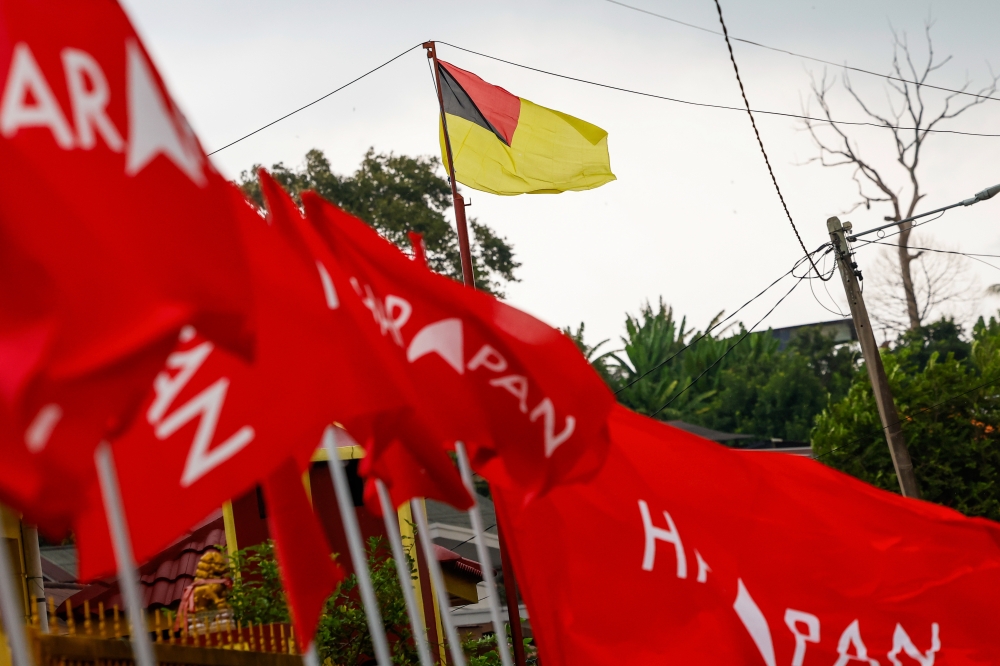
The Royal Malaysia Police's Negeri Sembilan contingent has launched a formal dual investigation into incidents of property destruction allegedly connected to election-related mischief, underscoring law enforcement's commitment to safeguarding public assets during the electoral cycle. The opening of multiple investigation papers reflects growing concerns about the intersection of political campaigning and civil disorder in the state, a pattern that authorities have moved swiftly to address through institutional channels.
Election-related property damage represents a serious concern for Malaysian law enforcement agencies, particularly as it undermines public confidence in the electoral process and signals potential breakdowns in civic discipline during politically charged periods. The decision to pursue two separate investigation threads suggests that authorities have identified distinct incidents rather than treating these as manifestations of a single coordinated disturbance. This differentiated approach allows investigators to isolate specific circumstances, identify perpetrators within distinct contexts, and pursue justice with appropriate proportionality.
Negeri Sembilan, situated at the geographic and political centre of Peninsular Malaysia, has historically served as a bellwether for national political sentiment. The state's significance in broader Malaysian politics makes electoral integrity particularly consequential; disruptions or property damage during campaigning could potentially reverberate beyond state boundaries and influence perceptions of political stability across the region. The police response demonstrates recognition of this elevated significance.
Property damage during election campaigns typically falls under several legal frameworks in Malaysian jurisdiction, including provisions governing public order, criminal mischief, and potentially election-specific legislation. The opening of investigation papers initiates formal documentation processes that establish evidentiary foundations, enable witness testimonies to be recorded systematically, and create operational frameworks within which forensic analysis and intelligence gathering can proceed according to established protocols.
The Negeri Sembilan police's proactive stance contrasts with historical patterns in some jurisdictions where election-related disturbances have received inconsistent enforcement attention. By formally documenting these investigations through separate papers, the authorities signal that such conduct will not be tolerated regardless of the political affiliations or motivations of those involved. This institutional commitment to uniform enforcement strengthens democratic institutions and demonstrates that electoral contests, however contentious, must remain anchored within legal and civil frameworks.
The timing of these investigations matters significantly within Malaysia's broader political calendar and electoral dynamics. Understanding when these incidents occurred relative to campaign periods, nomination deadlines, or voting days helps contextualize whether they represent spontaneous reactions to electoral developments or suggest more organised disruption attempts. Such temporal analysis often proves crucial in distinguishing between isolated incidents and patterns suggesting coordinated misconduct.
Property damage incidents during elections frequently involve damage to campaign materials, buildings used for electoral purposes, or public infrastructure deployed for voting operations. The specific nature of damaged property influences both the severity of charges that may ultimately be laid and the investigative techniques required to establish responsibility. Damage to polling stations or election commission facilities, for instance, carries heightened significance compared to damage to private campaign billboards.
From a regional Southeast Asian perspective, Malaysia's law enforcement response to election-related property damage reflects broader democratic maturation across the region. Countries throughout Southeast Asia have grappled with maintaining electoral integrity while respecting freedom of political expression. The Negeri Sembilan investigations exemplify how Malaysian institutions navigate this tension by targeting specific criminal conduct rather than engaging in broader political suppression.
The investigation papers serve important functions beyond immediate accountability. They establish documented evidence that can inform police resource allocation for future elections, provide data for academic researchers studying electoral conduct, and create precedent documentation that influences how similar incidents are treated in subsequent electoral cycles. Law enforcement agencies increasingly recognize that systematic documentation of electoral irregularities builds institutional knowledge that enhances long-term capacity.
For Malaysian citizens and regional observers, the police response demonstrates that electoral conduct remains subject to meaningful legal consequences. This reality operates as both deterrent against potential perpetrators and reassurance to voters that their participation occurs within frameworks designed to maintain order and protect public assets. The existence of active investigations signals that electoral competition, however spirited, operates within boundaries established through law rather than through pure political power.
The dual investigation structure also reflects operational best practices within Malaysian law enforcement. Separating distinct incidents into discrete investigation papers prevents cross-contamination of evidence, allows investigators to pursue leads specific to each case's circumstances, and facilitates clearer prosecution narratives should cases reach courts. This methodological approach enhances likelihood of successful legal outcomes while maintaining investigative integrity.
Moving forward, the outcomes of these Negeri Sembilan investigations will likely influence how police agencies across Malaysia approach similar election-related incidents in subsequent electoral contests. Should investigations result in successful prosecutions and meaningful legal consequences, the precedent established would reinforce institutional deterrence against property damage during campaigns. Conversely, if investigations encounter obstacles or produce unclear outcomes, they may signal limitations in Malaysian law enforcement capacity that require institutional attention and resource reallocation.
Ultimately, the police investigation papers represent Malaysia's democratic institutions functioning as designed: responding to alleged misconduct through systematic legal processes rather than through political retribution or institutional indifference. For stakeholders invested in Malaysian electoral stability and democratic development, these investigations offer evidence that institutional mechanisms exist to protect electoral integrity while respecting fundamental principles of justice.

