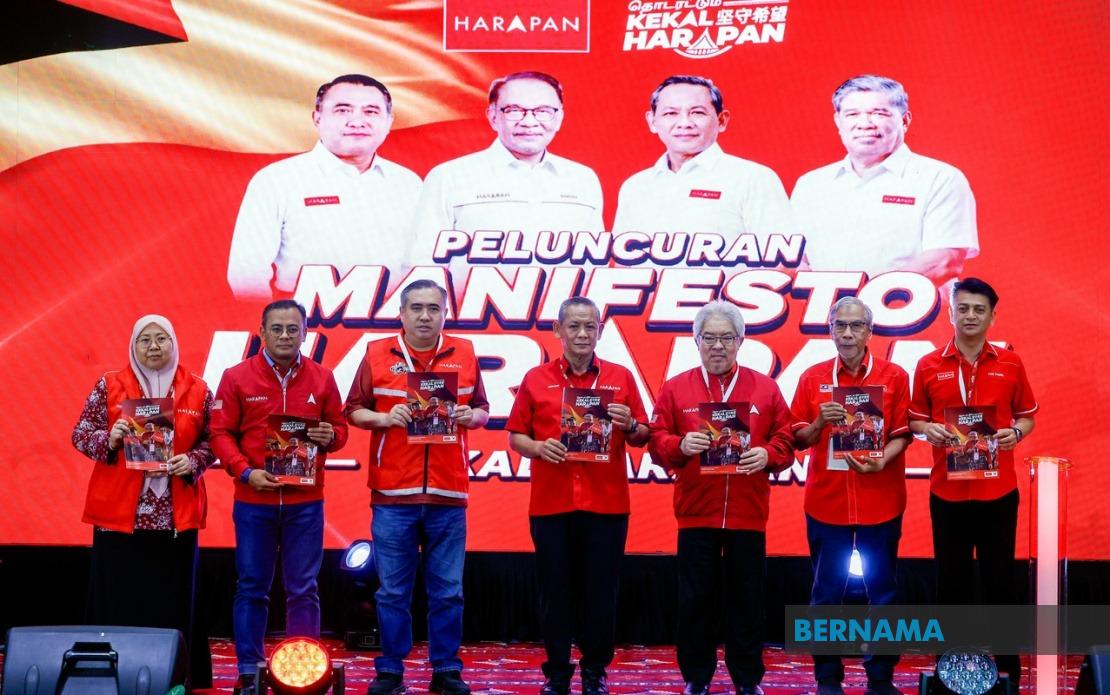
Pakatan Harapan launched its manifesto for the forthcoming Negeri Sembilan state election on July 20, with coalition leadership stressing that the document represents a commitment to achievable objectives rather than aspirational political messaging. The unveiling took place in Seremban, where state coalition chairman Datuk Seri Aminuddin Harun articulated the coalition's strategy of building upon its eight-year track record in the state rather than starting anew with untested proposals.
Aminuddin, who serves as Menteri Besar and is contesting the Linggi state seat, framed the upcoming five-year term as a period dedicated to consolidating gains and refining programmes already underway. This approach reflects a broader political strategy among governing coalitions across Malaysia to emphasize continuity and institutional competence rather than revolutionary change. The philosophy contrasts sharply with opposition parties that typically campaign on disruptive reform agendas, positioning PH as a stabilising force concerned with practical governance outcomes.
The manifesto, branded "Negeri Sembilan Kekal Harapan" (Negeri Sembilan Stays With Harapan), comprises ten key commitments that the coalition intends to pursue if returned to power. By anchoring its election platform to specific, measurable objectives rather than broad ideological statements, PH aims to demonstrate maturity in governance and accountability to voters. This messaging approach recognises that Malaysian electorate in state-level contests increasingly evaluate incumbent governments on tangible service delivery—healthcare access, educational infrastructure, employment generation, and transparent administration—rather than charismatic leadership or nationalist rhetoric.
The emphasis on strengthening rather than launching new initiatives carries particular significance for Negeri Sembilan, a mid-tier state that lacks the economic dynamism of Selangor or the resource wealth of Sarawak and Sabah. Voters in such states are acutely aware that government budgets are constrained, and grandiose promises ring hollow without realistic funding mechanisms. By positioning itself as prudent and focused on completion of existing projects, PH attempts to project credibility and financial responsibility. This is especially important in a state where fiscal management has been subject to scrutiny and where infrastructure backlogs remain evident.
Aminuddin's framing of the next five years as foundational work intended to benefit future generations suggests a longer-term vision that extends beyond a single electoral cycle. This temporal perspective aligns with modern best practices in state governance, where multiannual strategic planning and institutional capacity-building receive increasing emphasis. For Malaysian voters accustomed to short-term politicking and announcement-heavy campaigns, such messaging may represent a refreshing departure, though scepticism about political promises remains endemic across the region.
The launch strategy itself reveals how Malaysian coalition politics has evolved since 2018. Where previous election cycles often featured dramatic policy announcements and sweeping reform pledges, PH's approach now emphasises steady-state governance and incremental progress. This shift reflects both the realities of executing a complex state administration and lessons learned from scrutiny of earlier campaign commitments. By openly acknowledging that future initiatives will be continuations and enhancements of current work, the coalition establishes a narrative framework where success is measured by competent execution rather than revolutionary transformation.
For opposition parties in Negeri Sembilan, this manifesto strategy presents a communications challenge. Attacking PH for incremental approaches risks appearing reckless or dismissive of existing services, yet failing to present a compelling alternative vision cedes the initiative to the incumbent. The political arithmetic in Negeri Sembilan, with its mixed urban-rural demographic and moderate partisan leanings, suggests that voters may be receptive to messages about stability and proven delivery, particularly if economic conditions remain uncertain.
The manifesto's emphasis on what Aminuddin described as turning plans into reality within the next five-year term reflects acknowledgment that many of PH's earlier state-level initiatives remain incomplete or partial. Infrastructure projects, institutional reforms, and service expansions initiated during the first term under PH governance have proceeded at varying paces, creating both opportunities and vulnerabilities for the incumbent coalition. By framing the upcoming term as consolidation and enhancement, PH attempts to transform what might otherwise be perceived as unfulfilled promises into a narrative of phased, rational implementation.
Regional observers note that this approach is spreading across PH-governed states as the coalition matures in office. Selangor, Penang, and other PH-held states have adopted similar messaging strategies, suggesting a coordinated shift in how the coalition markets itself to voters. This coherence in messaging across multiple state administrations enhances the coalition's overall brand consistency and suggests institutional learning about effective political communication in the contemporary Malaysian context.
The ten specific commitments outlined in the manifesto will determine whether PH's message of practical delivery resonates with voters or whether opposition parties successfully characterise the coalition as having exhausted its reform agenda. The content of these commitments—whether focused on bread-and-butter issues like cost of living and healthcare, or on structural governance improvements—will reveal PH's assessment of voter priorities in Negeri Sembilan. The upcoming months of campaigning will test whether voters in the state reward parties for promising incremental improvements to existing systems or whether they remain hungry for more transformative change.

