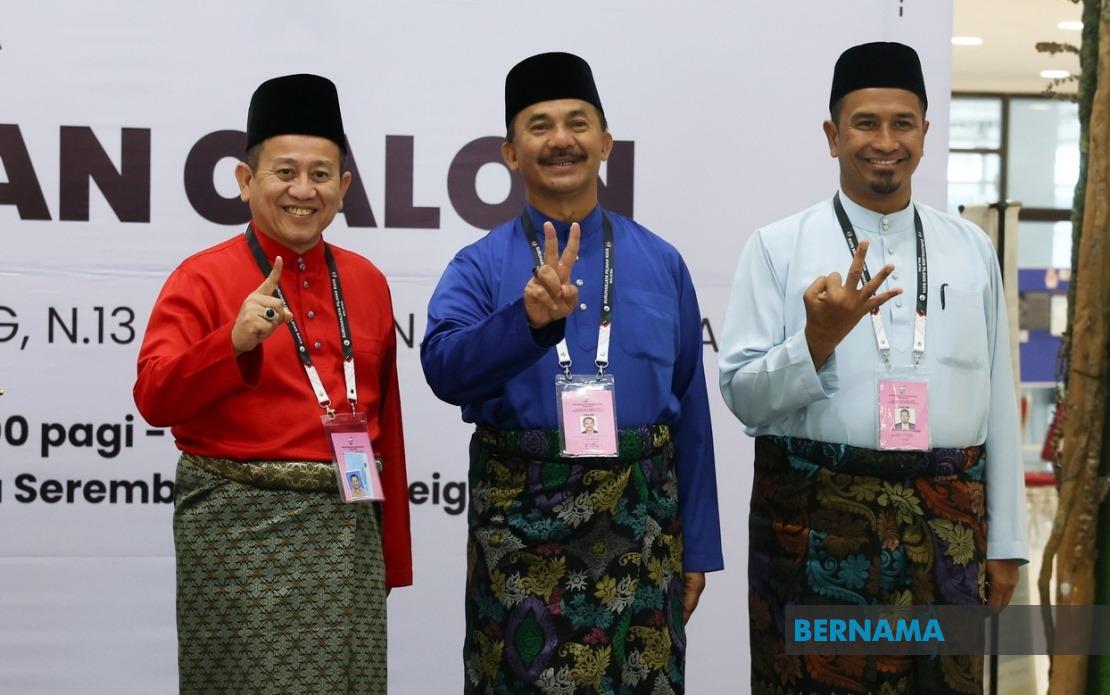
The 16th Negeri Sembilan State Election is shaping up as a contest that reflects broader shifts within Malaysia's political landscape, marked notably by the substantial injection of fresh political talent into the candidacy pools. Political parties contesting the 36 State Legislative Assembly seats have collectively embraced a strategy that pairs established figures with newcomers, signalling both continuity and renewal as they appeal to an electorate potentially fatigued by familiar faces. This demographic and experiential composition of the candidate slate carries implications that extend beyond Negeri Sembilan, offering insights into how the country's main political coalitions are recalibrating their grassroots representation ahead of anticipated national political developments.
Pakatan Harapan's approach has been notably aggressive in introducing new political blood to the electoral arena. The coalition, fielding candidates across all 36 seats in the state, has committed 24 new faces to the contest while retaining seasoned operatives in strategic positions. This numerical balance—two-thirds incumbents or established politicians against one-third newcomers—allows the opposition coalition to project both stability and forward momentum. The decision to field new candidates in nearly one-third of seats suggests confidence in developing a second tier of political leadership, a critical consideration for any coalition concerned with succession planning and long-term institutional strength.
Within Pakatan Harapan's slate, several high-profile incumbents have opted to shift constituencies rather than retire from frontline politics. Negeri Sembilan Pakatan Harapan Chairman Datuk Seri Aminuddin Harun exemplifies this strategic repositioning, vacating the Sekamat seat to contest Linggi, possibly reflecting demographic shifts or perceived electoral opportunity in the new constituency. Similarly, DAP Secretary-General and Transport Minister Anthony Loke's decision to defend the Chennah seat underscores how the coalition deploys recognizable national figures to anchor state-level contests, leveraging ministerial credentials and national visibility to bolster local campaigns. These veteran presences provide ballast to the younger cohort, grounding their campaigns in established party machinery and institutional knowledge.
Barisan Nasional's candidate strategy reveals a comparable but distinct approach to generational renewal. The coalition fielded 25 candidates across the state, of which 13 represent new faces in electoral politics. This represents a slightly lower proportion of newcomers than Pakatan Harapan, suggesting a more measured introduction of fresh blood. However, the absolute numbers remain substantial, indicating that Barisan Nasional recognizes the electoral significance of presenting an evolving organization rather than merely recycling familiar personalities. Several established Barisan Nasional figures have likewise navigated seat changes to position themselves strategically, with Datuk Ismail Lasim abandoning his Senaling seat to contest Juasseh, while Foreign Minister and UMNO Deputy President Datuk Seri Mohamad Hasan returns to defend Rantau. Negeri Sembilan Barisan Nasional Chairman Datuk Seri Jalaluddin Alias' retention of the Pertang seat he won in the previous state election demonstrates the coalition's confidence in retaining particular territorial strongholds.
Perikatan Nasional's fragmented candidacy structure reflects the coalition's organizational complexity. Contesting only 11 of the 36 seats through its component parties—PAS, Gerakan, Parti Wawasan Negara, and the Malaysian Indian People's Party—Perikatan Nasional necessarily fields a more limited pool of candidates, though one combining both new and experienced practitioners. This smaller electoral footprint allows Perikatan Nasional to concentrate resources in select constituencies deemed winnable, a tactical approach that differs fundamentally from the comprehensive state-wide presence of Pakatan Harapan and Barisan Nasional.
Partii Pribumi Bersatu Malaysia's participation through its own symbol rather than under the Perikatan Nasional banner represents a subtle but significant organizational development. The party fields 24 candidates across the state, among whom Datuk Tun Faisal Ismail Aziz appears as a newcomer to electoral contest. This candidate configuration allows Bersatu to assert separate identity and electoral independence while maintaining tactical cooperation with other opposition-aligned parties. Negeri Sembilan Bersatu Chairman Hanifah Abu Bakar's participation as an incumbent defending the Labu seat maintains organizational continuity even as the party reconfigures its strategic positioning within Malaysia's fractious coalition landscape.
The broader candidate ecosystem encompasses several smaller parties and independent contestants that, while individually marginal, collectively enliven the electoral competition. Parti Berjasa, Parti Orang Asli Malaysia, and Parti Sosialis Malaysia each field single candidates, while four independent aspirants seek election outside partisan structures. This proliferation of electoral options, though unlikely to significantly alter state government formation, reflects democratic dynamism and provides voters with substantive choice beyond the major coalitions.
Demographic analysis of the candidate field reveals telling generational contrasts. The oldest contestant, Datuk Abd Latiff A Tambi of Pakatan Harapan contesting Gemencheh, is 70 years old, while the youngest, Bersatu's Leevineshwaraan Murugan for Sri Tanjung, is merely 23. This 47-year age gap encapsulates the full spectrum of political experience and generation represented in this contest, from pre-independence era politicians to members of the post-1998 Reform generation. The presence of such diverse ages suggests that political parties are deliberately constructing multi-generational slates capable of appealing to different voter cohorts and promoting succession within their organizational hierarchies.
The nomination period closure yielded confirmation that 103 candidates from various parties and independent backgrounds will contest the 36 State Legislative Assembly seats. This ratio of approximately 2.86 candidates per seat indicates moderate electoral competition—sufficient to ensure genuine contests without excessive proliferation of candidacies. The Election Commission's scheduling of early voting for July 28 and polling day on August 1 provides voters with temporal flexibility while maintaining electoral efficiency and procedural integrity.
For Malaysian observers, particularly those in Negeri Sembilan, this election cycle demonstrates how the country's political parties are attempting to reconcile competing imperatives: retaining established figures with demonstrable electoral appeal while introducing fresh candidates capable of energizing party organizations and appealing to voters wearied by familiar political personalities. The balance struck by each coalition reveals differing assessments of voter sentiment and internal organizational confidence. Pakatan Harapan's more aggressive new-face strategy projects confidence and dynamism, while Barisan Nasional's more measured approach emphasizes stability and institutional continuity. The election results, scheduled for August 1, will test whether this particular calibration of old and new resonates with voters or whether the electorate demands greater or lesser generational change than these parties have calculated.
The Negeri Sembilan contest thus functions as an early indicator of broader Malaysian electoral trends heading toward anticipated federal-level political contests. The composition of these candidate lists, the positioning of national figures in state races, and the electoral performance of new versus established politicians will all inform how the country's political coalitions subsequently recalibrate their candidate selection processes and campaign strategies at the national level. For regional observers, Negeri Sembilan provides a window into how Southeast Asian democracies navigate the perpetual tension between institutional continuity and political renewal.

