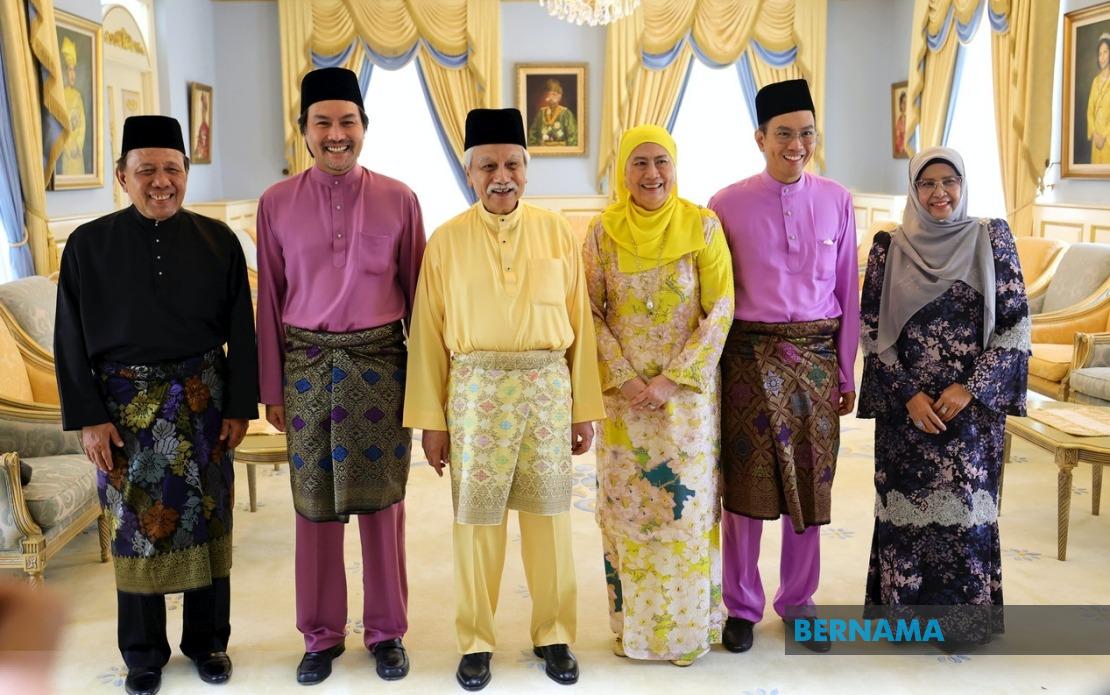
Negeri Sembilan's newly appointed Menteri Besar Datuk Ismail Lasim has committed to completing the state cabinet lineup by Friday, marking the beginning of a carefully orchestrated transition following the state election victory by Barisan Nasional and their coalition partners. Speaking at his first press conference after being sworn in before Tuanku Muhriz Tuanku Munawir at Istana Besar Seri Menanti, Lasim outlined a deliberate process that reflects the complex political negotiations required to form a stable state government in Malaysia's proportional power-sharing environment.
The timeline represents a compressed decision-making period that must balance multiple stakeholder interests. Before the proposed executive council composition reaches the Yang Dipertuan Besar for formal approval, Lasim indicated that extensive discussions would occur within Barisan Nasional leadership circles. This preliminary round of consultations proves essential in a coalition government where component parties such as MCA and MIC hold Assembly seats alongside UMNO, the dominant coalition partner. The Juasseh Assemblyman acknowledged that these conversations would establish the political foundation necessary for a functioning cabinet.
Crucially, Lasim plans to consult UMNO President Datuk Seri Dr Ahmad Zahid Hamidi specifically regarding whether Perikatan Nasional assembly members should receive executive positions. This conversation signals that Negeri Sembilan's new government is still exploring whether to formalise a broader coalition arrangement, even after the election delivered sufficient seats for a BN-PN combined majority. The flexibility in these discussions reflects the fluid nature of state-level political alignments in contemporary Malaysia, where winning coalitions often negotiate post-election arrangements to maximise stability and ministerial representation.
Regarding the cabinet's structure, Lasim expressed a preference for maintaining the existing ten-member executive council format, arguing that this arrangement provides optimal balance between ministerial workload and administrative efficiency. However, he emphasised that no final decision on this matter had been reached, leaving room for recalibration should coalition mathematics or portfolio considerations demand adjustment. The ten-member structure has proven functional for Negeri Sembilan's governance needs, and retaining it would avoid significant restructuring while allowing the new administration to focus on policy implementation rather than institutional reorganisation.
The electoral mandate provides both coalition partners with substantial authority to govern. Barisan Nasional secured eighteen of the thirty-six available state assembly seats, whilst Perikatan Nasional captured seven, creating a combined supermajority that exceeds two-thirds of the chamber. This electoral outcome effectively granted the coalitions decisive control over state legislation and executive functions, eliminating the need for external support and enabling coherent long-term policy direction. The result emerged from a three-cornered contest involving one hundred and three candidates competing for the thirty-six contested seats.
Lasim's emphasis on people-centric governance during his inaugural address signals the thematic direction for his administration. He positioned public welfare and citizen well-being as the foundational pillar and enduring priority throughout his tenure, language that typically precedes detailed policy announcements on education, healthcare, and economic development. For Malaysian state administrations, this rhetorical framing establishes accountability benchmarks against which the government's subsequent performance will be measured by voters and civil society observers.
The deliberate pace of cabinet formation, while potentially frustrating to coalition partners eager for ministerial appointments, reflects institutional respect for the constitutional monarchy and prudent political management. By securing the Yang Dipertuan Besar's preference for rapid resolution whilst ensuring adequate consultation time, Lasim demonstrates awareness that rushed appointments often generate internal coalition friction and expose governments to early scandals or capability questions. The royal institution's involvement in approving the executive council composition adds constitutional weight to the process and ensures that Singapore's governance maintains alignment with Negeri Sembilan's traditional power-sharing frameworks.
For Malaysian political observers, this cabinet formation process exemplifies the regional complexity of state-level coalition building. Unlike federal arrangements, state governments sometimes incorporate cross-coalition partnerships even after achieving independent legislative majorities, reflecting specific state demographics, electoral competition patterns, and established power-sharing conventions. Negeri Sembilan's consideration of Perikatan Nasional inclusion despite Barisan Nasional's sufficient numbers suggests that political accommodations at state level prioritise consensus-building and reduced opposition hostility over maximising government representation density.
The involvement of UMNO President Ahmad Zahid in composition discussions underscores the party's dominance within Barisan Nasional and its effective veto power over major coalition decisions. Although Lasim holds the Menteri Besar position and exercises significant executive authority, consultation with the UMNO national leadership remains essential protocol, reflecting the hierarchical nature of Malaysian party politics. This deference to UMNO's preferences ensures that state government decisions remain consistent with federal coalition strategies and national party positioning.
Portfolio allocation decisions, whilst not yet publicly detailed, will prove crucial for distributing influence among coalition components. The inclusion of MCA and MIC representatives in the executive council requires careful attention to portfolio significance, salary bands, and policy prominence to satisfy component party expectations and prevent coalition friction. Negeri Sembilan's particular demographic composition, with its mix of urban, agricultural, and industrial constituencies, demands cabinet representation reflecting these diverse economic interests and ensuring that resource distribution and development priorities address regional variations appropriately.
The assembly of this cabinet against compressed timelines also reflects changing political norms in Malaysia, where efficient transition periods increasingly demonstrate governmental competence and decisiveness to voters and investors. Extended cabinet formation periods, common in earlier decades, now risk appearing indecisive or indicative of coalition instability. By targeting Friday's deadline, Lasim projects confidence in coalition cohesion and readiness to govern, important psychological signals in competitive democratic environments where performance perceptions shape electoral calculations for subsequent election cycles.
As Negeri Sembilan's government takes shape, the state joins other Malaysian constituencies where Barisan Nasional has returned to dominant political positions following the coalition's mid-term revival. The successful cabinet formation would represent another consolidation milestone in the coalition's electoral comeback trajectory, potentially encouraging similar political configurations in forthcoming state and federal contests. For Lasim personally, navigating these initial weeks successfully establishes his credentials as a capable administrator capable of managing complex coalition politics whilst advancing state development agendas.

