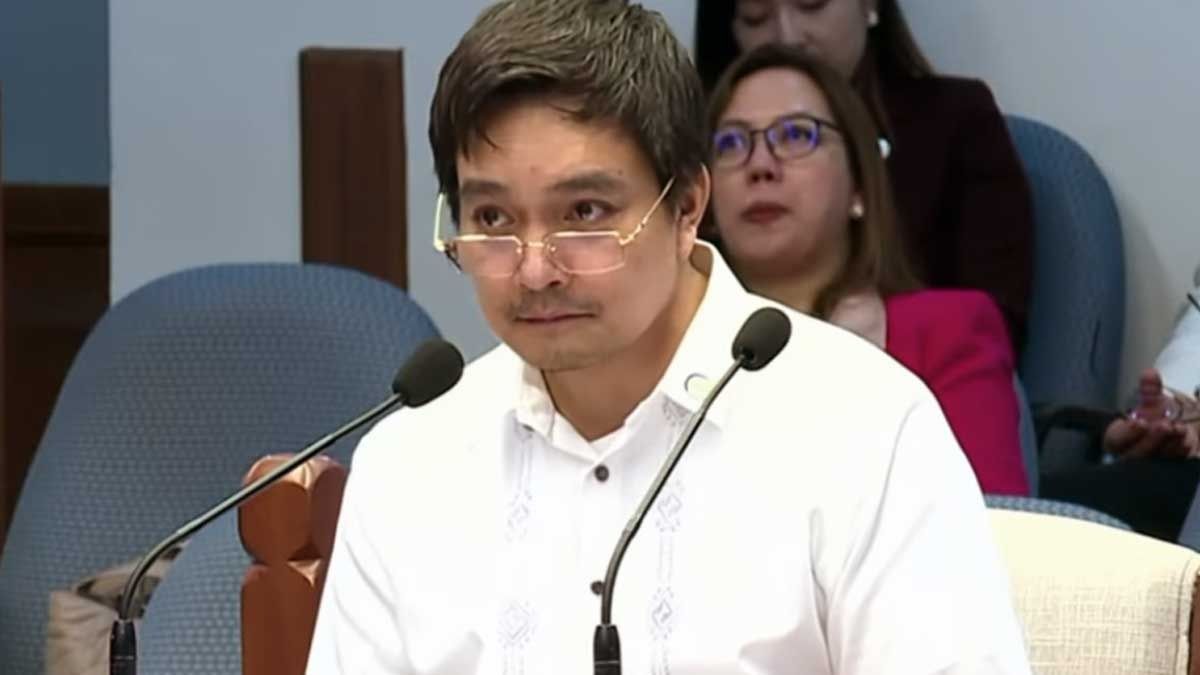
The Philippines' impeachment trial of Vice President Sara Duterte intensified on Tuesday as a National Bureau of Investigation official maintained that accumulated evidence implicated her in an alleged assassination plot against President Ferdinand Marcos Jr., despite acknowledging he possessed no direct personal knowledge of such a conspiracy. Jeremy Lotoc, the NBI's Regional Director who oversaw the Crime Division investigation, faced rigorous cross-examination as he attempted to distinguish between circumstantial evidence and eyewitness testimony, a distinction that proved contentious throughout the proceedings.
The controversy centres on remarks Duterte made during an online media briefing on 23 November 2024, when she allegedly stated she had contracted someone to kill the president, First Lady Liza Araneta-Marcos, and former House Speaker Martin Romualdez. These comments formed the basis of the fourth article of impeachment filed against the Vice President, and Lotoc's investigation represented the NBI's primary effort to substantiate the seriousness of the threats. The case exemplifies a broader tension in Philippine political discourse, where inflammatory rhetoric from high-ranking officials raises questions about the boundaries between free expression and criminal conspiracy.
When defence lawyer Mark Vinluan pressed Lotoc on whether he possessed personal knowledge that Duterte had engaged someone to execute the alleged murders, the witness offered a carefully calibrated response. He stated that while the NBI believed such a contract existed based on their investigation, he could not testify to firsthand knowledge of the arrangement. This distinction proved crucial throughout the trial, as the defence sought to undermine the prosecution's case by highlighting the absence of direct evidence. The prosecutor's team, led by private counsel Amando Ligutan, objected repeatedly to what they characterised as the defence's manipulative framing of the witness's testimony.
The courtroom deteriorated into procedural arguments as Vinluan attempted to establish that the NBI official lacked sufficient grounds to connect the Vice President's words to actual criminal intent. When Lotoc began referencing Duterte's own statements in the video as evidence supporting the NBI's conclusions, Vinluan interrupted, demanding yes-or-no answers rather than explanatory responses. The tension escalated as Ligutan objected to what he called "foul side remarks," accusing the defence counsel of deliberately twisting the witness's answers to support a predetermined narrative. Senate President Sherwin Gatchalian, serving as the presiding officer, repeatedly intervened to restore order, at one point admonishing both sides that the trial was "not a college debate," signalling frustration with the escalating hostility.
Lotoc ultimately conceded that he lacked personal knowledge that Duterte had actually contracted an assassin, a significant admission that appeared to strengthen the defence's argument. However, he insisted that the pieces of evidence gathered by the NBI's investigation supported the conclusion that such a contract existed. This apparent contradiction—believing something to be true while admitting to no direct knowledge—highlighted the investigative challenges inherent in cases involving high-level political figures whose statements and actions receive limited independent corroboration. The witness's reliance on circumstantial evidence rather than concrete proof raised questions about the sufficiency of the prosecution's case.
Gatchalian's questioning of Lotoc revealed another critical gap in the prosecution's argument. When the NBI director suggested that Duterte's position as Vice President itself demonstrated her capacity to carry out threats, Gatchalian pushed back forcefully, noting that holding high office does not necessarily equate to possessing the capability or means to execute such plans. The Senate leader's scepticism suggested growing impatience with the prosecution's reasoning, as the presentation of evidence appeared increasingly circular and dependent on inferences rather than documented facts. This exchange underscored the legal and evidentiary challenges facing those seeking to convict a sitting Vice President of conspiracy to commit murder based primarily on statements made during a media briefing.
In response to Gatchalian's request for concrete evidence of Duterte's capacity to carry out her threats, Lotoc invoked her father's legal troubles, citing former President Rodrigo Duterte's ongoing case before the International Criminal Court regarding alleged extrajudicial killings during his administration's anti-drug campaign. The witness suggested that Sara Duterte's family background and demonstrated awareness of such matters indicated she possessed both the capability and potential willingness to orchestrate violence. This argument, however, represented inference based on family history rather than direct evidence of the Vice President's own intentions or actions, and it risked violating principles of individual responsibility by attributing potential dangerousness based on a relative's alleged crimes.
The trial's procedural battles over evidentiary standards and questioning techniques reflected deeper divisions within the Philippine political establishment regarding how to prosecute high-ranking officials. The defence's emphasis on requiring direct knowledge and concrete proof aligned with traditional criminal jurisprudence, while the prosecution's reliance on circumstantial evidence and investigative conclusions suggested an effort to construct a political narrative rather than prove a specific crime beyond reasonable doubt. For Malaysian and Southeast Asian observers, the proceedings offered a cautionary example of how impeachment proceedings can become consumed by legal technicalities and procedural disputes when political motivations run high.
The case also illuminates the challenges faced by the NBI and other investigative agencies when senior government officials make inflammatory statements that may or may not constitute genuine criminal threats. Without wiretap evidence, financial records of payments to would-be assassins, or testimony from intermediaries, investigators must rely on inference and context to establish guilt. Duterte's statements, however seriously intended, remain subject to multiple interpretations, and the absence of any actual assassination attempt further complicates efforts to demonstrate that her words reflected genuine criminal conspiracy rather than hyperbolic political rhetoric.
For the Philippine political system, the trial raises fundamental questions about the standards of evidence required to remove a sitting Vice President from office. If impeachment can proceed based on circumstantial evidence, inference, and investigative conclusions rather than proof beyond reasonable doubt, the threshold for removal becomes considerably lower than for criminal conviction. This distinction carries significant implications, as it could establish a precedent making future impeachments more politically expedient, potentially destabilising executive continuity if applied aggressively during periods of intense partisan conflict.

